



News:
Brokerage
Posted: October 27, 2015
Singer of Singer & Bassuk Org. closes $80 million loan with AXA
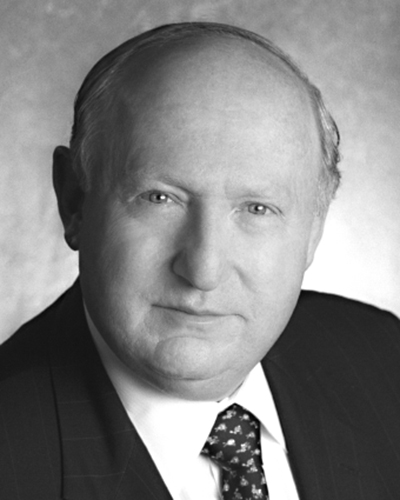 Andrew Singer, Singer & Bassuk
New York, NY The Singer & Bassuk Organization LLC (SBO) has closed an $80 million loan with AXA Equitable Life Insurance Co. to provide permanent financing for 501 Madison Ave., a recently transformed, 30-story office and retail property owned by heirs of Cornelius Vanderbilt III.
The loan is the last phase of a three-part series of interim, construction and permanent financings – which SBO first started to arrange in 2013 – that aggregate to $160 million for the 200,000 s/f asset.
“It has been an honor to work hand-in-hand with ownership in securing sound, multi-tiered financing for this remarkable building,” said Andrew Singer, chairman and CEO of SBO, who arranged the financing. “The transformative renovations, complemented by the property’s ‘triple-A’ location and rich history, have elevated 501 Madison Ave. to class A status within the highest echelon of Manhattan’s most coveted pre-war commercial spaces.”
The land beneath the Plaza District property has been owned by descendants of Cornelius Vanderbilt III since 1929. Soon after acquiring the property, the Vanderbilt family entered into a long term ground lease with a developer who erected the building. The leasehold changed hands several times before expiring in 2013, at which point Vanderbilt’s descendants
 501 Madison Avenue - New York, NY
chose to operate the building themselves instead of entering into a new ground lease.
Under the direction of Kevin Wang of KRW Realty Advisors LLC, who serves as the asset manager for 501 Madison Ave., ownership embarked on executing a major restoration and upgrade of the building, which had not been materially improved or renovated since it was constructed. Renovations included: a new facade for the first and second-floor retail spaces, new building entrance, lobby, elevators, windows, cooling tower, electrical-system upgrades and revitalized, multi-tenant common areas.
Located at the northeast corner of 52nd St., 501 Madison Ave. is nearly 100% leased. Notable tenants include Carlo Pazolini, Oscar Heyan Inc., Randi Rahm, Innisfree M&A Inc., The World Jewish Congress Foundation, among others.
The property includes floor plates ranging from 1,826 to 8,938 s/f, with German apparel company Porsche Design occupying the ground-floor retail space as its flagship location.
Tags:
Brokerage
MORE FROM Brokerage

Meridian Capital Group arranges 10-year retail lease for Mess at 236 West 10th St.
Manhattan, NY According to Meridian Capital Group, Jordan Langer, Noam Aziz and Carson Shahrabani of the firm’s retail leasing team have arranged a five-year lease at 236 West 10th St. in Greenwich Village


.jpg)

Quick Hits

Columns and Thought Leadership

Behind the post: Why reels, stories, and shorts work for CRE (and how to use them) - by Kimberly Zar Bloorian
Let’s be real: if you’re still only posting photos of properties, you’re missing out. Reels, Stories, and Shorts are where attention lives, and in commercial real estate, attention is currency.

AI comes to public relations, but be cautious, experts say - by Harry Zlokower
Last month Bisnow scheduled the New York AI & Technology cocktail event on commercial real estate, moderated by Tal Kerret, president, Silverstein Properties, and including tech officers from Rudin Management, Silverstein Properties, structural engineering company Thornton Tomasetti and the founder of Overlay Capital Build,

Strategic pause - by Shallini Mehra and Chirag Doshi
Many investors are in a period of strategic pause as New York City’s mayoral race approaches. A major inflection point came with the Democratic primary victory of Zohran Mamdani, a staunch tenant advocate, with a progressive housing platform which supports rent freezes for rent

Lasting effects of eminent domain on commercial development - by Sebastian Jablonski
The state has the authority to seize all or part of privately owned commercial real estate for public use by the power of eminent domain. Although the state is constitutionally required to provide just compensation to the property owner, it frequently fails to account
.gif)