



Jericho, NY Mojo Stumer + Associates completed a 4,500 s/f space for Esquire Bank’s headquarters. In its fourth expansion in as many years, Esquire Bank further grew its headquarters with the addition of a new 4,500 s/f tech space dedicated to its technology and software development teams.
The design had to maintain the simplicity and modern sophistication of the prior three build-outs, but this time with a new end user in mind; instead of creating a space intended to impress bank clientele and corporate CEOs, the new Esquire Tech space had to attract young computer programmers to join the Esquire team, which was competing with the likes of Google and Facebook for the best new talent.
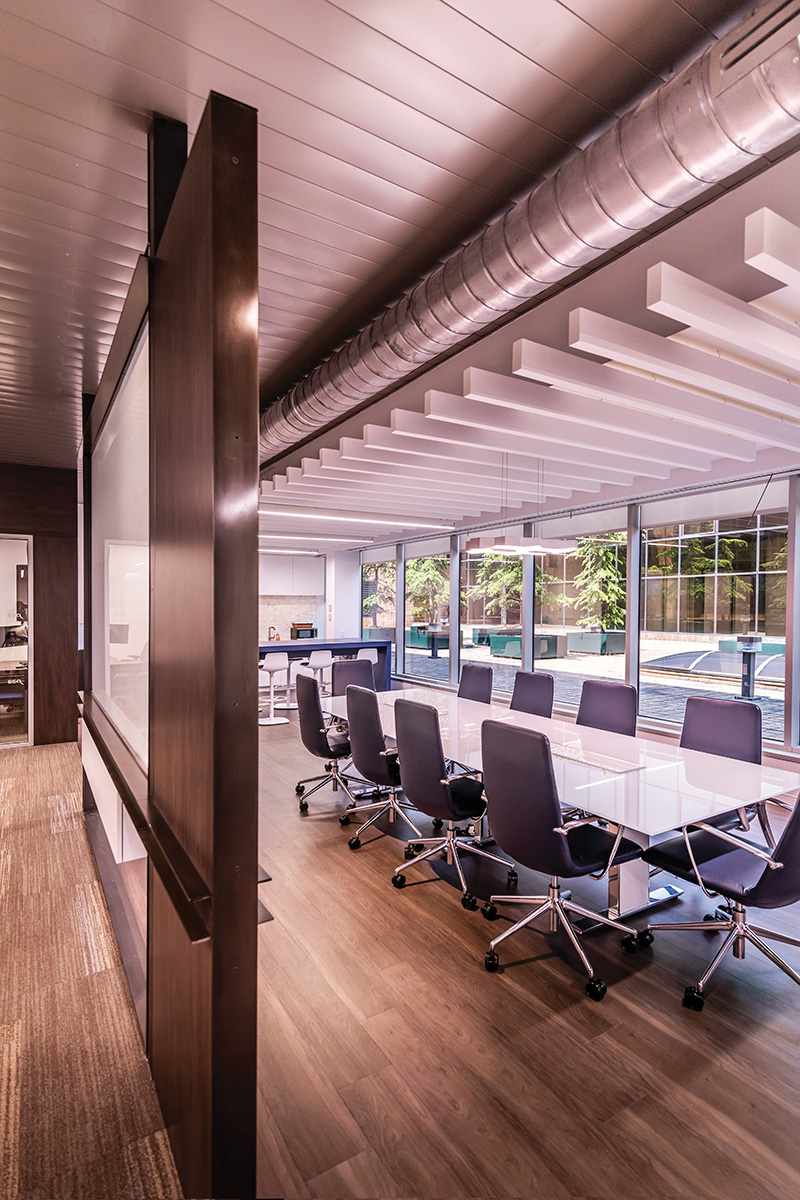
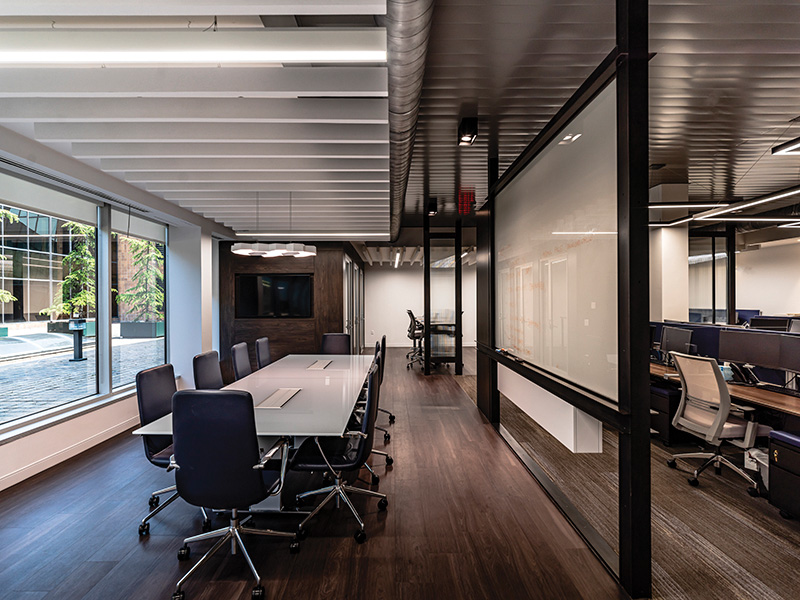 From early programming, the space was planned to look, feel, and function like a tech start up, rather than a typical office tenant build-out. Upon entry, the newly branded ‘Esquire’ logo is featured over an oversized moss wall, surrounded by the dark wood wall paneling. The open-concept floor plan features hotel-type seating to allow full flexibility for the hybrid team, while prioritizing a group work area and conference areas in the remaining space. A custom feature wall of semi-translucent marker-board glass, framed in blackened stainless steel and dark walnut, creates a partial separation between the work and conference areas and provides a double-sided collaboration board for teams. Ultimately every work station within the entire space has direct or secondary access to natural lighting from the exterior wall.
The ceiling of the main work area was left exposed to further enhance the start-up aesthetic, with round ductwork and custom suspended overlapping square LED pendants highlighting each work pod. The lower ceilings in the surrounding areas are treated with linear acoustical baffles, both to dampen sound and to create a dynamic textured and rhythmic ceiling plane in contrast to the remaining areas of exposed metal deck. An open kitchen connects directly to the conference area, and three ‘huddle’ rooms, each with different furniture concepts, provide opportunity for private conversation when needed.




.gif)
.jpg)

When Environmental Site Assessments (ESA) were first part of commercial real estate risk management, it was the lenders driving this requirement. When a borrower wanted a loan on a property, banks would utilize a list of “Approved Consultants” to order the report on both refinances and purchases.