



News:
Spotlight Content
Posted: October 28, 2025
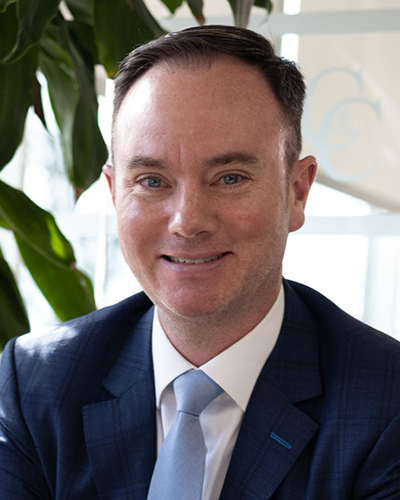
2025-Innovators in Commercial Real Estate-Zach Alerhand of Time Equities Inc.

Director of Portfolio Strategy
Time Equities Inc.
Impact Highlight: Describe a recent program, initiative, or process implemented by you and the impact on your firm, organization, or community. In 2022, I led Time Equities’ seed investment into 1Print, a concrete 3D-printing company. We were drawn to the technology’s potential to address the nation’s housing shortage and wanted to position ourselves at the forefront of innovation in the built environment. After 18 months of development, we realized that large-scale construction 3-D printing was not yet capable of delivering the efficiency or durability needed for meaningful impact. At the same time, we identified a far more immediate and underserved need: coastal protection. Since 2024, 1Print has pivoted to apply its concrete 3-D printing expertise toward safeguarding America’s shorelines; transforming an ambitious housing concept into a practical solution for climate resilience.
Innovative Outlook: Where do you see the biggest opportunities for innovation in the commercial real estate sector? I believe the greatest opportunities for innovation in commercial real estate lie in how we use data and technology to validate and scale new ideas. Too often, promising materials or construction systems stall because their benefits are difficult to quantify or prove in advance. Creating programs and financial structures that incentivize pilot projects and reward the adoption of proven technologies would accelerate innovation across the industry and help bridge the gap between concept and implementation.
Beyond Buildings: How do you see innovation in commercial real estate creating a broader impact on communities and the people who live and work in them? With 1Print, our focus extends beyond traditional real estate development to the foundation that makes our coastal communities possible. Literally. To create a community, you need infrastructure; to build infrastructure, you need land; and to have land, you must first protect the coastline that anchors it. By developing 3D-printed concrete solutions for shoreline stabilization, we’re helping to safeguard coastal regions from erosion, mitigate the impact of extreme weather, and support the ecosystems that sustain local economies and livable communities.
Tags:
Spotlight Content
MORE FROM Spotlight Content
Over half of Long Island towns vote to exceed the tax cap - Here’s how owners can respond - by Brad and Sean Cronin
When New York permanently adopted the 2% property tax cap more than a decade ago, many owners hoped it would finally end the relentless climb in tax bills. But in the last couple of years, that “cap” has started to look more like a speed bump. Property owners are seeing taxes increase even when an


.png)


Quick Hits

.jpg)
Columns and Thought Leadership
How much power does the NYC mayor really have over real estate policy? - by Ron Cohen
The mayor of New York City holds significant influence over real estate policy — but not absolute legislative power. Here’s how it breaks down:
Formal Legislative Role
• Limited direct lawmaking power: The NYC Council is the primary

Oldies but goodies: The value of long-term ownership in rent-stabilized assets - by Shallini Mehra
Active investors seeking rent-stabilized properties often gravitate toward buildings that have been held under long-term ownership — and for good reasons. These properties tend to be well-maintained, both physically and operationally, offering a level of stability

The strategy of co-op busting in commercial real estate - by Robert Khodadadian
In New York City’s competitive real estate market, particularly in prime neighborhoods like Midtown Manhattan, investors are constantly seeking new ways to unlock property value. One such strategy — often overlooked but

Properly serving a lien law Section 59 Demand - by Bret McCabe
Many attorneys operating within the construction space are familiar with the provisions of New York Lien Law, which allow for the discharge of a Mechanic’s Lien in the event the lienor does not commence an action to enforce following the service of a “Section 59 Demand”.
.gif)