



News:
Brokerage
Posted: March 25, 2025
Yates Exterior Restoration Commemorates 100th Anniversary
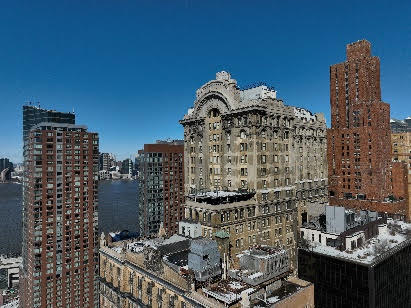
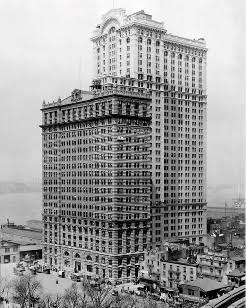 Long Island City, NY Yates Exterior Restoration Services, LLC, a full-service construction company, specializing in the restoration and maintenance of pre- and post-war buildings, founded in 1925, is celebrating its 100th year keeping New York City’s buildings safe and beautiful. In addition to having repaired and restored hundreds of commercial and residential properties, including landmark buildings that were new when the company was founded, Yates has been instrumental in developing many of the practices that have become standards in building restoration. More recently, it has influenced critical methods and techniques currently being used for Façade Inspection Safety Program (FISP) projects.
Yates' reputation and years of experience are among the reasons why the firm was chosen to restore the Statue of Liberty in preparation of the monument’s centennial in 1986. Likewise, it was selected to reproduce the missing statuary at the prow of the Flatiron Building to celebrate that building’s centennial anniversary. Over four generations, Yates Exterior Restoration has been family operated, led by Michael Yates, who has been the Company’s president since 1996.
“I am both proud of our contributions to this great city and humbled by my family’s legacy,” said Yates. “Our mission has always been to protect and preserve New York City’s facades with a sensitivity to the architecture and the building’s tenants. We are fortunate to have developed a world-class team over the years, which continues to advance and improve with the advent of new technologies and materials.”
In addition to FISP projects, Yates is especially well-regarded for projects completed on such landmark properties as Trinity Church, 1185 Park Avenue, The Carlyle Hotel, 1 Fifth Avenue, The Fred French Building, and 140 Riverside Drive, among others. The firm also provides ground-up restoration services, including complete façade replacements at 501 East 79th Street and 114 East 72nd Street, and a notable plaza replacement at 10 West 66th Street.
Yates said, “Over the years, we have been fortunate to have worked on a diverse range of projects, with clients who have been second to none in terms of placing great value on protecting and preserving their buildings. Together, with our parent company Central Construction Management, we look forward to continuing to play an important role in maintaining the architectural fabric of this city and being part of its continuing history.”
Tags:
Brokerage
MORE FROM Brokerage
Meridian Capital Group arranges 10-year retail lease for Mess at 236 West 10th St.
Manhattan, NY According to Meridian Capital Group, Jordan Langer, Noam Aziz and Carson Shahrabani of the firm’s retail leasing team have arranged a five-year lease at 236 West 10th St. in Greenwich Village


.jpg)

.gif)
Columns and Thought Leadership

Behind the post: Why reels, stories, and shorts work for CRE (and how to use them) - by Kimberly Zar Bloorian
Let’s be real: if you’re still only posting photos of properties, you’re missing out. Reels, Stories, and Shorts are where attention lives, and in commercial real estate, attention is currency.

Strategic pause - by Shallini Mehra and Chirag Doshi
Many investors are in a period of strategic pause as New York City’s mayoral race approaches. A major inflection point came with the Democratic primary victory of Zohran Mamdani, a staunch tenant advocate, with a progressive housing platform which supports rent freezes for rent
AI comes to public relations, but be cautious, experts say - by Harry Zlokower
Last month Bisnow scheduled the New York AI & Technology cocktail event on commercial real estate, moderated by Tal Kerret, president, Silverstein Properties, and including tech officers from Rudin Management, Silverstein Properties, structural engineering company Thornton Tomasetti and the founder of Overlay Capital Build,

Lasting effects of eminent domain on commercial development - by Sebastian Jablonski
The state has the authority to seize all or part of privately owned commercial real estate for public use by the power of eminent domain. Although the state is constitutionally required to provide just compensation to the property owner, it frequently fails to account
.gif)