



News:
Brokerage
Posted: February 2, 2016
The strategic purchase – The bane of commercial property evaluation by Ferro
 Richard Ferro, Berkshire Hathaway Blake, Realtors
 Unlike residential real estate, commercial real estate can present a particularly difficult challenge in determining an estimate of value because of something called a strategic purchase. In this situation, the property has an exceedingly high intrinsic value for reasons particular to a single purchaser. In the days of rapid drugstore expansion, signalized corner locations were a prime example. Another example is an adjacent property that can be a neighbor’s only option to increase the size and utility of his/her property, yielding a higher sale price that could be garnered from any other purchaser. Indeed, in the business world, there can be a host of reasons for the strategic purchase.
Knowledge of these situations is critical when using comparable sales to estimate value of a subject property, because it can skew one’s calculations. But the possibility of a strategic purchase also comes into play when the practitioner is discussing the asking price with a seller prior to marketing a new listing. Every seller’s worst nightmare is leaving money on the table. Because of this, the broker is challenged to determine a realistic asking price in order to market the property effectively, while addressing the seller’s desire for a price that can well be an unreasonable expectation.
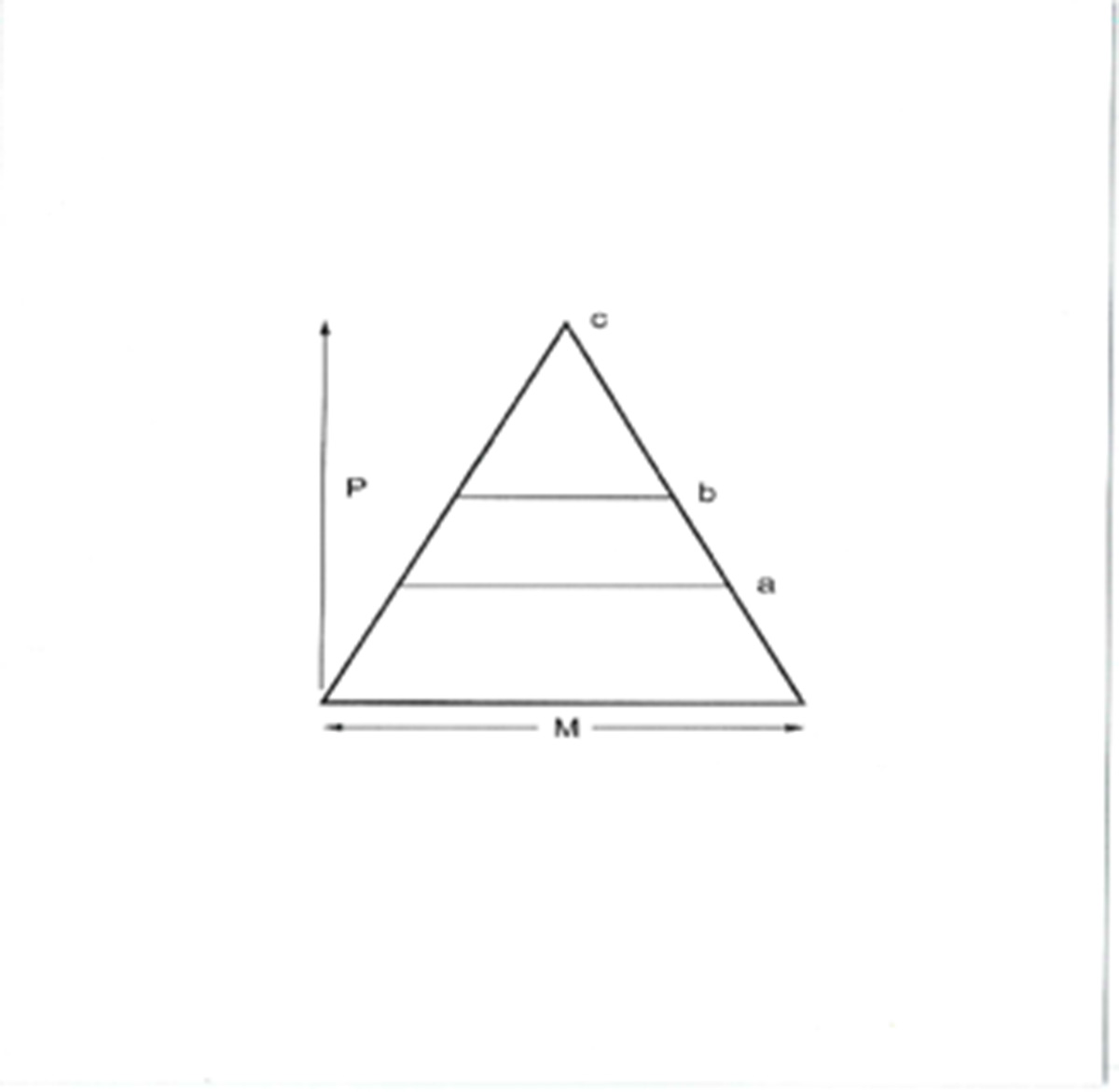
To incorporate the possibility of a strategic purchase, the use of the accompanying diagram can be of great benefit in discussions with a seller. “P” represents price and “M” represents the breadth of the market – the number of prospective purchasers who would be interested in the property at a given price. It is easy to demonstrate to the seller that as the price rises (comparing “a” price with the “b” price), fewer and fewer purchasers would be interested in their property. Point “c” represents that one purchaser who would pay an exceedingly high price – most likely for a strategic reason. With this visual aid, the seller is much more likely to see that such a probability is low at best and it could take an inordinate amount of time for that one buyer to come along.
Richard Ferro, CCIM is a principal broker and manager of Berkshire Hathaway Blake, Realtors, Albany, N.Y.
Unlike residential real estate, commercial real estate can present a particularly difficult challenge in determining an estimate of value because of something called a strategic purchase. In this situation, the property has an exceedingly high intrinsic value for reasons particular to a single purchaser. In the days of rapid drugstore expansion, signalized corner locations were a prime example. Another example is an adjacent property that can be a neighbor’s only option to increase the size and utility of his/her property, yielding a higher sale price that could be garnered from any other purchaser. Indeed, in the business world, there can be a host of reasons for the strategic purchase.
Knowledge of these situations is critical when using comparable sales to estimate value of a subject property, because it can skew one’s calculations. But the possibility of a strategic purchase also comes into play when the practitioner is discussing the asking price with a seller prior to marketing a new listing. Every seller’s worst nightmare is leaving money on the table. Because of this, the broker is challenged to determine a realistic asking price in order to market the property effectively, while addressing the seller’s desire for a price that can well be an unreasonable expectation.
To incorporate the possibility of a strategic purchase, the use of the accompanying diagram can be of great benefit in discussions with a seller. “P” represents price and “M” represents the breadth of the market – the number of prospective purchasers who would be interested in the property at a given price. It is easy to demonstrate to the seller that as the price rises (comparing “a” price with the “b” price), fewer and fewer purchasers would be interested in their property. Point “c” represents that one purchaser who would pay an exceedingly high price – most likely for a strategic reason. With this visual aid, the seller is much more likely to see that such a probability is low at best and it could take an inordinate amount of time for that one buyer to come along.
Richard Ferro, CCIM is a principal broker and manager of Berkshire Hathaway Blake, Realtors, Albany, N.Y.
Tags:
Brokerage
MORE FROM Brokerage

Meridian Capital Group arranges 10-year retail lease for Mess at 236 West 10th St.
Manhattan, NY According to Meridian Capital Group, Jordan Langer, Noam Aziz and Carson Shahrabani of the firm’s retail leasing team have arranged a five-year lease at 236 West 10th St. in Greenwich Village





.jpg)

.gif)
Columns and Thought Leadership

Strategic pause - by Shallini Mehra and Chirag Doshi
Many investors are in a period of strategic pause as New York City’s mayoral race approaches. A major inflection point came with the Democratic primary victory of Zohran Mamdani, a staunch tenant advocate, with a progressive housing platform which supports rent freezes for rent

AI comes to public relations, but be cautious, experts say - by Harry Zlokower
Last month Bisnow scheduled the New York AI & Technology cocktail event on commercial real estate, moderated by Tal Kerret, president, Silverstein Properties, and including tech officers from Rudin Management, Silverstein Properties, structural engineering company Thornton Tomasetti and the founder of Overlay Capital Build,

Behind the post: Why reels, stories, and shorts work for CRE (and how to use them) - by Kimberly Zar Bloorian
Let’s be real: if you’re still only posting photos of properties, you’re missing out. Reels, Stories, and Shorts are where attention lives, and in commercial real estate, attention is currency.

Lasting effects of eminent domain on commercial development - by Sebastian Jablonski
The state has the authority to seize all or part of privately owned commercial real estate for public use by the power of eminent domain. Although the state is constitutionally required to provide just compensation to the property owner, it frequently fails to account
.gif)