



News:
Brokerage
Posted: March 7, 2017
The Community Preservation Corp. funds $1.53 million for rehabilitation by 800 Broadway LLC, developer
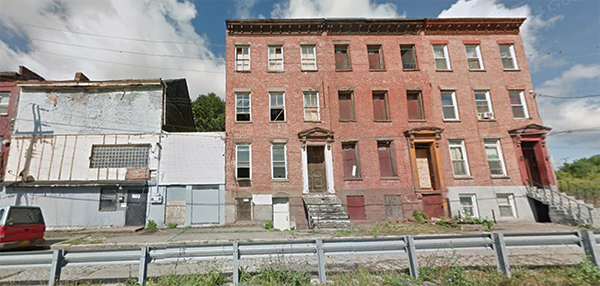 800-804 Broadway - Albany, NY
Albany, NY According to The Community Preservation Corp., and project developer 800 Broadway LLC, $1.53 million in financing for the housing and community revitalization project at 800-804 Broadway has been placed. The project is a complete gut-rehabilitation of the four historic properties into 15 one- and two-bedroom apartments. The rehabilitation of 800-804 Broadway will turn a formerly blighting influence into a long-term resource of stable housing and serve as a catalyst for the ongoing revitalization of the larger Arbor Hill neighborhood.
“Small buildings like these are the backbone of communities throughout our state, often serving as a haven of natural affordability for low- and moderate-income families. At CPC, we understand that it’s not whether a project is large or small, it’s the positive impact it can have in anchoring a community, bringing additional investment to the area, and giving people stable and sustainable housing opportunities,” said Rafael Cestero, president and CEO of CPC. “We’ll always be there for developers like 800 Broadway LLC and our partners in local government to support their efforts to breathe new life into underserved neighborhoods.”
“The redevelopment and historic preservation of these buildings is critical to the revitalization of the ‘New Broadway,’ and will play a key role in connecting Downtown Albany and the Warehouse District,” said Patrick Chiou of 800 Broadway LLC. “It’s been great working with a finance company like CPC that understands what we’re trying to accomplish in the community, and has the tools and flexibility to get us there.”
“As trustee of the state pension fund, securing a sound investment return for the more than one million members, retirees and beneficiaries is my priority. The Community Preservation Corp. has established itself as a non-profit organization that specializes in affordable housing and community revitalization. This partnership with CPC will provide a return to our fund and enhance the quality of housing in Albany,” said state comptroller Thomas DiNapoli.
The total development cost of the project is $2 million. The $1.53 million in funding placed is being provided by CPC as a construction loan and SONYMA-insured permanent loan financed through CPC’s agreement with the New York State Common Retirement Fund. The fund, which is the third largest public pension plan in the country, is administered by New York state comptroller Thomas DiNapoli. The remainder of the financing will consist of developer equity. Additionally, the city is providing a 485A tax abatement, which will aid in the project’s affordability. The developer will also seek federal and state historic tax credits, which will be claimed after the construction is completed.
In keeping with the developer’s intent to apply for historic tax credits, the gut-rehabilitation of 800-804 Broadway will restore the property to its historic standards. The scope of the renovation work includes, but is not limited to: installing new structural elements such as floors and exteriors, electrical, plumbing, flooring, sheetrock, heating, windows and roof replacement, paving, and landscaping. The development will also include 800 to 1,000 s/f of off-street parking in two adjacent lots.
Rents of the newly renovated apartments will be affordable to New Yorkers earning between 60%-80% of area median income, or $1,200-$1,475, which is in keeping with the average income and renter demographic of the community.
The city has identified Arbor Hill as a key focus area and has been committed to its redevelopment, having dedicated more than $75 million towards its revitalization. This has included 200 new or rehabilitated housing units, 79,000 square feet of new retail and community service spaces, an established Neighborhood Association, and new and improved parks.
800 Broadway is the first renewal project on its block, and CPC’s latest investment in revitalization projects in the Capital Region. Recent projects include 151 Henry Johnson Boulevard, the gut-renovation of an eight-unit, mixed-use building in Albany, and 733 Broadway, the renovation of a 29-unit apartment building located near the 800 Broadway project. Since 1993, CPC has invested $671 million to support 403 housing projects with a total of 14,706 units in the Capital Region.
Tags:
Brokerage
MORE FROM Brokerage

Meridian Capital Group arranges 10-year retail lease for Mess at 236 West 10th St.
Manhattan, NY According to Meridian Capital Group, Jordan Langer, Noam Aziz and Carson Shahrabani of the firm’s retail leasing team have arranged a five-year lease at 236 West 10th St. in Greenwich Village


.jpg)


Columns and Thought Leadership

AI comes to public relations, but be cautious, experts say - by Harry Zlokower
Last month Bisnow scheduled the New York AI & Technology cocktail event on commercial real estate, moderated by Tal Kerret, president, Silverstein Properties, and including tech officers from Rudin Management, Silverstein Properties, structural engineering company Thornton Tomasetti and the founder of Overlay Capital Build,

Behind the post: Why reels, stories, and shorts work for CRE (and how to use them) - by Kimberly Zar Bloorian
Let’s be real: if you’re still only posting photos of properties, you’re missing out. Reels, Stories, and Shorts are where attention lives, and in commercial real estate, attention is currency.

Strategic pause - by Shallini Mehra and Chirag Doshi
Many investors are in a period of strategic pause as New York City’s mayoral race approaches. A major inflection point came with the Democratic primary victory of Zohran Mamdani, a staunch tenant advocate, with a progressive housing platform which supports rent freezes for rent

Lasting effects of eminent domain on commercial development - by Sebastian Jablonski
The state has the authority to seize all or part of privately owned commercial real estate for public use by the power of eminent domain. Although the state is constitutionally required to provide just compensation to the property owner, it frequently fails to account
.gif)