



News:
Owners Developers & Managers
Posted: January 11, 2022
New York: The bustling hub that still struggles with poor cell reception - by Jon Mykrantz
 Whether you’re walking down a crowded Manhattan sidewalk, doing some shopping along Fashion Avenue, or even sitting in your apartment trying to get work done, local New Yorkers and visitors share the same cellular experience—poor cell reception and inconsistent connectivity.
Why There are Problems with Cell Reception in the City
Lackluster cell reception isn’t surprising given the sheer number of residents and visitors. New York City accommodates more than 8 million residents and 66 million visitors annually. The latest data shows that there are roughly 349 FCC-registered cell towers in New York City. That’s an astronomical number of people trying to connect to a cellular device and a relatively small number of cell towers to accommodate the ever-growing population and bandwidth needs.
In addition, chronically poor cell reception and connectivity issues occur due to the volume of buildings, often high-rises, and other obstacles that exist in the city between a given cell tower and city-goers. New York City boasts more than one million buildings itself. Many of these buildings are made of thick walls of cement, steel, and other materials that physically block cell signals from making their way inside.
One thing is for certain: New Yorkers and visitors expect cell reception, and a fast connection at that. Gone are the days when poor or even no cell reception was an acceptable standard. Especially on the heels of a global pandemic that has shifted a huge working population to remote work, quick and reliable cell reception, with 5G speed, is the new normal. Building tenants expect the same. Residential tenants will be more likely to renew their leases if they are pleased with their own cellular experience. Retailers and business tenants will naturally gravitate to spaces that provide a seamless digital experience for them, as well as their employees and customers. Not only that, but a property owner that has incorporated a reliable and fast cell connection can use that amenity as a competitive advantage and a market differentiator to attract customers.
Poor Cell Connectivity Outside of New York City
One might expect that outside of the city, cell reception would be better, but that’s not necessarily the case. Upstate New York has a reputation for several cellular dead zones. A lack of cell towers, as well as a lack of presence from America’s major cellular carriers, have resulted in large patches of roadways and towns where there’s hardly any cell reception at all.
How Property Owners Can Provide Good Cell Reception
There are certainly measures property owners can put in place to vastly improve a cellular experience within their spaces. Cellular reception technology has come a long way in recent years, and property owners can implement technology that does not require expensive hardware or major building renovations.
One affordable way to improve 5G speeds in a property is to utilize cellular repeater technology. Cellular repeaters harness an outside cell signal, amplify, and then distribute the improved cell signal within buildings. Professionals work with property owners to plan a design that distributes the maximum cell signal within a building. This solution is inexpensive and can be implemented in a matter of days.
One company at the forefront of cellular communications technology is WilsonPro. WilsonPro has created and implemented cellular repeater solutions for businesses across the country, including many in New York City and surrounding areas. One property WilsonPro helped improve cell reception for is the Jersey City Urby Building (JCUB), a luxury residential tower in Jersey City, N.J.
Comprising 72 floors of apartments, the JCUB was built to be extremely energy efficient, but the building’s eco-friendly materials blocked cell signal. Soon after opening, management received multiple complaints regarding a lack of cell service. JCUB ended up installing four WilsonPro cell signal repeaters on each floor that would evenly distribute cell reception. WilsonPro repeaters work for all cellular carriers at once and were the ideal choice in the JCUB.
WilsonPro also helped provide premium cell reception for New York’s Fashion Week. Tweeting, texting, posting, and live streaming are key to hosting a successful Fashion Week. But a few years ago, even making a simple phone call was nearly impossible in the steel and concrete structure that houses Fashion Week — Skylight Modern. The production company behind New York Fashion Week contacted WilsonPro to look into cost-effective cellular repeater solutions that could guarantee indoor coverage in a building of that size. New York Fashion Week ended up adding WilsonPro repeaters to the building and immediately saw a boost in cell reception. Those promoting Fashion Week and event-goers alike were able to fully utilize their cell phones without any connectivity issues within the building.
Cellular repeater technology may not be the answer for every property owner. Whatever property owners decide, it’s worth examining their portfolio of real estate and determining which buildings need better cellular experiences, and being proactive in implementing the best solutions. It’s an investment that will offer payoff for years to come.
Jon Mykrantz is the vice president of enterprise sales at Wilson Electronics.
MORE FROM Owners Developers & Managers
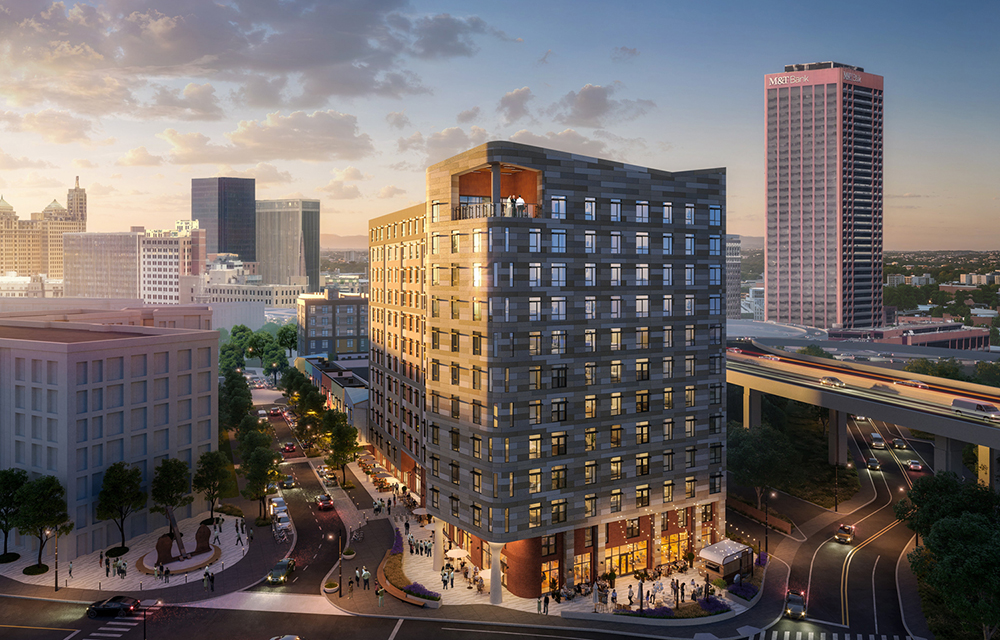
Habitat, Duvernay + Brooks and Buffalo Municipal Housing close on 254-unit first phase redev. of Marine Drive Apts.
Buffalo, NY The Habitat Company has closed on Marine Drive Apartments, officially setting in motion the redevelopment of the historic waterfront site. The project, undertaken by Habitat in partnership with Duvernay +



.gif)


Quick Hits
.gif)
.jpg)
Columns and Thought Leadership

Strategies for turning around COVID-distressed properties - by Carmelo Milio
Due to the ongoing pandemic, many landlords are faced with an increasing number of distressed properties. The dramatic increase in unemployment and reduction in income for so many has led to a mass exodus out of Manhattan, an increase in the number of empty rental units

The CRE content gap: Why owners and brokers need better digital narratives in 2026 - by Kimberly Zar Bloorian
As we head into 2026, one thing is clear: deals aren’t won by who has the best asset; they’re won by who presents it best. Yet many owners, operators, and brokers are entering the new year with outdated photos, inconsistent branding, and limited digital presence. This
.gif)