



News:
Owners Developers & Managers
Posted: March 3, 2020
Mixed-use developments raise the bar for affordable housing projects - by Walter Marin

Marin Architects
In New York City, rent and the cost of living continues to escalate and residents are seeking affordable neighborhoods with the same access to transportation, schools, and shopping as their more expensive counterparts. This has generated interesting real estate opportunities that we at Marin Architects have witnessed over the past number of years —a very specific type of marriage between the commercial and the residential in mixed-use properties. This combination enhances the value of the property, attracts new residents, and offers affordable housing with a refreshing design edge.
What’s the Problem?
New York City’s shortage of affordable housing has reached a crisis point. Mayor Bill de Blasio’s administration’s response to a concerning housing crisis was to incentivize the affordable housing by allowing for extra Floor Area Ratio (FAR) in the outer boroughs. However, in Manhattan Core, the same scenario has not played out as planned. In recent years, the city quietly reduced the FAR in Manhattan Core, as it forced developers to introduce inclusionary housing into their buildings. Unfortunately, the cost of property and the inclusionary housing balance have not really been successful because of the lower FAR, which makes building affordable housing difficult. The significant limit due to square footage reduces any good ratios to create value. If there could be a better FAR, the odds would increase in building market rate housing in Manhattan Core. There are also incentives, but this generally reduces the market rate. In short, 100 units in a building could be market rate, but now 20 units in that same building also need to be affordable housing. So developers lost the nickel that made the deal possible. This process naturally pushed the affordable housing developments outside of Manhattan Core to where affordable housing is incentivized with extra FAR.
The Role of Retail
As developers and city residents continue to be forced to move outside of the city’s core into areas like Upper Manhattan and the Bronx in search of affordable housing, a typical tax payer building—one story retail buildings—saw the opportunity in implementing affordable housing into strategic lots around the neighborhood, which provides an excellent way for developers to increase the value of their properties.
Value is added by building housing on top of these ventures, allowing developers to automatically add a concentrated, built-in audience for that business, ultimately increasing the value of both residential and commercial enterprises seamlessly. With multiple incentives like extra FAR and tax breaks, developers and landowners are now motivated to incorporate an affordable housing component into their development that results in an emerging new type of relationship between residential and retail use.
Supermarkets, quickly emerging as the “new Starbucks” of the New York City retail landscape, are becoming a key retail player in this cooperative relationship between commercial and residential spaces, especially in areas like the Bronx. Developers are able to offer tenants in apartment buildings incentives to use the supermarket conveniently located in the building, which in turn enhances the value of the space for the developer.
Marin Architects’ portfolio includes both residential and commercial clients. However, as we experience the shift in this new trend, we encourage our clients to take advantage of this symbiotic relationship between retail and residential by incorporating the affordable component. We’re currently working on a number of projects in the Bronx that are market rate housing. With developments near Fordham University’s Bronx campus, these projects will seamlessly target and serve the student population with both residential and retail components, creating a synergy between both markets where tenants have access to fresh food and entertainment.
What’s Next?
So what’s next for those being priced out of the city? While many residents are leaving the city altogether due to the affordable housing crisis, others are trying to find the means to stay. The good news is that above these new retail initiatives, new affordable housing is popping up, and spaces with a strong sense of design at that. Aesthetics in neighborhoods are becoming more elevated than they were five to ten years ago, raising the expectation of quality of life in that neighborhood from the tenants—and drawing a higher caliber of retail business as a result. Now, with the quality of building development surpassing what we’ve seen in previous years, a renter doesn’t have to live on Park Ave. to feel a sense of pride in their neighborhood. As a neighborhood becomes more refined and residents start to benefit from its new amenities, the area becomes more desirable.
As our team at Marin Architects takes on design-minded yet affordable residential projects, it is important to keep in mind that everyone has a right to experience aesthetics and beauty where they live. Here, we always practice excellence in our work and emphasize that affordable doesn’t have to mean boring and ugly. Timeless aesthetic and thoughtful design is something that never goes out of style. We put a lot of effort into creating projects that will not look or feel dated in a few years.
If you walk down Central Park West, you will see buildings that all look different, yet all have the same sense of timeless aesthetic—you know that when you walk down the same street in 10 years, these buildings will still feel current. It is our hope that our affordable housing development projects in Upper Manhattan and the Bronx will have this same timeless feeling down the line. At the end of the day, we don’t want to end up like Pruitt-Igoe.
Walter Marin is principal at Marin Architects, New York, N.Y.
MORE FROM Owners Developers & Managers
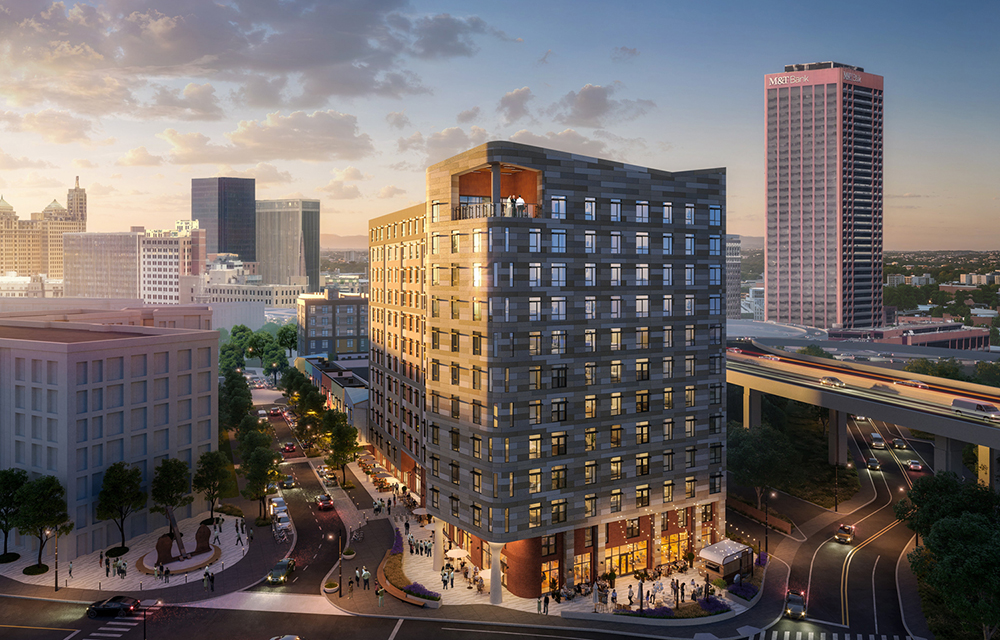
Habitat, Duvernay + Brooks and Buffalo Municipal Housing close on 254-unit first phase redev. of Marine Drive Apts.
Buffalo, NY The Habitat Company has closed on Marine Drive Apartments, officially setting in motion the redevelopment of the historic waterfront site. The project, undertaken by Habitat in partnership with Duvernay +


.gif)


.gif)
.jpg)
Columns and Thought Leadership

The CRE content gap: Why owners and brokers need better digital narratives in 2026 - by Kimberly Zar Bloorian
As we head into 2026, one thing is clear: deals aren’t won by who has the best asset; they’re won by who presents it best. Yet many owners, operators, and brokers are entering the new year with outdated photos, inconsistent branding, and limited digital presence. This

Strategies for turning around COVID-distressed properties - by Carmelo Milio
Due to the ongoing pandemic, many landlords are faced with an increasing number of distressed properties. The dramatic increase in unemployment and reduction in income for so many has led to a mass exodus out of Manhattan, an increase in the number of empty rental units
.gif)