



News:
Long Island
Posted: June 10, 2025
Levin Mgmt. adds Gap Factory store to Mayfair Shopping Center
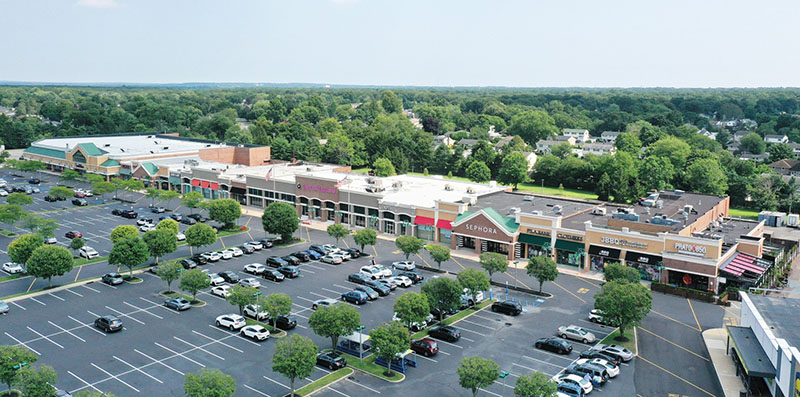
Commack, NY A new Gap Factory store is coming to Mayfair Shopping Center, as Levin Management Corp. (LMC) adds another brand in its focused retenanting effort at the Jericho Tpke. retail property. The commitment from this retailer continues a strong leasing run at the 222,000 s/f center.
Levin Management Corp. serves as exclusive leasing and managing agent for Mayfair Shopping Center. E.J. Moawad, Levin Management Corp. senior leasing representative, arranged the 12,800 s/f Gap Factory lease on behalf of property ownership, while Michael Friedman of Inline Realty represented the tenant.
The commitment marks Gap Inc.’s return to Mayfair Shopping Center, which previously housed a Gap store. Gap Factory offers an exclusive assortment of affordable, casual-chic clothing for men, women, children and babies. The new store will serve a wide demographic with stylish everyday essentials.
“Over the past several years, Mayfair Shopping Center has attracted a dynamic, relevant tenant mix that blends fashion, fitness, lifestyle and entertainment – with the goal to align the property’s offerings with the expectations and lifestyles of today’s shoppers,” said Moawad. “The Gap Factory lease is a direct result of this evolution and provides a strong endorsement of the property as one of Long Island’s most desirable retail destinations.”
Gap Factory continues a flurry of recent additions at Mayfair Shopping Center. This spring, experiential concepts Kids Empire and My Gym signed commitments, further diversifying the property’s offerings and enhancing its appeal for local families.
Gap Factory joins an increasingly fashion-focused tenant lineup that includes J.Crew Factory, Loft, Jos. A. Bank and PGA TOUR Superstore, which also features a large apparel section. National retailers Lidl, Planet Fitness and Sephora, further bolster the shopping center’s broad appeal, alongside a variety of dining options, specialty shops and service providers. The property serves a growing population of more than 209,000 residents within a five-mile radius and draws 2.3 million annual visitors, according to Placer.ai.
Tags:
Long Island
MORE FROM Long Island

Suffolk County IDA supports expansion of A&Z Pharmaceuticals
Hauppauge, NY The Suffolk County Industrial Development Agency (IDA) has granted preliminary approval of a financial incentive package that will assist a manufacturer in expanding its business by manufacturing more prescription (Rx) pharmaceuticals in addition to its existing over-the-counter





Quick Hits
.gif)
.jpg)
Columns and Thought Leadership

The evolving relationship of environmental consultants and the lending community - by Chuck Merritt
When Environmental Site Assessments (ESA) were first part of commercial real estate risk management, it was the lenders driving this requirement. When a borrower wanted a loan on a property, banks would utilize a list of “Approved Consultants” to order the report on both refinances and purchases.