



News:
Brokerage
Posted: March 21, 2011
Kaufman of Cryder Bankroff reps SL Green's 11,765 s/f lease to RMKB; Silver of Newmark Knight Frank reps tenant at 750 Third Avenue
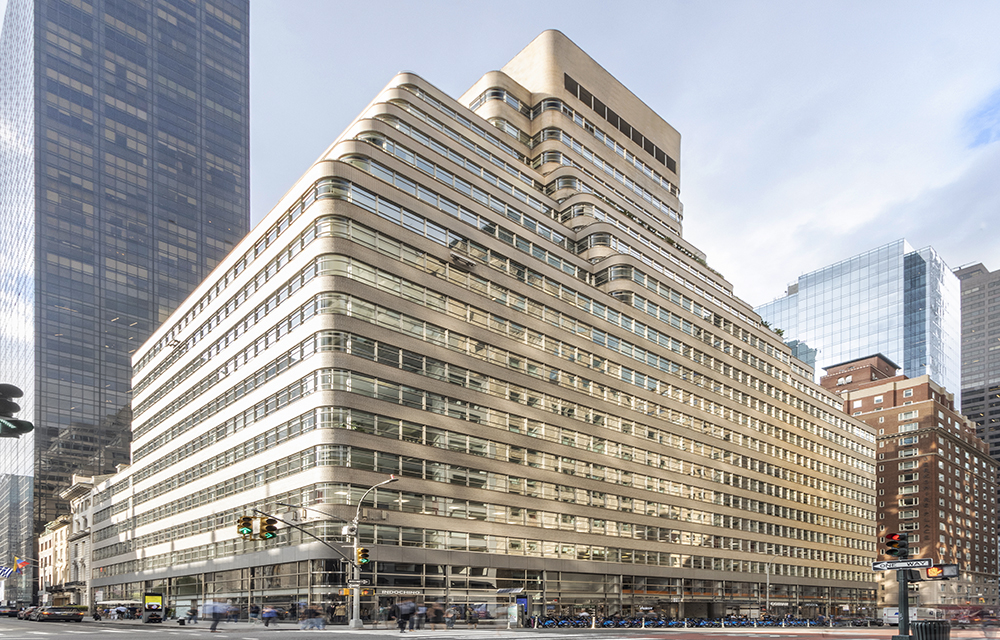
According to SL Green Realty Corp., the law firm of Ropers, Majeski, Kohn & Bentley (RMKB) has signed a 10-year, 11,765 s/f lease covering the entire 25th floor of 750 Third Ave. The 34-story, 857,354 s/f tower is part of the two-building 1.9-million s/f complex known as Grand Central Sq.
"We are delighted to welcome RMKB," said Steven Durels, executive VP, director of leasing and real property for SL Green. "This lease raises occupancy to 100% within the building."
Other major tenants at 750 Third Ave. include Eisner LLP, Schonbraun McCann LLP, Fairchild Publications, Marcum & Kleigman and Endurance Reinsurance. Robert Silver of Newmark Knight Frank represented RMKB and David Kaufman with Cryder Bankcroft acted on behalf of SL Green. The attorneys were: Stuart Bassel Esq. of Cyruli Shanks Hart & Zizmor for SL Green, and Michael Schneider Esq. of Cassin & Cassin LLP for RMKB.
Tags:
Brokerage
MORE FROM Brokerage
Meridian Capital Group arranges 10-year retail lease for Mess at 236 West 10th St.
Manhattan, NY According to Meridian Capital Group, Jordan Langer, Noam Aziz and Carson Shahrabani of the firm’s retail leasing team have arranged a five-year lease at 236 West 10th St. in Greenwich Village


.jpg)

Quick Hits

Columns and Thought Leadership

Strategic pause - by Shallini Mehra and Chirag Doshi
Many investors are in a period of strategic pause as New York City’s mayoral race approaches. A major inflection point came with the Democratic primary victory of Zohran Mamdani, a staunch tenant advocate, with a progressive housing platform which supports rent freezes for rent

Behind the post: Why reels, stories, and shorts work for CRE (and how to use them) - by Kimberly Zar Bloorian
Let’s be real: if you’re still only posting photos of properties, you’re missing out. Reels, Stories, and Shorts are where attention lives, and in commercial real estate, attention is currency.
AI comes to public relations, but be cautious, experts say - by Harry Zlokower
Last month Bisnow scheduled the New York AI & Technology cocktail event on commercial real estate, moderated by Tal Kerret, president, Silverstein Properties, and including tech officers from Rudin Management, Silverstein Properties, structural engineering company Thornton Tomasetti and the founder of Overlay Capital Build,

Lasting effects of eminent domain on commercial development - by Sebastian Jablonski
The state has the authority to seize all or part of privately owned commercial real estate for public use by the power of eminent domain. Although the state is constitutionally required to provide just compensation to the property owner, it frequently fails to account
.gif)