



News:
Brokerage
Posted: January 11, 2022
Hudson Valley Pattern for Progress appoints Bosch as president, CEO
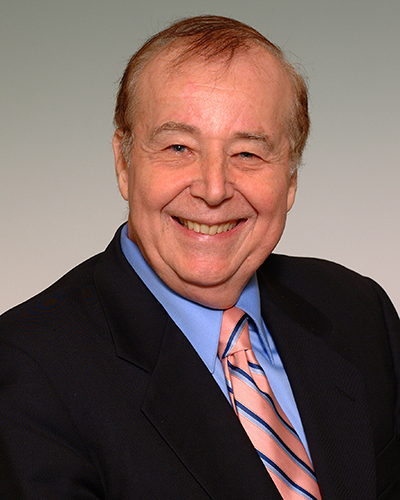
Newburgh, NY The board of directors at Hudson Valley Pattern for Progress appointed Adam Bosch to be the organization’s next president and CEO. Bosch worked as a journalist, college professor, and policy analyst across the region before joining the senior leadership team of the New York City water supply system. He will become Pattern’s sixth president since the organization was founded in 1965.
“I am excited to lead the team at Pattern for Progress during a time when the Hudson Valley faces so many challenges and opportunities,” Bosch said. “Our region has long trusted Pattern to develop plans and policies that are based on objective research, steering our communities toward a more prosperous and equitable future. I’m eager to amplify the work of Pattern’s talented staff by collaborating with leaders across the region who have the passion and authority to turn our research into action.”
“As Pattern enters into this next chapter of its history, I am excited to work with our new president and CEO Adam Bosch, our talented staff, and our committed and dedicated board of directors,” said Anthony Campagiorni, chair of the Pattern for Progress Board of Directors. “Adam is the right leader for Pattern at this moment. He has demonstrated success in developing actionable research for the region, he brings an exciting vision for the Hudson Valley and Pattern’s role in advancing that vision, and he demonstrates an inspiring passion that will undoubtedly attract new individuals and organizations to Pattern’s critical mission.”
“Adam is the perfect choice to lead Pattern for Progress at this important time for the Hudson Valley,” said Jonathan Drapkin, who stepped down as president of Pattern in December after leading the organization for 15 years. “Throughout his career, Adam has built many strong relationships across the region. Those who have worked with Adam respect and trust him for his savvy advice, creative thinking and ability to knit issues together. Adam is a thorough researcher and an articulate communicator who will help the region assess where it was before the pandemic, and where it needs to go in the future. Pattern was indeed fortunate to attract Adam to this vital position.”
Bosch will join Pattern for Progress on Jan. 31.
Bosch started his career as a journalist in the Hudson Valley. He covered public affairs, courts and the environment for the Wallkill Valley Times, the Times Herald-Record, and in the Albany bureau of The New York Times. His work also appeared in several regional and national magazines. His work in journalism earned six Associated Press awards for investigative reporting, depth reporting, and breaking news coverage. Bosch also served as an adjunct professor of journalism for 10 years at SUNY New Paltz.
After leaving journalism, Bosch joined Hudson Valley Pattern for Progress in 2012 as vice president of research and external affairs. Bosch authored reports on the adaptive re-use of closed school buildings across the region, New York’s tax cap, and an investigation of Rockland County’s budget deficit. His examination of Rockland County’s fiscal crisis, and recommendations to solve it, earned Pattern the President’s Award from the Rockland County Business Association.
For the past nine years, Bosch has served as director of public affairs for the New York City water supply system – the largest municipal water supply in the United States. In that role, Bosch was responsible for community outreach, intergovernmental affairs, education programs and more. He served as the primary liaison between New York City and federal, state and local officials across the Hudson Valley and Catskills for issues related to the city’s reservoir system and its infrastructure. His work focused on explaining the operation, maintenance and protection of the water supply system that serves nearly 10 million New Yorkers, especially as the city pursued several large capital projects to upgrade its dams, aqueducts and treatment facilities in the region.
Bosch currently serves as a volunteer on the Catskill Advisory Group, a state-appointed panel that is developing a strategic framework to tackle the challenges and opportunities of increased visitation to the Catskill Park. He also serves on a nationwide advisory group that is developing risk communications for perfluoroalkyl substances (PFAS) in drinking water supplies.
Bosch graduated from Wallkill High School. He earned his bachelor’s degree from SUNY New Paltz, and his master’s degree from Columbia University in the City of New York.
Tags:
Brokerage
MORE FROM Brokerage

Meridian Capital Group arranges 10-year retail lease for Mess at 236 West 10th St.
Manhattan, NY According to Meridian Capital Group, Jordan Langer, Noam Aziz and Carson Shahrabani of the firm’s retail leasing team have arranged a five-year lease at 236 West 10th St. in Greenwich Village





.jpg)


Columns and Thought Leadership
AI comes to public relations, but be cautious, experts say - by Harry Zlokower
Last month Bisnow scheduled the New York AI & Technology cocktail event on commercial real estate, moderated by Tal Kerret, president, Silverstein Properties, and including tech officers from Rudin Management, Silverstein Properties, structural engineering company Thornton Tomasetti and the founder of Overlay Capital Build,

Behind the post: Why reels, stories, and shorts work for CRE (and how to use them) - by Kimberly Zar Bloorian
Let’s be real: if you’re still only posting photos of properties, you’re missing out. Reels, Stories, and Shorts are where attention lives, and in commercial real estate, attention is currency.

Strategic pause - by Shallini Mehra and Chirag Doshi
Many investors are in a period of strategic pause as New York City’s mayoral race approaches. A major inflection point came with the Democratic primary victory of Zohran Mamdani, a staunch tenant advocate, with a progressive housing platform which supports rent freezes for rent

Lasting effects of eminent domain on commercial development - by Sebastian Jablonski
The state has the authority to seize all or part of privately owned commercial real estate for public use by the power of eminent domain. Although the state is constitutionally required to provide just compensation to the property owner, it frequently fails to account
.gif)