



News:
Long Island
Posted: July 8, 2025
HIA-LI and Long Island Economic Development Task Force spotlight South Bay Village project
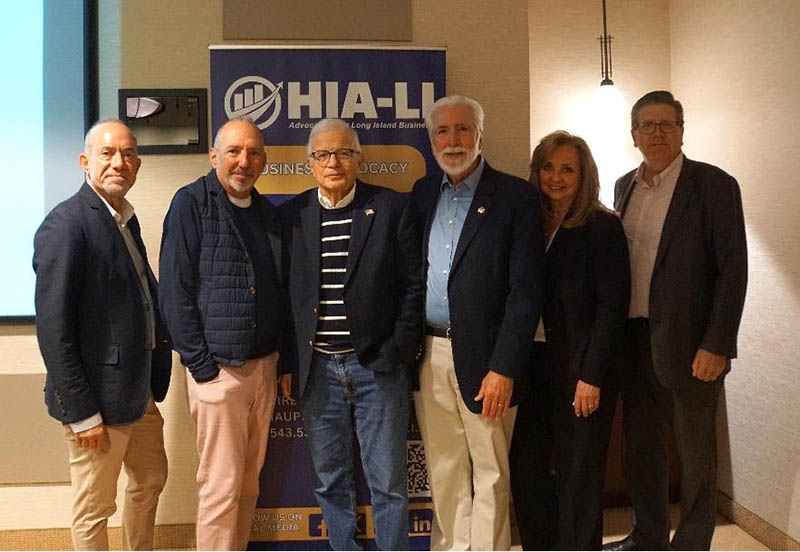
Hauppauge, NY HIA-LI’s Economic Development Task Force held an exclusive “The Process and The Project” presentation highlighting the proposed South Bay Village project from Rechler Equity Partners. The event brought together regional business leaders, elected officials, and community stakeholders to discuss the vision for the shuttered Island Hills Golf Course in Sayville.
The presentation featured three speakers: Gregg Rechler, managing partner of Rechler Equity Partners; Jim Morgo, president of Morgo Private Public Strategies; and Mike Dawidziak, of Strategic Planning and Consulting. Morgo and Dawidziak demonstrated how the lack of housing options for young workers and elderly empty nesters greatly contributed to Suffolk County’s housing crisis. They also reviewed the community engagement process that transformed Greybarn Sayville into South Bay Village. The redevelopment has been described as “bold yet balanced,” as the South Bay Village plan was shaped by input from an independent advisory committee composed of local leaders. The project seeks to reflect the character of the Sayville area while driving economic growth and promoting environmental stewardship.
Rechler provided a detailed description of the project. He emphasized the many community-inspired changes included in the South Bay Village project.
“The many iterations of this community over the years show how truly committed we are to ensuring that South Bay Village is a welcomed asset for the community,” said Rechler. “Feedback from community groups and residents has been instrumental in reimagining this property to meet the community’s existing character while also developing much-needed housing in various options.”
Key features of the revised South Bay Village plan:
• Reduced density: The number of homes has been reduced by 35% from the original plan to 890.
• Reconfigured roadways result in significant reductions in traffic impacts, especially on Lakeland Ave.
• Diverse housing options: The development includes 314 for-sale homes, 100% of which are age-restricted for residents aged 55 and older. Additionally, 173 of the 576 rental homes are age-restricted, resulting in 55% of all homes catering to this demographic.
• Community integration: The design features single-family “cottages” along the perimeter, smaller structures with a maximum height of three stories, and architectural styles that reflect the surrounding Sayville community.
• Environmental enhancements: Green spaces, buffers, and greenways throughout the site will be incorporated, along with cutting-edge stormwater management techniques, to improve groundwater and surface water quality, particularly benefiting the Great South Bay.
• Community benefits: Plans include providing sewage capacity for downtown Sayville, a downtown community arts center, a significant property tax generated revenue increase for the Connetquot School District, and reserving 10-15 affordable rental homes for adults with developmental disabilities in partnership with organizations like Autism Communities (AC).
Rechler Equity Partners and its development and community outreach team remain committed to ongoing dialogue with residents and stakeholders as the South Bay Village project concepts progress. This ensures that the growth continues to reflect the values and needs of the Sayville community. Moreover, Rechler has been meeting with various residents and community groups for over a decade to discuss their vision for the property.
“At HIA-LI, we recognize that Long Island’s long-term economic vitality depends on our ability to retain and attract talent, which means providing a range of housing opportunities for people at every stage of life,” said Terri Alessi-Miceli, president and CEO of HIA-LI. “Engaging in conversations that explore thoughtful, community-driven development is critical to ensuring our region remains a place where people can live, work, and thrive.”
HIA-LI is one of the region’s most powerful business associations and a recognized voice for Long Island development. For over 40 years, HIA-LI has helped Long Island businesses prosper through networking events, educational programs, and regional advocacy. It is also the steward of the Long Island Innovation Park at Hauppauge, the largest innovation park in the Northeast, home to over 1,300 companies and more than 55,000 workers.
Tags:
Long Island
MORE FROM Long Island

Suffolk County IDA supports expansion of A&Z Pharmaceuticals
Hauppauge, NY The Suffolk County Industrial Development Agency (IDA) has granted preliminary approval of a financial incentive package that will assist a manufacturer in expanding its business by manufacturing more prescription (Rx) pharmaceuticals in addition to its existing over-the-counter



Quick Hits
.gif)
.jpg)
Columns and Thought Leadership

The evolving relationship of environmental consultants and the lending community - by Chuck Merritt
When Environmental Site Assessments (ESA) were first part of commercial real estate risk management, it was the lenders driving this requirement. When a borrower wanted a loan on a property, banks would utilize a list of “Approved Consultants” to order the report on both refinances and purchases.