



News:
Long Island
Posted: March 11, 2025
Commercial Classroom: Understanding Tenants-in-Common and Delaware Statutory Trusts - by Edward Smith Jr.
1031 Tax Deferred Exchanges started over a hundred years ago, in 1921. Generally, when an investment property is sold, one must pay capital gains taxes. With the 1031 Exchange, if another property is bought at that time the capital gains taxes may be deferred to that property. Many investors do this repeatedly throughout their lifetime. They use the deferred taxes to add to their downpayment, allowing them to purchase larger properties with higher cash flows. However, the IRS has a lot of regulations about how this may be done. Taxpayers need to discuss this with their accountants, tax advisors or a Qualified Intermediary.
One of the biggest benefits of the 1031 Exchange is the “stepped-up basis”. If you are holding investment property that had been part of a 1031 Exchange, upon your death, your heirs get the Stepped-Up Basis. All of the built-in gain disappears upon the taxpayer’s death. What that means is the market value of the property at the date of your death would pass through your estate to your heirs. If they decide to sell the property for that same appraised value, there would be no capital gains tax due to be paid by your heirs.
One of the most difficult parts of doing a 1031 Tax Deferred Exchange is finding the right replacement property to purchase within the required 45 calendar day identification period and successfully closing the purchase within 180 calendar days.
Additional exchange opportunities of investment grade buildings are offered by many firms as Tenant-in-Common (TIC) or Delaware Statutory Trusts (DST). This can be very beneficial if for some reason the property selected to purchase cannot be closed on within the time limits. As both the TIC and DST can be completed in a relatively short period.
With Tenants-in-Common you own a pro-rate share of a building. In this structure each investor forms a single member limited liability company and the lender is financing individually with each investor. Each investor reaps their proportionate share of cash flow and eventual sale proceeds. But this structure can become convoluted as investors in the TIC must vote unanimously on all major investment decisions. It may become difficult to get all the co-investors to agree on an important decision.
One of the TIC rules is there can be no more than 35 co-investors. Practically speaking this limits the amount of funds available; say each investor contributes $100,000 and loans are secured for 50% of the value; the available funds to purchase are $7 million.
The Delaware Statutory Trust is governed by the Security and Exchange Commission (SEC) regulation D of the 1933 Securities Act and later defined in 2010 by the Dodd-Frank Act. This requires each investor to be an “Accredited Investor”. These are individuals whose net worth is in excess of $1 million dollars and/or have earned annual income of $200,000 for two or more years, with the expectation that this income level will continue. Typical DST’s will have 100 (sometimes more) investors, allowing them to raise significantly more capital and buy much larger buildings than with a TIC.
With the DST there are property sponsors who serve as Trustees of the Trust; they purchase the property and structure it as a securities DST, with detailed offering documents being written. Mortgage banking and property management are pre-arranged by the property sponsor. The investor owns an individual “Beneficial Interest” in the DST; there is no need to form individual LLC’s. The Trust owns 100% of the real estate so unlike the TIC there is only one loan and one borrower.
The property sponsor administers the Trust and operations of the property. Management is less complicated as individual co-investors or beneficiaries in the Delaware Statutory Trust are not permitted to vote. There are numerous other rules and regulations regarding DST operations.
Both TIC’s and DST’s can be set up as income producing properties; other offerings may have the strategy of directing all the income to pay down the loan, thereby increasing each taxpayer’s equity over the course of the holding period. Upon disposition of the asset the taxpayer can potentially use another 1031 Exchange and do this all over again!
This is just a brief outline of these types of investments; be sure you or your client discuss these opportunities with your accountant and an expert in either Tenants-in-Common or Delaware Statutory Trusts.
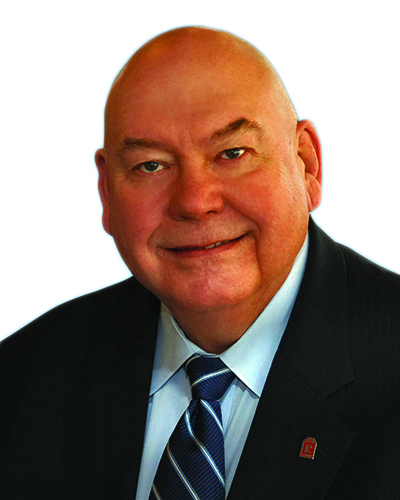
Edward S. Smith. Jr. CREI, ITI, CIC, GREEN. MICP, CNE, e-PRO and CIREC Program Developer, is a Commercial and Investment Real Estate Instructor, Author, Licensed Real Estate Broker, Speaker, and a Consultant to the Trade.
Tags:
Long Island
MORE FROM Long Island

Suffolk County IDA supports expansion of A&Z Pharmaceuticals
Hauppauge, NY The Suffolk County Industrial Development Agency (IDA) has granted preliminary approval of a financial incentive package that will assist a manufacturer in expanding its business by manufacturing more prescription (Rx) pharmaceuticals in addition to its existing over-the-counter





Quick Hits

.jpg)
Columns and Thought Leadership

The evolving relationship of environmental consultants and the lending community - by Chuck Merritt
When Environmental Site Assessments (ESA) were first part of commercial real estate risk management, it was the lenders driving this requirement. When a borrower wanted a loan on a property, banks would utilize a list of “Approved Consultants” to order the report on both refinances and purchases.