



News:
Owners Developers & Managers
Posted: February 7, 2017
Architects apprise the new Presidential administration
 David Piscuskas, FAIA, LEED AP, AIA New York and 1100 Architect
By David Piscuskas, FAIA, LEED AP
Less than two weeks into the new presidential administration, there’s evidence of actions on policies that may – and in certain cases, will – challenge the values that underpin many of our practices and that our organization seeks to protect. It is both important and appropriate now to reaffirm those values as we aim to engage, dialogue, and work cooperatively and collaboratively with each other.
On behalf of AIA New York, I reiterate to our membership and extended community our fundamental commitment to providing shelter and protecting the safety and well-being of all people. Civil dialogue, reciprocal respect, and the protection of human rights are essential to our activities and are vital characteristics of the profession. We believe in inalienable rights, regardless of creed or nation of origin, gender or sexual orientation, language or skin color.
We believe in equity in design and its benefits to all. Architecture is a civic art that seeks cultural and societal benefit. By extension, we support and are aligned with initiatives that serve to endow and strengthen education and the arts, and their contribution to our cultural heritage as a nation. In our public schools, architectural concepts should be included in STEM education. These concepts promote learning across disciplines and teach students how design and architecture impact their lives. In higher education, architecture programs should be affordable for all. Millions of young people aspire to help their communities through architecture but lack of opportunity and the crushing cost of education hold them back. Consequentially, the design and construction industries face a severe shortage of talent.
As always, we remain committed to mitigating climate change and protecting New Yorkers from its unavoidable consequences. We will continue to advocate on behalf of evidence-based best practices in energy conservation and sustainable high-performance building design. Sustainability is an integral component of the design process and should be fully integrated with all aspects of a building, including form, function, site, structure, systems, and construction. Our local, state, and federal governments should serve as leaders and examples to follow with regards to the construction of energy-efficient buildings and green retrofitting.
Finally, it is incumbent on the federal government to acknowledge the primacy of the nation’s public housing system and take steps to ensure its survival. Lack of affordable housing disproportionately affects the most vulnerable members of our society, including children, the elderly, veterans, and the homeless – and has been proven to have pervasively negative long-term health and socioeconomic consequences. To say nothing of elevated health risks and shortened life-expectancy of living on the streets, at least 700 homeless persons die each year in the United States from hypothermia alone. AIA New York believes decent housing should be viewed as a vital part of the nation’s infrastructure, a resource requiring the same level of government concern and investment as roads and bridges, and yes, our collective national security.
David Piscuskas, FAIA, LEED AP is the 2017 president of AIA New York and the founding partner at 1100 Architect, New York, NY.
MORE FROM Owners Developers & Managers
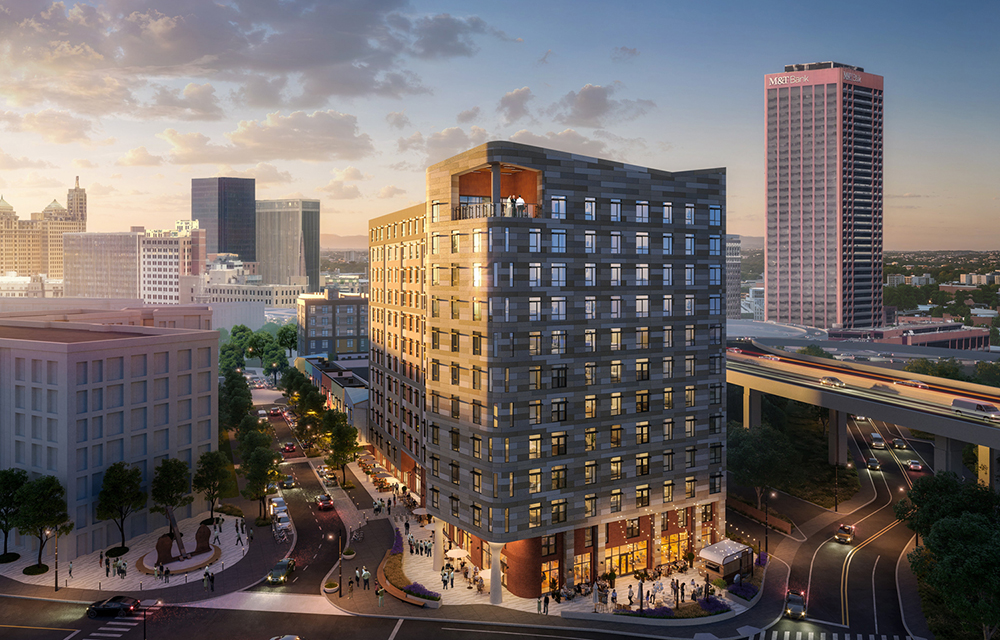
Habitat, Duvernay + Brooks and Buffalo Municipal Housing close on 254-unit first phase redev. of Marine Drive Apts.
Buffalo, NY The Habitat Company has closed on Marine Drive Apartments, officially setting in motion the redevelopment of the historic waterfront site. The project, undertaken by Habitat in partnership with Duvernay +


.gif)

Quick Hits
.gif)
.jpg)
Columns and Thought Leadership

The CRE content gap: Why owners and brokers need better digital narratives in 2026 - by Kimberly Zar Bloorian
As we head into 2026, one thing is clear: deals aren’t won by who has the best asset; they’re won by who presents it best. Yet many owners, operators, and brokers are entering the new year with outdated photos, inconsistent branding, and limited digital presence. This

Strategies for turning around COVID-distressed properties - by Carmelo Milio
Due to the ongoing pandemic, many landlords are faced with an increasing number of distressed properties. The dramatic increase in unemployment and reduction in income for so many has led to a mass exodus out of Manhattan, an increase in the number of empty rental units
.gif)