



News:
Brokerage
Posted: October 27, 2015
1031 exchange business appears to be thriving again; timing and preparation are important - by Michael Packman
I just came back from the FEA conference; the largest Qualified Intermediary (QI) organization in the country, and the 1031 business appears to be thriving again. When it comes to completing an exchange, timing and preparation are of the utmost importance. For those in which real estate is their primary business, it can be challenging at times, but for those who only own a property or two, it can be extremely difficult. When selling a property that has been a major investment in someone’s life and has been owned for many, many years, adding the complications of completing an exchange, as well as meeting the strict and short guidelines imposed, the task can seem daunting. Without proper planning, you can end up with a huge tax bill or in a property you don’t really want to own.
In the New York market today, there are additional challenges. Its clearly still is a sellers market. However, for a seller that has a highly appreciated asset and needs to complete a 1031 exchange, he/she now becomes a buyer in this same market. With the appreciation we have seen and bidding wars still breaking out, this can create quite a challenge for the exchanger. In addition to the risks associated with buying anything at very low cap rates, which in the best neighborhoods are now in the 2-4 range, we also now have the very real risk of rising interest rates. Those that are anticipating this rise in rates over the near term being imminent, consider a property asking a 5 cap to really be a 7. That can make most of what they see in the city to be fairly unattractive. Those that have highly appreciated assets are constantly expanding their horizons further and further outside of the city. First it was Brooklyn and Queens, and then those areas within a few hours drive. This year we have seen a large spike in interest for alternative ways to satisfy exchanges. Triple net properties all over the country with credit tenants have reached peak prices. Multifamily returns have in some areas exceeded those in 2006. The Delaware Statutory Trust market is having one of, if not its largest year ever.
If you are looking at exchanging out of a property, I would offer two pieces of advice. First, give yourself as much time as possible to prepare and when evaluating your options, remember the downturns. Everyone seems to forget how devastating the last one was until we are in the midst of another one. I started in the investment business twenty-one years ago and in just that short span have seen multiple cycles across real estate, the economy, and the stock market. What I have found from both my own experience and having the good fortune of being around some of the greatest minds in the financial and real estate worlds, is evaluate the downside first. Examine a purchase from every way it can go wrong first, and then look at the upside. In any investment, it’s all risk/reward ratios. We all have a tendency to compare to the last three or five years, and if that was all rosy, that’s what we expect to continue. I don’t have a crystal ball, but I do know that some of the investors that are at the top of the industry are not buying at the extremely low cap rates we are seeing and instead are looking at value add. Evaluate that new purchase on not what has been recently happening, but instead what happens if the economy takes a turn for the worse, or interest rates rise a couple points or more. Ask yourself “...would I still be happy owning that property if...” When you look at the transaction from these viewpoints, would you have been better off keeping the one you own, paying the taxes, or finding another way?
Keep in mind, all asset classes don’t always move together. One option may be to look at one that has taken a big dive recently. Oil for instance, when it was $100 per barrel, everyone wanted to invest in it and the talk was more of $150 or $200. Now that it’s plummeted more than 50%, most are worried about $30. Please remember that I don’t have a crystal ball and don’t know where oil prices are going. However, some of the savviest in the oil industry believe this may be a huge opportunity for the long term. Many people don’t realize that you can exchange into certain oil and gas interest to satisfy an exchange, but if structured correctly, you can sell just about any type of real estate and buy into oil and gas. Finding a value add property is another option. If it needs some work or has some vacancy, you’re not paying todays rates for tenants that aren’t there. If the market keeps going, you’ll be able to get more for the work you do and if it goes the other way, you likely insulated yourself, at least to an extent. Another option that we’ve seen a significant interest in as of late, is the deferred sales trust, which allows you to diversify out of real estate altogether and still defer the gains. If you are considering an exchange, the most important thing you can do for yourself is plan as much as possible and don’t rush into anything.
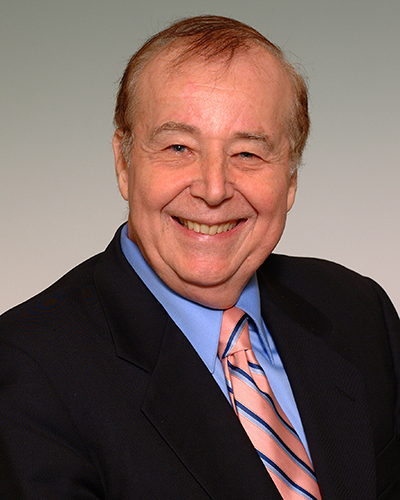
Michael Packman is chief executive officer at PNI Capital Partners, Westbury, N.Y.
PNI Capital Partners Inc. is a branch office of, and offers securities though Axiom Capital Management, Inc. member FINRA/SIPA. PNI Capital Partners Inc. and Axiom Capital Management, Inc. are independent of each other. PNI Capital Partners does not offer tax advice. Please consult your tax professional for tax advice.
Tags:
Brokerage
MORE FROM Brokerage

Meridian Capital Group arranges 10-year retail lease for Mess at 236 West 10th St.
Manhattan, NY According to Meridian Capital Group, Jordan Langer, Noam Aziz and Carson Shahrabani of the firm’s retail leasing team have arranged a five-year lease at 236 West 10th St. in Greenwich Village





.jpg)


Columns and Thought Leadership

Behind the post: Why reels, stories, and shorts work for CRE (and how to use them) - by Kimberly Zar Bloorian
Let’s be real: if you’re still only posting photos of properties, you’re missing out. Reels, Stories, and Shorts are where attention lives, and in commercial real estate, attention is currency.

Strategic pause - by Shallini Mehra and Chirag Doshi
Many investors are in a period of strategic pause as New York City’s mayoral race approaches. A major inflection point came with the Democratic primary victory of Zohran Mamdani, a staunch tenant advocate, with a progressive housing platform which supports rent freezes for rent
AI comes to public relations, but be cautious, experts say - by Harry Zlokower
Last month Bisnow scheduled the New York AI & Technology cocktail event on commercial real estate, moderated by Tal Kerret, president, Silverstein Properties, and including tech officers from Rudin Management, Silverstein Properties, structural engineering company Thornton Tomasetti and the founder of Overlay Capital Build,

Lasting effects of eminent domain on commercial development - by Sebastian Jablonski
The state has the authority to seize all or part of privately owned commercial real estate for public use by the power of eminent domain. Although the state is constitutionally required to provide just compensation to the property owner, it frequently fails to account
.gif)