



News:
Construction Design & Engineering
Posted: November 11, 2014
Winter is coming! Prepare your job site and workplace against fire!
During the cold season, many job sites utilize portable space heaters which can increase the risk of electrical fire. Building owners are responsible for the development and maintenance of an effective fire protection and prevention program at occupied buildings and building job sites throughout all phases of the construction, repair, alteration, or demolition work. Employers must ensure that fire protection and suppression equipment is available and operating properly at all times.
There are several resources out there dedicated to educating the workforce about safe work practices when it comes to fire protection and prevention. With OSHA being the most comprehensive, local and regional jurisdictions may have additional requirements. All building owners and employers must adhere to city and federal regulations pertaining to fire safety.
According to the Bureau of Labor Statistics' Census of Fatal Occupational Injuries Charts (1992- 2013), "Fires and explosions accounted for 3% of workplace fatalities in 2013." Workplace fires can be prevented if employers and building owners educate their workers on the different classes of fire, type of fire extinguishers, and ways to properly and safely put out fires.
There are five types of fire classifications:
1. Class A fire is an ordinary combustible fire involving blazes using fuels such as wood, paper, plastic, rubber, and cloth. The fire extinguisher symbol for this class of fire is a green triangle with the letter A in the center. A wood pile is also used to symbolize Class A fires.
2. Class B fire involves flammable and combustible liquids or gases. This includes any hydrocarbon or alcohol-based liquids that will support combustion. A red square with a capital B and a pictogram with a fuel can and fire are commonly used to symbolize Class B fires.
3. Class C fire is one that involves energized electrical equipment. A blue circle with a capital C and a pictogram with an electrical cord and plug, and a flaming receptacle are commonly used to symbolize Class C fires. When the fuel source is de-energized, it can then be classified as A, B, or D.
4. Class D fire is one that involves combustible metals. Examples of these types of metals are: zirconium, titanium, potassium, and magnesium. A yellow star with a capital D (no pictogram) is commonly used to symbolize Class D fires. Within this fire classification, the extinguishing agent may vary, and it must be compatible with the anticipated use.
5. Class K is for fires in unsaturated cooking oils in well insulated cooking appliances in commercial kitchens. Class K has no related symbol as of yet, but it can be identified by a pictogram of a flame in a frying pan. These extinguishers deliver the extinguishing agent in a fine mist onto the surface of the hot cooking oil.
Now that we have analyzed the different types of fires, let's venture into the types of extinguishers that are available and their benefits. The three most common types of extinguishers are:
* Water extinguishers, also known as APW extinguishers are used for Class A fires only. These fire extinguishers cool burning material. They are filled with water and pressurized with air. They essentially take the heat element out of a flame to extinguish it.
* Dry chemical extinguishers are filled with foam or powder and pressured with nitrogen. These extinguishers prevent the chemical reactions involving heat, fuel, and oxygen. The materials vary based on the type of dry chemical extinguisher you choose. Those labeled as "BC" are intended for B & C fires. Those labeled "ABC" indicate the ability to extinguish A, B & C fires.
* Carbon dioxide (CO2) extinguishers are filled with non-flammable carbon dioxide that is under extreme pressure. These extinguish fire by displacing oxygen from the materials it is meant for CO2 extinguishers do not leave a corrosive residue that can damage equipment. These are used for Class B & C fires only.
Fire extinguishers in all buildings and construction sites are required to be serviced and inspected by a fire protection service company at least annually. Kitchen suppression systems must be inspected biannually. Some jurisdictions require more frequent service for fire extinguishers.
It is important for building owners and employers to take fire safety preventive measures during the cold season but also educate their workers. Fire safety can save lives!
Katherine Depablos is the VP of operations for Safety Supplies Unlimited (SSU), a subsidiary of Total Safety Consulting, Bayonne, N.J.
MORE FROM Construction Design & Engineering
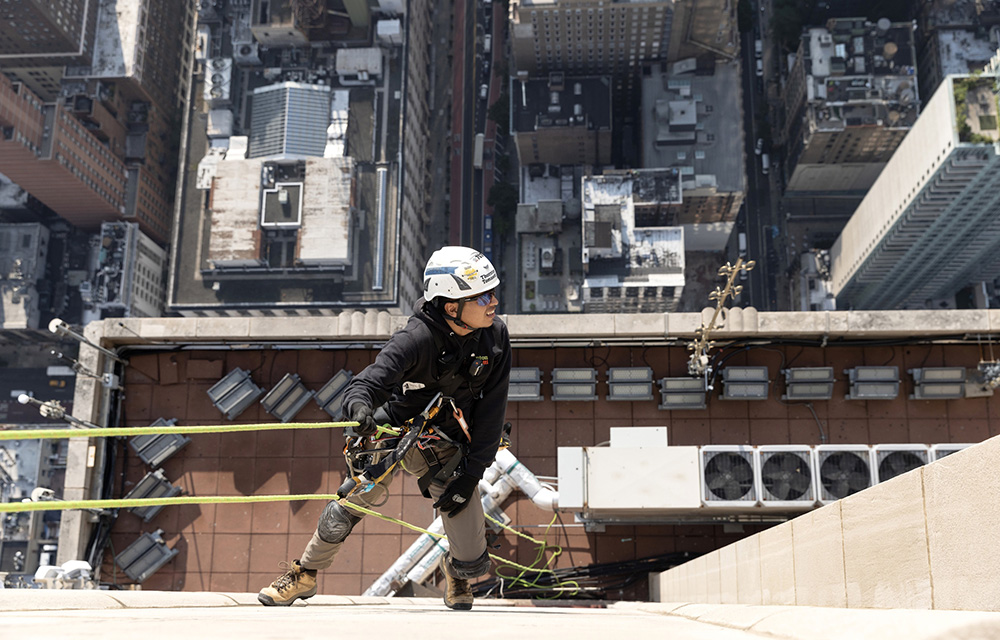
NYC mayor and DOB release comprehensive façade inspection and safety study conducted by Thornton Tomasetti
Manhattan, NY New York City mayor Eric Adams and New York City Department of Buildings (DOB) commissioner Jimmy Oddo released the full recommendations from a comprehensive engineering study conducted by global engineering firm Thornton Tomasetti




.gif)
.jpg)

Quick Hits
.gif)
.gif)