



News:
Construction Design & Engineering
Posted: September 30, 2025
Two landmark buildings reimagined into luxury developments with a design homage to history
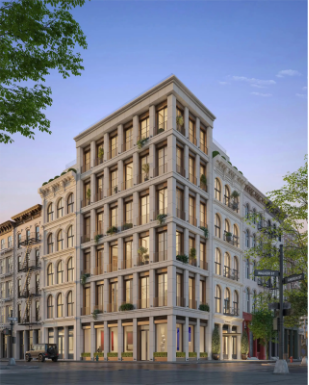
Rendering courtesy of SOMA
Manhattan, NY Two landmark buildings, 27 Sagasta in Madrid, Spain and 32 & 34 Walker St. in NYC, are ushering in a new era of preservation and refinement. Despite their distance across the globe, both properties are rewriting the playbook on what it means to play a part in history, while creating some of the most sought-after residences on both sides of the Atlantic.
32 & 34 Walker St., NY
In Tribeca, 32 & 34 Walker St. is undergoing a refined transformation by Urban Capital Group and Prosper Property Group. Approved by the Landmarks Preservation Commission, the newly constructed façade takes direct inspiration from the neighborhood’s 19th-century cast-iron architecture, echoing the industrial elegance that once defined this downtown enclave. The result is a building that feels deeply rooted in place, bridging the area’s past as a hub for textile mills and artist lofts with its present identity as one of the most sought-after residential neighborhoods in the city.
Inside, the vision shifts to contemporary luxury. Ceilings go up to 16 ft., oversized windows bring in natural light, full-floor layouts are designed with modern families in mind, along with a curated ground-floor retail to match the building’s aesthetic.
The development team, Urban Capital Group and Prosper Property Group, recognized Tribeca’s shift from bohemian enclave to global luxury capital.
From Madrid to Manhattan, 27 Sagasta and 32-34 Walker St. represent a new generation of luxury living, connected to their history, yet designed for today. Whether reimagining a historic Chamberí palace or shaping a bold new landmark in Tribeca, both developments reflect a growing appetite for homes that balance timeless character with modern sophistication.
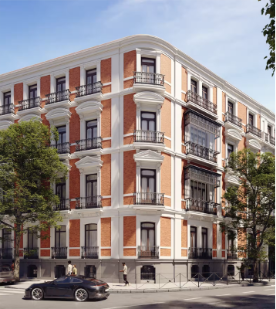
Rendering courtesy of Persepolis Investments
27 Sagasta, Madrid
In the Chamberí district, the Palacio Torre-Almirante is undergoing a transformation by Persepolis Investments, the private fund behind the restoration of this 1893 Neoclassical masterpiece. Originally built for the Viscount of Torre-Almirante, the four-story building at 27 Sagasta was designed by Eduardo de Adaro, one of Spain’s most revered architects, known for the Banco de España.
Now, the building is being reimagined into a limited collection of luxury residences, with a commitment to preserving its palatial bones. Think 16-ft. ceilings, decorative wooden coffered ceilings, grand marble foyers, original fireplaces, and sweeping balconies overlooking the Calle de Sagasta. One standout unit, the viscount’s former residence, features a private courtyard and over 1,700 s/f of refined living space, a $9.4 million testament to a time when architecture was as much about ceremony as function.
MORE FROM Construction Design & Engineering
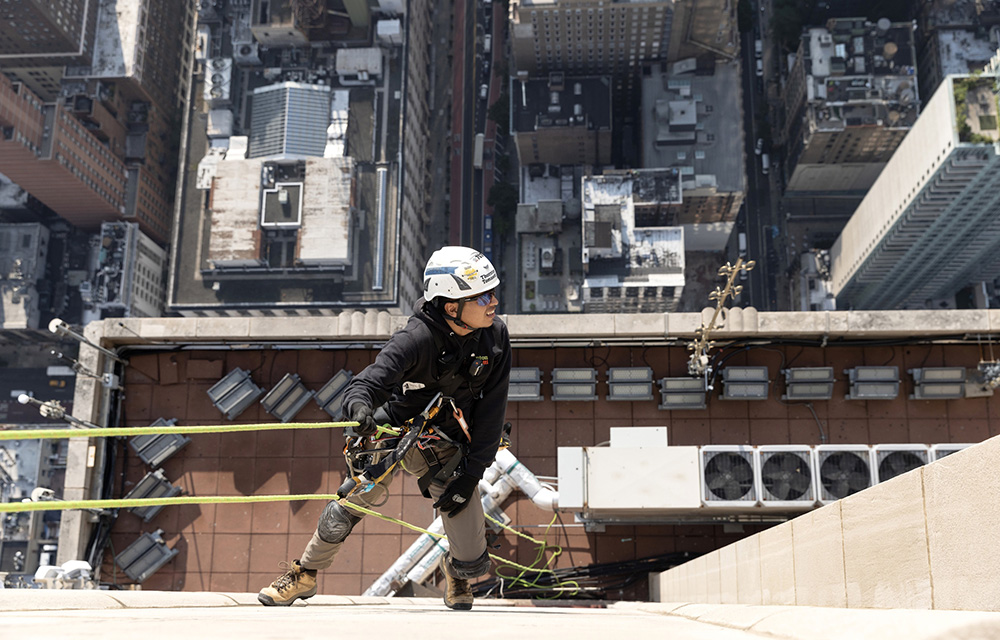
NYC mayor and DOB release comprehensive façade inspection and safety study conducted by Thornton Tomasetti
Manhattan, NY New York City mayor Eric Adams and New York City Department of Buildings (DOB) commissioner Jimmy Oddo released the full recommendations from a comprehensive engineering study conducted by global engineering firm Thornton Tomasetti



.gif)
.jpg)

Quick Hits
.gif)
.gif)