



News:
Brokerage
Posted: July 8, 2025
Tri-state capital migrates nationally amid regulation pressure - by Reese Weaver

New York tri-state multifamily investors are increasingly reallocating capital to less-regulated markets across the U.S. as rent control and legislative risk erode returns at home. With over 60% of New York City’s rental housing stock classified as rent-stabilized, the traditional value-add model — buying under-performing buildings, upgrading units, and raising rents — is now less viable. Investors face strict limits on rent increases, even after capital improvements, making it difficult to justify renovation costs.
The 2019 Housing Stability and Tenant Protection Act further curtailed landlord flexibility, limiting rent increases and vacancy bonuses. As a result, stabilized assets in New York City often trade at compressed cap rates with limited upside, while interest rates and operating costs have risen. Many institutional and mid-sized investors now view other United States markets as more attractive for capital deployment.
Nationwide, multifamily investment volume reached $28.8 billion in Q1 2025, up 33% year-over-year. New York tri-state firms contributed significantly to this growth, targeting markets in the Southeast, Midwest, Mountain West, and parts of the Mid-Atlantic — areas with no rent control and more favorable fundamentals.
With over $650 billion in multifamily debt maturing nationally by 2026, opportunities abound to recapitalize or acquire assets in growth markets where rents can adjust freely to reflect demand. The shift signals a long-term strategic pivot: New York tri-state investors are no longer just chasing yield — they’re avoiding regulation that caps upside and hinders reinvestment.
Reese Weaver is an associate in the national multifamily group of Besen Partners, Manhattan, N.Y.
Tags:
Brokerage
MORE FROM Brokerage
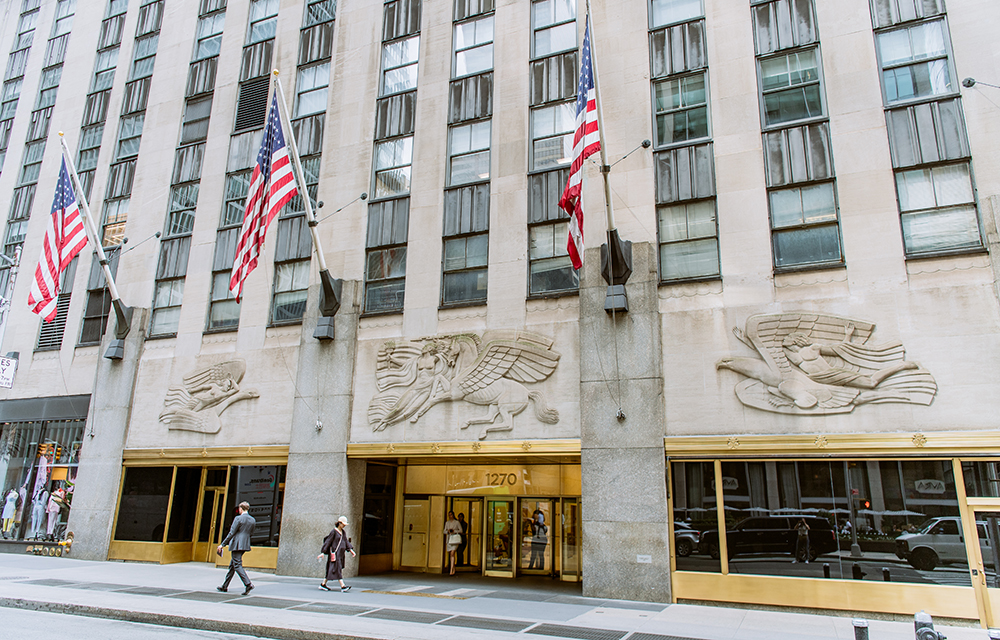
Horizon Kinetics relocates new headquarters to Tishman Speyer’s Rockefeller Center
Manhattan, NY According to Tishman Speyer investment boutique Horizon Kinetics Asset Management LLC will relocate its current New York office to 18,713 s/f on the 27th floor of 1270 Avenue of the Americas at



.jpg)

Quick Hits
.gif)
Columns and Thought Leadership
AI comes to public relations, but be cautious, experts say - by Harry Zlokower
Last month Bisnow scheduled the New York AI & Technology cocktail event on commercial real estate, moderated by Tal Kerret, president, Silverstein Properties, and including tech officers from Rudin Management, Silverstein Properties, structural engineering company Thornton Tomasetti and the founder of Overlay Capital Build,

Behind the post: Why reels, stories, and shorts work for CRE (and how to use them) - by Kimberly Zar Bloorian
Let’s be real: if you’re still only posting photos of properties, you’re missing out. Reels, Stories, and Shorts are where attention lives, and in commercial real estate, attention is currency.

Lasting effects of eminent domain on commercial development - by Sebastian Jablonski
The state has the authority to seize all or part of privately owned commercial real estate for public use by the power of eminent domain. Although the state is constitutionally required to provide just compensation to the property owner, it frequently fails to account

Strategic pause - by Shallini Mehra and Chirag Doshi
Many investors are in a period of strategic pause as New York City’s mayoral race approaches. A major inflection point came with the Democratic primary victory of Zohran Mamdani, a staunch tenant advocate, with a progressive housing platform which supports rent freezes for rent
.gif)