



News:
Brokerage
Posted: January 28, 2025
Top 2024 legal developments affecting New York’s commercial real estate industry - by Thomas Kearns

1. City of Yes. The city passed a large and complex revision to local codes to promote construction of new housing. The changes are significant - experts, municipal departments and developers will no doubt take many months to fully analyze the hundreds of pages of changes and how they impact on a particular parcel. Highlights of the changes include broadening the possible receiving sites for the sale of air rights from landmarked properties, increasing the permitted size of residential housing if affordable housing is included, reducing or eliminating parking requirements in certain neighborhoods, and reducing some standards for the minimum distances between buildings.
2. LLC Transparency Laws. While the federal LLC transparency statute continues to be litigated, New York amended its own copycat statute in 2024. The New York filings are presently scheduled to start January 1, 2026, with a deadline of January 1, 2027, for entities formed prior to 2026.Both statutes require disclosure of the ownership and management of LLCs.
3. NAR Settlement. After an adverse anti-trust verdict in Missouri, the National Association of Realtors (NAR) settled with the plaintiffs. While many New York real estate brokers are not members of NAR, the settlement will affect the New York market since many national brokerage companies have opted into the settlement. The settlement will require changes in the typical residential brokerage commission customs since listing brokers will no longer be able to require the seller to pay the commission for brokers hired by the buyer.
4. Good Cause Eviction. The free market rental housing market will be affected by 2024’s Good Cause Eviction Law which now governs New York City and any other jurisdictions that opt in. Under this law, landlords can remove a tenant from a residential unit only if there is good cause even after the expiration of a lease. Examples of good cause are nuisance and illegal use of the premises. The law also imposes rent increase caps and notice requirements on landlords. Unreasonable rent increases are those that are above the inflation index or 10%, whichever is lower, subject to adjustment for significant repairs. Exempt from the law are co-op’s and condo’s, seasonal rentals, and buildings with 10 units or less owned by small landlords or which are owner occupied.
5. Voting by Estates. Two recent decisions, one in Delaware (Gurney-Goldman v Goldman) and one in New York (Weinstein v Wallace), have raised doubts about the longstanding “pick your partner” principle in LLCs. Under that principle it was long thought that estates did not having voting rights after the death of an individual member in an LLC.The two decisions cast doubt on that understanding and hold that in the circumstances presented in the particular cases, the estates did in fact have certain voting rights.
Thomas Kearns is a partner with Olshan Frome Wolosky LLP, Manhattan, N.Y.
Tags:
Brokerage
MORE FROM Brokerage
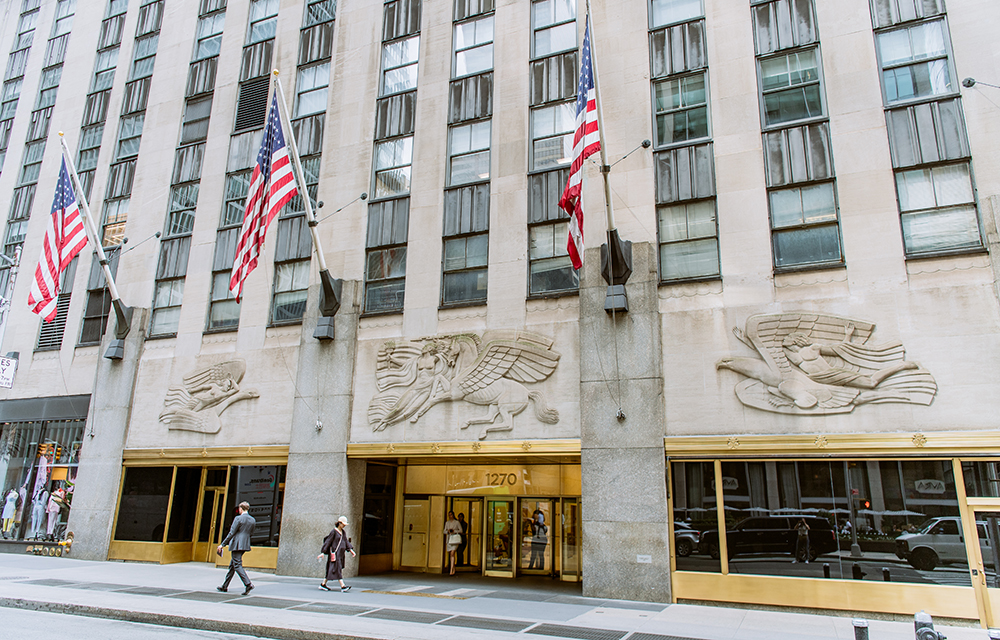
Horizon Kinetics relocates new headquarters to Tishman Speyer’s Rockefeller Center
Manhattan, NY According to Tishman Speyer investment boutique Horizon Kinetics Asset Management LLC will relocate its current New York office to 18,713 s/f on the 27th floor of 1270 Avenue of the Americas at

.jpg)

Quick Hits
.gif)
Columns and Thought Leadership

Strategic pause - by Shallini Mehra and Chirag Doshi
Many investors are in a period of strategic pause as New York City’s mayoral race approaches. A major inflection point came with the Democratic primary victory of Zohran Mamdani, a staunch tenant advocate, with a progressive housing platform which supports rent freezes for rent

Lasting effects of eminent domain on commercial development - by Sebastian Jablonski
The state has the authority to seize all or part of privately owned commercial real estate for public use by the power of eminent domain. Although the state is constitutionally required to provide just compensation to the property owner, it frequently fails to account

Behind the post: Why reels, stories, and shorts work for CRE (and how to use them) - by Kimberly Zar Bloorian
Let’s be real: if you’re still only posting photos of properties, you’re missing out. Reels, Stories, and Shorts are where attention lives, and in commercial real estate, attention is currency.
AI comes to public relations, but be cautious, experts say - by Harry Zlokower
Last month Bisnow scheduled the New York AI & Technology cocktail event on commercial real estate, moderated by Tal Kerret, president, Silverstein Properties, and including tech officers from Rudin Management, Silverstein Properties, structural engineering company Thornton Tomasetti and the founder of Overlay Capital Build,
.gif)