



News:
Construction Design & Engineering
Posted: September 26, 2023
Property of the Month: Wesbuilt Construction Managers and architect THIRLWALL complete 54D flagship fitness club
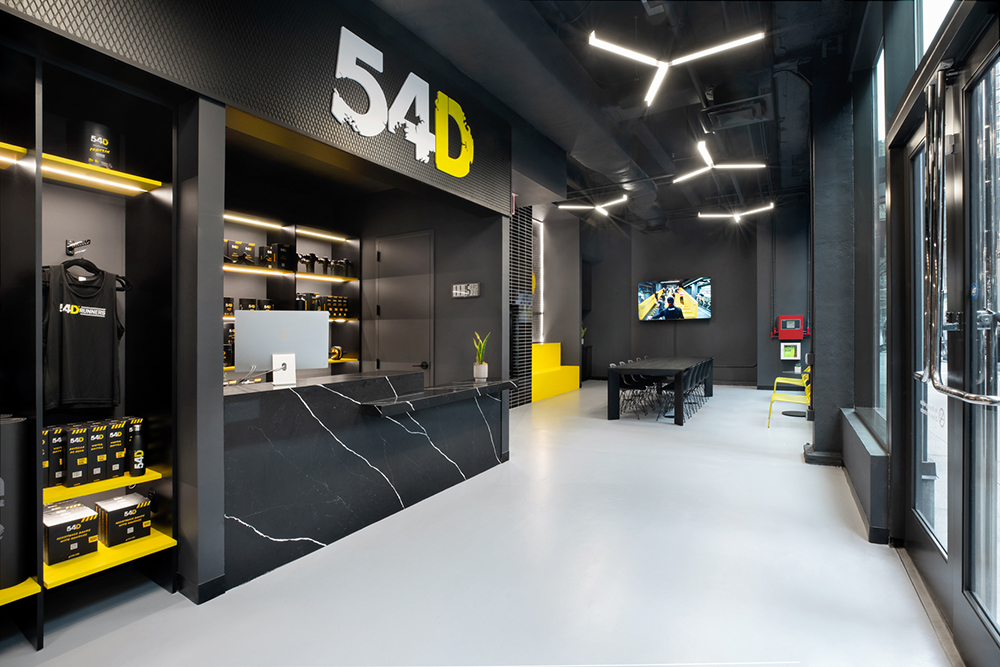 Manhattan, NY Wesbuilt Construction Managers and Miami Beach, FL-based architectural firm THIRLWALL have completed a $2.2 million fit-out of the ground floor of 125 West 25th St. as the location of the New York flagship fitness club of 54D, the international fitness brand headquartered in Mexico City. Former professional soccer player Rodrigo Garduño founded 54D in Mexico City in 2012 and expanded to its first US location in 2019.
“We are a global fitness brand dedicated to human transformation through physical, mental and emotional changes in every participant. This new space will enable us to expand the program to include new members in New York City,” said Garduño.
“As a brand, we always invite our members to get out of their comfort zones. Opening our studio in New York City was the next step for us as a brand to lead by example and get out of ours,” said Omar Yunes, 54D’s CEO.
“Wesbuilt is very familiar with the construction challenges inherent in building fitness facilities in urban locations,” explained Mark Galway, Wesbuilt principal. “Completing this 7,000 s/f studio required specialized skills from the project team, including constructing extensive noise mitigation solutions. We delivered this project four weeks ahead of schedule to help 54D successfully launch its New York City’s first gym.”
Intense music provides a backdrop to 54D’s exercise sessions. The potential for loud noise drove the Manhattan site selection process. “Several potential locations were reviewed to determine the feasibility of meeting the sound mitigation requirements. Finding the right location took over 18 months,” said Yunes. “The property owner AFIAA incorporated sound attenuation requirements into the lease terms.”
The project team also included executive architect Mija Architecture; acoustical consultant Criterion Acoustics; MEP engineer NY Engineers; and owner’s representative Stys Hospitality Initiative.
Design
The original 54D locations in Mexico City and Bogotá were freestanding structures designed with an industrial aesthetic, exposed metal and unfinished concrete. When Garduño expanded to the U.S., he chose THIRWALL as the design architect to create a brand image for 54D.
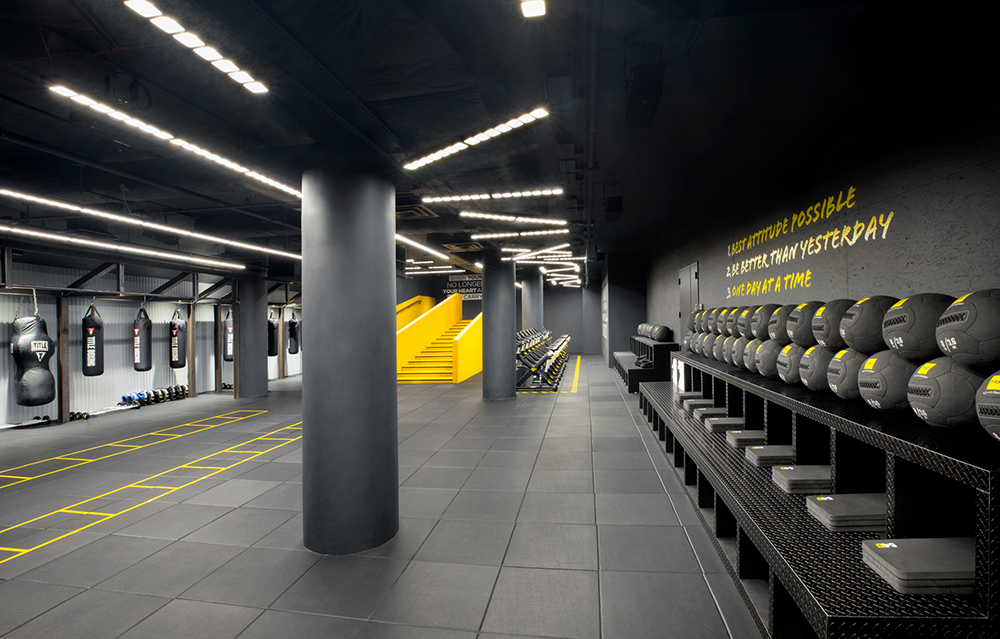
THIRWALL lead designer Thomas Seibt said, “It was important to position 54D as a high-end brand, so the original industrial theme had to be supplemented with materials belonging to a more elevated aesthetic.” THIRWALL created a design palette that still uses industrial materials, but they are of a high quality finish grade that includes powder-coated corrugated and diamond plate metal panels, painted OSB boards, and polished concrete.
The new studio is the brand’s first location in a multi-story building and a high-density urban area. The design serves as a prototype for future similar sites. The landlord did not permit façade work, so the architect maintained the existing full-height glazed storefront exterior wall to permit passersby to have clear views into the space.
The high visibility approach took into account the high noise level in the training rooms. “The studio layout had to be modified to meet sound attenuation requirements,” said Nabil Mijalli, principal at Mija Architecture. Acoustical consultant Criterion Acoustics joined the team to develop engineering details that would contain the noise within the studio.
The 850 s/f lobby area includes a reception desk, a merchandising section and a social area. Two corridors lead from the lobby toward the 2,500 s/f training room at the rear. Other spaces include recovery and massage rooms, a manager’s office, nutritionists’ offices, locker rooms, and a media room.
The finishes reflect the industrial warehouse design vernacular. Gypsum board walls, open ceilings, and exposed ductwork are painted in a light black color. Flooring in the lobby and treatment rooms is light gray-painted polished concrete.
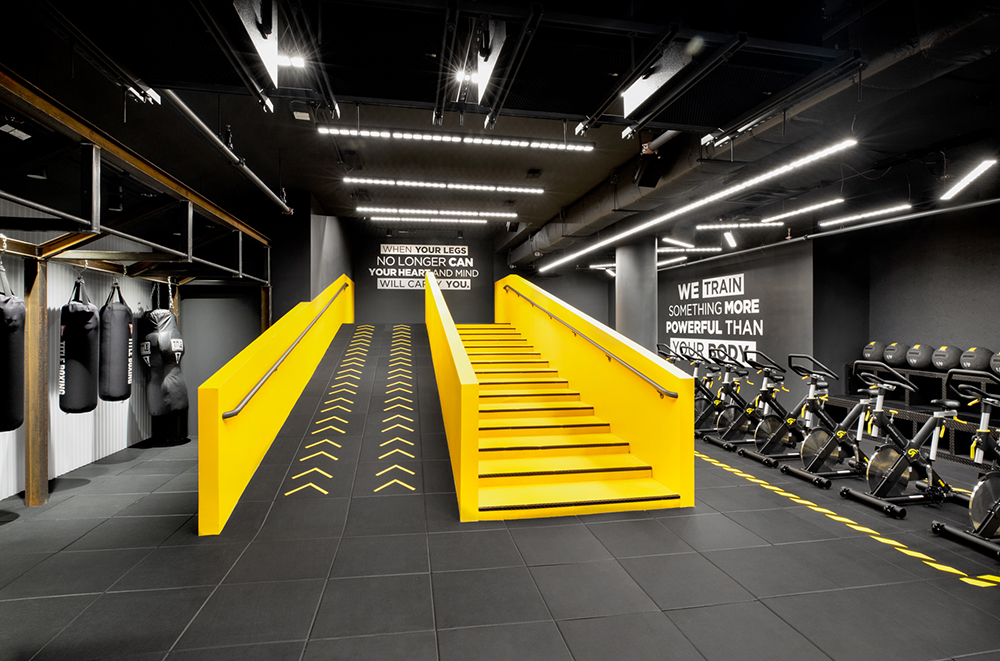
A large steel cardio ramp with yellow risers and sidewalls and a black ramp is the key feature in the fitness studio. Finishes include black powder coated diamond steel plates, oriented strand board (OSB) panels, black rubber tiles with yellow striping, and raw steel with intentional rusting. Fluxwerx Profile linear LED lighting fixtures are used throughout the training room. Three-spoke Profile fixtures are featured in the lobby.
Construction
Wesbuilt uses BIM technology on all of its projects. “At the start of the process, we used laser scanners to digitally map existing building conditions. This information was then combined with the digital design drawings and we collaborated with the design team to make sure that there were no conflicts between the existing elements and the proposed work,” said Stephen McKenna, Wesbuilt project manager. “This coordination permitted us to avoid delays and change orders,” he added.
The digital model was used to produce shop drawings for subcontractors. Scans were performed frequently during construction to record progress and to create field reports. The final model produced for the client contained all product and location information.
54D had a strict 16-week construction schedule. Construction of the specialized sound attenuation components of the project strained the schedule limits. In addition, the design included two new air handling units that were a long lead item at 30 weeks. While the team waited for the delivery, Wesbuilt installed a temporary rental unit to allow the gym to open, and then changed out the system when the permanent units were delivered.
“Wesbuilt scheduled overtime and weekend work that compressed the schedule from 16 weeks to 12 weeks, turning the studio over to the client four weeks ahead of the scheduled opening date,” said McKenna.
Acoustical Engineering
David Kotch, principal of Criterion Acoustics, teamed with 54D during the site selection process. “We evaluated three short-listed spaces. This property was chosen for three reasons: it had the highest ceiling level of the three, there were no residential tenants involved, and the existing concrete structural frame would reduce vibration transfers.”
Criterion developed a custom sound isolation system to surround the training room. Andy Swerdlow, Criterion associate principal, said “Walls are double framed, with two metal stud support structures separated by an air space. On each side of air space are four layers of gypsum board panels. Head and floor tracks are isolated from the surrounding structure by rubber gaskets to reduce vibration.”
The training room has four subwoofers located directly below the ceiling. Criterion designed a cardioid subwoofer array that directs the sound down toward the floor, and with input from Wesbuilt developed a kinetic spring system to isolate the woofers from the ceiling.
Photos by Ola Wilk Properties
MORE FROM Construction Design & Engineering
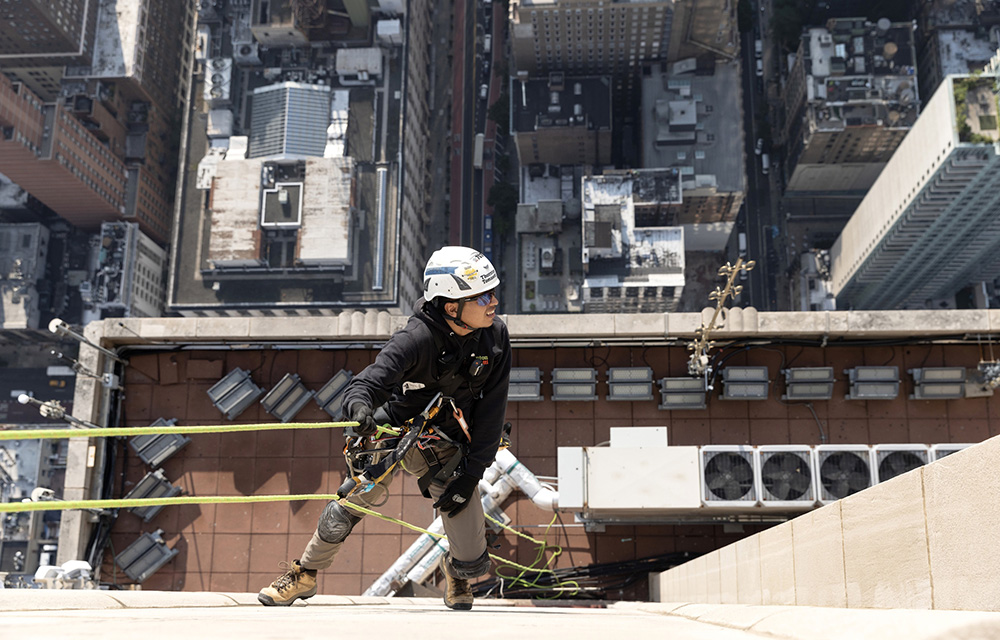
NYC mayor and DOB release comprehensive façade inspection and safety study conducted by Thornton Tomasetti
Manhattan, NY New York City mayor Eric Adams and New York City Department of Buildings (DOB) commissioner Jimmy Oddo released the full recommendations from a comprehensive engineering study conducted by global engineering firm Thornton Tomasetti


.gif)
.jpg)

.gif)
.gif)