
RKTB Architects focuses on K-12 sustainability with recent projects
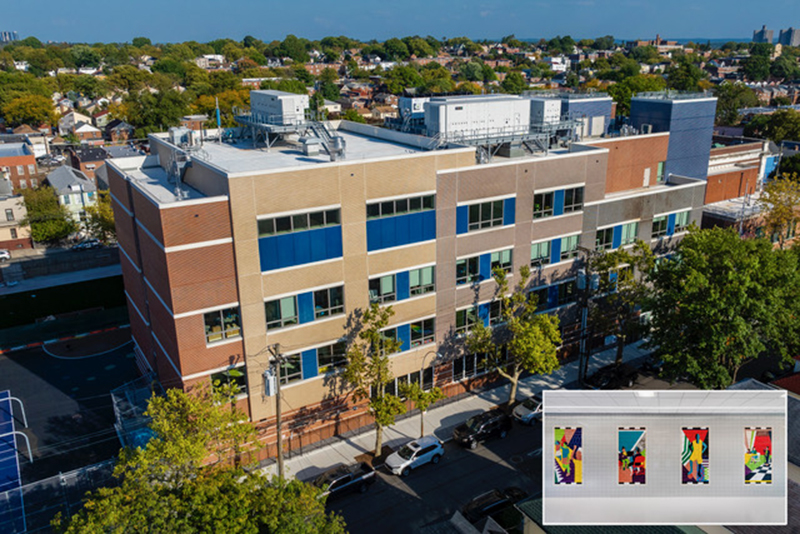
Photo Credit: Technico
Artwork Friends and Family (inset) by Dennis RedMoon Darkeem
Brooklyn, NY RKTB Architects and its experts in design for K-12 schools are expanding their reach and vision beyond the New York metro area, aspiring to bring best practices to communities across the northeastern United States. Led by architect and partner Albert Aronov, AIA, the academic facilities studio at RKTB have worked directly for New York’s School Construction Authority, or SCA, the nation’s largest and among the most demanding agencies overseeing development, construction and renovation of taxpayer-funded facilities for pre-kindergarten through grade 12. Under Local Law 86, SCA requires that projects within its jurisdiction meet or exceed the Green Schools Guide, New York’s municipal green building standard. This high level of achievement is considered by sustainable design experts as meeting or surpassing the U.S. Green Building Council’s renowned LEED Gold standard.
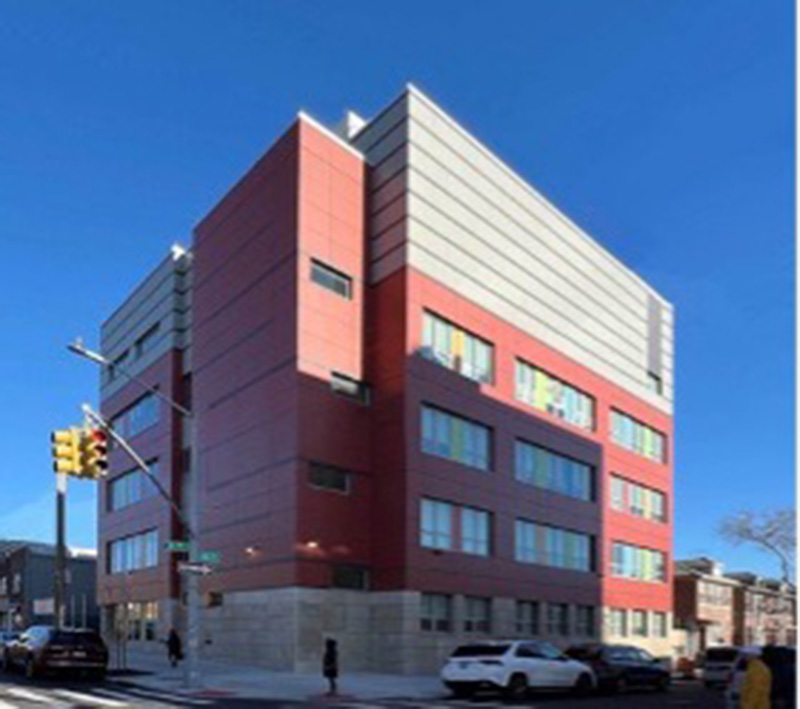
Design by RKTB Architects
As the firm continues its push into the wider regional market, RKTB is celebrating two recently completed works while a third is expected to open its doors in the fall of 2026:
Public School 730K. Serving the Sunset Park neighborhood, this new five-story, 48,600 s/f facility for grades 3 to 5 students is oriented around a central playground that open’s the site to the 8th Ave. corridor. RKTB and SCA (as both client and construction manager) agreed to deviate from typical construction methods for New York schools, favoring a cast-in-place concrete structure and a rainscreen façade system that would expedite the project’s completion given the limited staging area and other site challenges. The design for PS 730K visually harmonizes the building with the neighborhood context, and brightly colored panels in the fenestration assemblies evoke the flags of cultures represented in the diverse community.
Public School 87. Utilizing a steel structure with concrete insulated panels for reduced construction time and for optimal efficiency, durability, and energy performance, this 58,000 s/f expansion of P.S. 87 adds 17 new preK-5 classrooms as well as new spaces for art and music and new offices for administrative, guidance, and medical uses. The relocation of administrative enabled the conversion of offices into new modern classrooms. The expansion also doubles the size of cafeteria and gymnasium facilities, and new elevators ensure full accessibility. Representing a significant and much-needed expansion and modernization for a school serving a rapidly growing student population in the Wakefield neighborhood of the Bronx, the addition features a varied façade of brick veneer that harmonizes with the surrounding architecture. A metal canopy and flagpole announce the new fully accessible main entrance where the existing building meets the addition, and the rebuilt schoolyard includes a basketball court, early childhood playground, and sitting area open to the entire community.
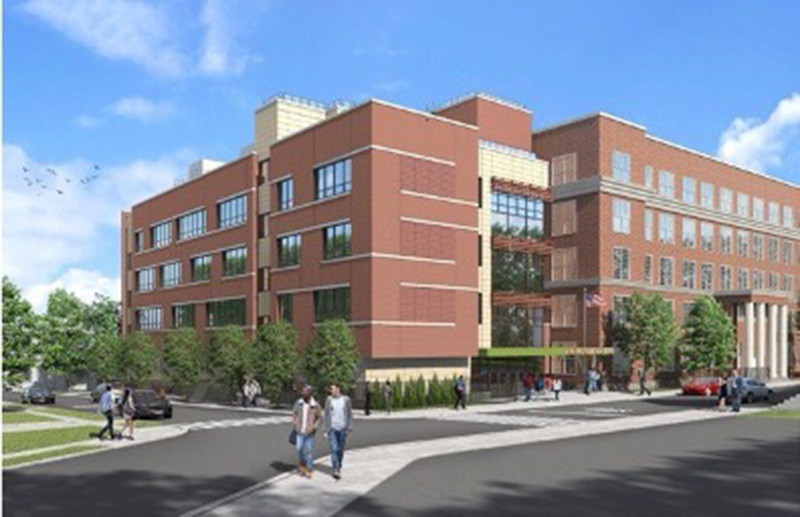
Design by RKTB Architects
Public School 116Q. Slated for completion in 2026, this sustainably designed four-story 55,000 s/f addition to a preK-8 facility in Jamaica, Queens incorporates air source heat pump chillers for high-efficiency, all-electric heating and cooling. Additionally rooftop photovoltaic panels generate electricity, and a vegetated green roof reduces stormwater runoff. With all spaces served by custom-built variable air volume rooftop units with energy recovery ventilation and MERV13 filters for enhanced indoor air quality, the expanded school building is expected to meet both Green Schools Guide requirements and certification standards under LEED for Schools 4.1.
This, and other leading design concepts for K-12 schools, are widely in demand across the Northeast, says Aronov, noting that is team of architects have completed a dozen new buildings (including major additions) and hundreds of capital improvement projects for SCA. RKTB is well known for overseeing their construction to ensure they meet the strict requirements for environmentally responsive design, efficient performance, and student wellbeing and inspiration.
“More than anything, RKTB is committed to designing K-12 facilities that are responsive to the demands of school districts and to the needs and dreams of students, teachers, administratorsand parents,” said Aronov, who has led the majority of RKTB’s award-winning K-12 projects since joining the firm in 1997. “Public schools are often the beating hearts of the communities they serve, utilized in many ways by multiple stakeholder groups. We believe as architects that a school building should represent and celebrate the unique local culture, identity, and history.”
With school districts across New York State, New Jersey, Pennsylvania and Connecticut in need of high-performing new schools that offer flexibility and meet benchmarks for sustainability, construction budgets, and operating costs, RKTB has begun initiating partnerships with a growing number of communities, according to Aronov.
The push by RKTB in collaboration with SCA to implement innovative techniques and methods – like those used in the current crop of projects outlined above – is essential for public agencies who are answerable to the taxpayer, notes Peter Bafitis, AIA, managing principal with RKTB. “Keeping projects on time and within budget is critical for any school district,” he says. “With construction costs rising and building trades in high demand, efficiency matters in project management as much as it does in school operations – more than ever, really. Those doors have to open when school starts in September, it’s a command performance, so to speak.”
According to Bafitis, this is the message RKTB is bringing when meeting with officials in school districts across the region: “We’ve worked for decades with the country’s most demanding, most exacting public school system, and our results speak for themselves.”