



News:
Spotlight Content
Posted: May 30, 2023
Parking garage condition assessments New York state and New York City requirements - by Chris Krepcio

In April, a parking garage collapsed in lower Manhattan, killing one person and injuring five others. While the cause is still under investigation, structural issues are believed to be to blame for the tragic collapse. Recent changes were put into effect to prevent future negligence and destruction of parking garages across New York State and New York City. Below is a brief summary of each rule.
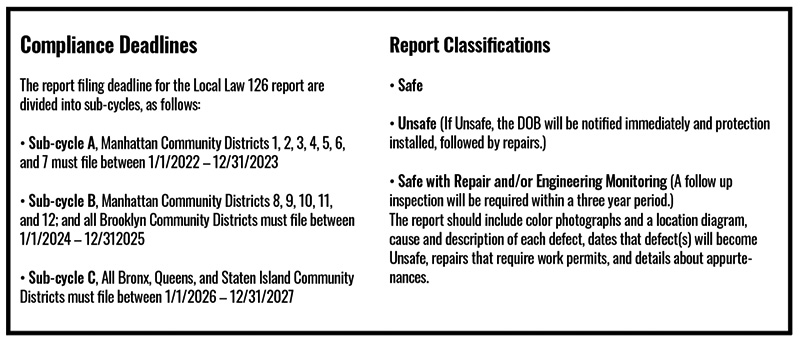 New York State Parking Garage Condition Assessments
The Department of State adopted a rule that amends Parts 1202, 1203, and 1204 of Title 19 of the New York Codes, Rules and Regulations, which requires owners of parking garages to have periodic condition assessments performed by a qualified Professional Engineer (PE). The assessment should include an on-site inspection and evaluation of a parking garage to determine evidence of deterioration of any structural element or building component, evidence of the existence of any unsafe condition, and evidence indicating that a parking garage is an unsafe structure. Once the engineer completes the condition assessment, a report will be prepared, signed, sealed and then submitted to the local jurisdiction.
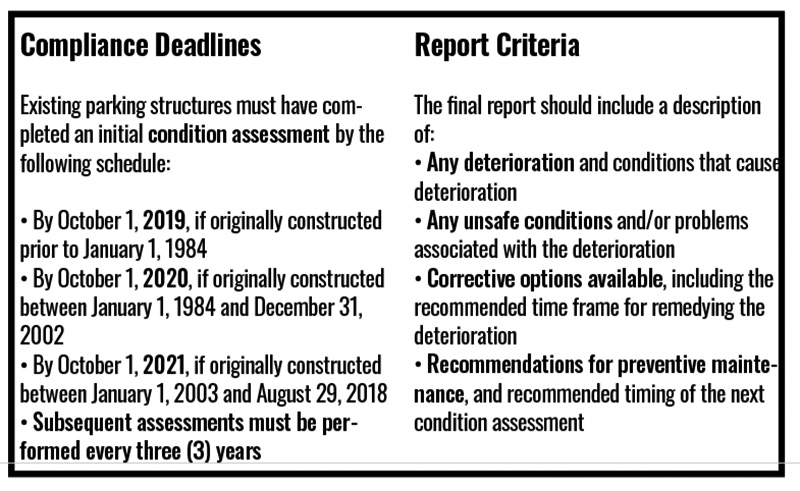 New York City Local Law 126 Garage Inspections
Local Law 126 of 2021 requires owners of parking structures to hire a NYS licensed and registered Professional Engineer (PE) to inspect the structure at least once every six years and file a report with the DOB documenting the results of the inspection (in accordance with NYC Construction Codes §28-323, and RCNY §103-13). Any space for parking/storing motor vehicles, other than an unenclosed outdoor lot, 1- or 2-car garage, or auto service station or showroom, must undergo an assessment by a certified QPSI.
Chris Krepcio, PE, Certified NYC QPSI, is principal at Merritt Engineering, Queens, N.Y.
Tags:
Spotlight Content
MORE FROM Spotlight Content

Over half of Long Island towns vote to exceed the tax cap - Here’s how owners can respond - by Brad and Sean Cronin
When New York permanently adopted the 2% property tax cap more than a decade ago, many owners hoped it would finally end the relentless climb in tax bills. But in the last couple of years, that “cap” has started to look more like a speed bump. Property owners are seeing taxes increase even when an



.png)


Quick Hits

.jpg)
Columns and Thought Leadership

The strategy of co-op busting in commercial real estate - by Robert Khodadadian
In New York City’s competitive real estate market, particularly in prime neighborhoods like Midtown Manhattan, investors are constantly seeking new ways to unlock property value. One such strategy — often overlooked but

Oldies but goodies: The value of long-term ownership in rent-stabilized assets - by Shallini Mehra
Active investors seeking rent-stabilized properties often gravitate toward buildings that have been held under long-term ownership — and for good reasons. These properties tend to be well-maintained, both physically and operationally, offering a level of stability

Properly serving a lien law Section 59 Demand - by Bret McCabe
Many attorneys operating within the construction space are familiar with the provisions of New York Lien Law, which allow for the discharge of a Mechanic’s Lien in the event the lienor does not commence an action to enforce following the service of a “Section 59 Demand”.

How much power does the NYC mayor really have over real estate policy? - by Ron Cohen
The mayor of New York City holds significant influence over real estate policy — but not absolute legislative power. Here’s how it breaks down:
Formal Legislative Role
• Limited direct lawmaking power: The NYC Council is the primary
.gif)