



News:
Brokerage
Posted: July 13, 2015
NYC residential developers talk tough on city's housing issues at REBNY's owner/manager luncheon
New York City's leading residential developers talked tough on the current state of New York City's real estate market and addressed the need for affordable housing, the future for 421a and the expanding luxury market at the Real Estate Board of New York's (REBNY) Annual Residential Owner/Manager Luncheon held at the New York Athletic Club on June 10.
When asked for his macro-level perspective on the market, Brodsky explained that New York City has become a global city with buyers and equity coming from abroad, and tourism playing a major role in the economy. He identified housing for all people, the job market and safety as driving factors in maintaining the City's health.
Fetner noted that on a rental basis, the current market is very strong, but when you look at the market with a global perspective, it's difficult to see the same thing. He expressed concern over competition with condo developers and high construction costs.
Elghanayan added that high land and construction costs, impacted by competition between luxury condo and rental developers for contractors, will impact the future of rental developments throughout the city.
Walentas explained that government regulation has created the city's massive housing shortage with great barriers to entry for housing developers. "The reason why we have an affordable housing problem is because we have an overall housing problem," he said. "We need to think about building housing at every level and smart ways to do it."
Knakal advised that Mayor de Blasio's administration will need to create a balance with the right incentives, including 421a, to allow for the creation of more affordable housing.
Brodsky commended the Mayor for discussing his ideas with the real estate industry and proposing a tax program that allows developers to build.
Shown (left to right) are: Jed Walentas, Two Trees Management Co.; Barry Brandt, Argo Residential/REBNY Membership Committee Co-Chair; Daniel Brodsky, The Brodsky Organization; John Banks, REBNY; Corinne Pulitzer, Douglas Elliman/REBNY Membership Committee Co-Chair; Steven Spinola, REBNY; Robert Knakal, Cushman & Wakefield; K. Thomas Elghanayan, TF Cornerstone; Harold Fetner, Fetner Properties Following a standing ovation for outgoing REBNY President Steven Spinola, Robert Knakal, Chairman of NYC Investment Sales at Cushman & Wakefield, led the riveting panel discussion, which featured panelists: K. Thomas Elghanayan, Chairman of TF Cornerstone; Daniel Brodsky, President of The Brodsky Organization; Harold A. Fetner, President & CEO of Fetner Properties; and Jed D. Walentas, Principal of Two Trees Management Co., LLC.
Tags:
Brokerage
MORE FROM Brokerage
Marcus & Millichap facilitates $17.5 million sale of experiential retail property in Brooklyn
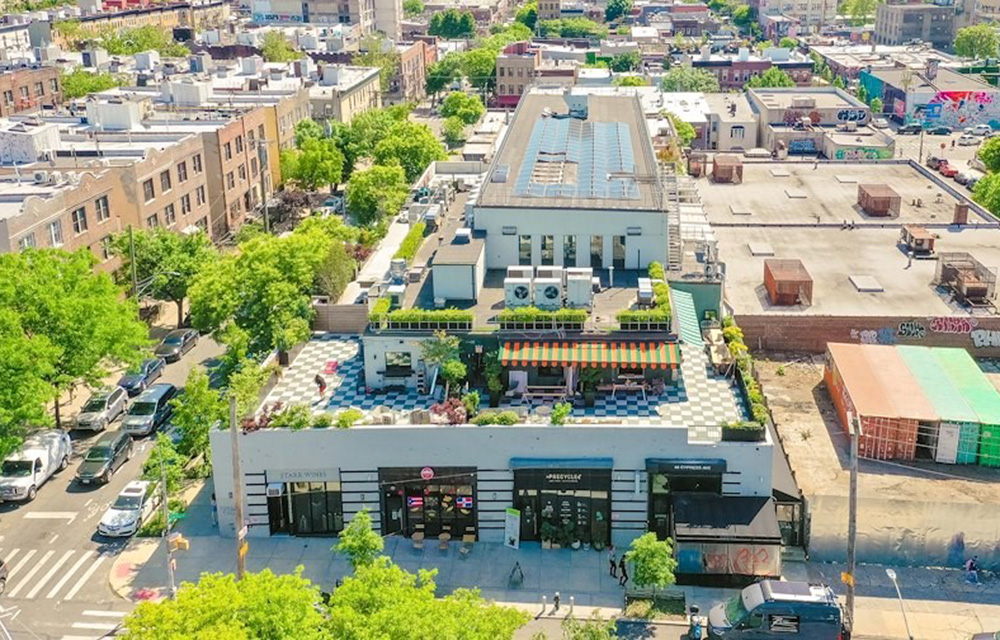
Brooklyn, NY Marcus & Millichap negoatied the sale of 321 Starr St., a fully leased, 10-unit retail property in the Bushwick neighborhood, for $17.5 million.



.jpg)

Quick Hits
.gif)
Columns and Thought Leadership

Behind the post: Why reels, stories, and shorts work for CRE (and how to use them) - by Kimberly Zar Bloorian
Let’s be real: if you’re still only posting photos of properties, you’re missing out. Reels, Stories, and Shorts are where attention lives, and in commercial real estate, attention is currency.
AI comes to public relations, but be cautious, experts say - by Harry Zlokower
Last month Bisnow scheduled the New York AI & Technology cocktail event on commercial real estate, moderated by Tal Kerret, president, Silverstein Properties, and including tech officers from Rudin Management, Silverstein Properties, structural engineering company Thornton Tomasetti and the founder of Overlay Capital Build,

Strategic pause - by Shallini Mehra and Chirag Doshi
Many investors are in a period of strategic pause as New York City’s mayoral race approaches. A major inflection point came with the Democratic primary victory of Zohran Mamdani, a staunch tenant advocate, with a progressive housing platform which supports rent freezes for rent

Lasting effects of eminent domain on commercial development - by Sebastian Jablonski
The state has the authority to seize all or part of privately owned commercial real estate for public use by the power of eminent domain. Although the state is constitutionally required to provide just compensation to the property owner, it frequently fails to account
.gif)