



News:
Owners Developers & Managers
Posted: December 9, 2025
New York retail’s comeback: Rebuilt one deal at a time - by James Famularo

Retail doesn’t stand still, and in 2025, New York proved how quickly it can accelerate. After years of post-pandemic uncertainty, the city’s landscape rebounded with a surge few would have anticipated, as retailers, landlords, and entire corridors reentered the market with renewed confidence. Deals moved at a pace unseen in recent memory, tenants acted with clarity and conviction, and the streets pulsed once again with the entrepreneurial energy that defines the city. This was no mere stabilization; it was a full resurgence of momentum.
Demand outpaced supply across the city’s most active neighborhoods. Second-generation spaces in the East Village, Lower East Side, SoHo, Williamsburg, Harlem, and select corners of Brooklyn drew interest, with many listings receiving multiple qualified offers within days. Rising foot traffic, strong neighborhood populations, and a consumer appetite for in person experiences pushed asking rents up as much as 25% year over year in some submarkets. This reflected genuine competition from operators, ready to sign, invest, and grow.
Several standout transactions illustrated the strength of the year’s activity. Meridian’s lease with Kyma at ModernHaus SoHo highlighted the speed and competitiveness defining today’s retail landscape. After sitting dormant for more than two years under previous representation, the space generated 12 qualified offers in less than two weeks, ultimately securing one of the city’s most sought after restaurant operators. The flagship deal for C as in Charlie at 166 First Ave. reinforced this trend: chef-driven, story focused concepts are resonating with consumers and landlords across Manhattan.
Innovative and experiential tenants also left their mark. Kove Studios on East 7th St. brought accessible wellness to one of Manhattan’s busiest corridors, while Paint ’N Pour’s newest flagship underscored the strength of creative, experience-driven retail. Across Brooklyn, Harlem, and the Lower East Side, boutique fitness operators expanded with confidence, highlighting the city’s growing appetite for health concepts. These deals varied in size and category, but they sent the same message: operators believe in New York.
Landlords also showed renewed commitment to their properties. Many prioritized visibility, frontage, lighting, and turnkey buildouts; upgrades that reduced friction and enhanced appeal. Buildings that had been quiet earlier in the decade came back to life, drawing multiple competing offers from operators who recognized location value and space quality. Rather than letting the market dictate terms, landlords became proactive partners in shaping New York’s retail landscape.
Looking ahead, fundamentals remain solid. Manhattan below 23rd St. has shifted back toward a landlord-favorable market, Brooklyn’s momentum remains steady, and Queens, particularly Long Island City, Astoria, and Ridgewood, is emerging as an increasingly important player. At the same time, the year ahead brings uncertainties. New York will transition to a new administration, and the impact of future policies, taxes, enforcement strategies, and quality-of-life initiatives remains unclear. While these unknowns don’t diminish market strength, they call for a measured outlook and readiness to adapt.
Having completed more than ten thousand leases across the city, I see 2025 as a year defined by resilience, creativity, and genuine momentum. New York retail is not merely recovering, it is evolving. Today’s businesses bring intention and identity. They aren’t seeking space just to occupy; they are looking for neighborhoods to become part of. Landlords who meet that energy with quality, readiness, and strategic investment will continue to secure the strongest tenants and most impactful deals. As we close out the year, I remain cautiously optimistic. The foundation is solid, the activity is real, and the energy on the streets tells the story of a city moving with purpose again: one deal, one storefront, and one neighborhood at a time.
James Famularo is president of Meridian Retail Leasing, Manhattan, N.Y.
MORE FROM Owners Developers & Managers
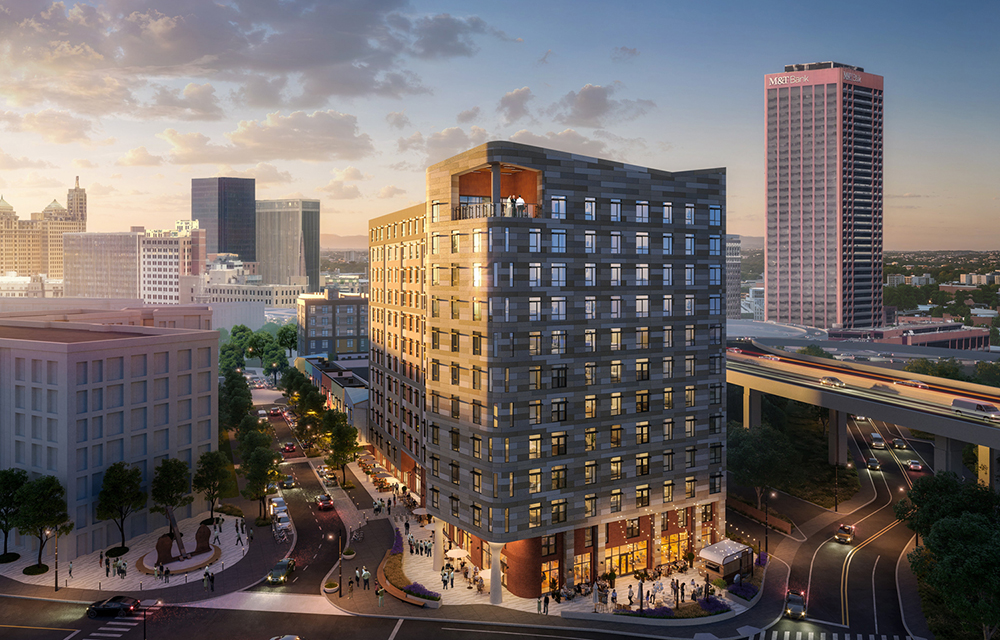
Habitat, Duvernay + Brooks and Buffalo Municipal Housing close on 254-unit first phase redev. of Marine Drive Apts.
Buffalo, NY The Habitat Company has closed on Marine Drive Apartments, officially setting in motion the redevelopment of the historic waterfront site. The project, undertaken by Habitat in partnership with Duvernay +

.gif)


Quick Hits
.gif)
.jpg)
Columns and Thought Leadership

The CRE content gap: Why owners and brokers need better digital narratives in 2026 - by Kimberly Zar Bloorian
As we head into 2026, one thing is clear: deals aren’t won by who has the best asset; they’re won by who presents it best. Yet many owners, operators, and brokers are entering the new year with outdated photos, inconsistent branding, and limited digital presence. This

Strategies for turning around COVID-distressed properties - by Carmelo Milio
Due to the ongoing pandemic, many landlords are faced with an increasing number of distressed properties. The dramatic increase in unemployment and reduction in income for so many has led to a mass exodus out of Manhattan, an increase in the number of empty rental units
.gif)