



News:
Brokerage
Posted: May 21, 2019
New York City Climate Mobilization Act passes - by Thomas Kearns

Olshan Frome Wolosky LLP
The New York City Council recently passed a set of bills requiring owners of buildings of 25,000 s/f or larger to take several steps to reduce greenhouse gas emissions. The bills include: a requirement that the emission of greenhouse gases be reduced in stages by 2030, revisions to simplify the installation of wind turbines, a mandate to study the reduction of gas-fired power plants, the installation of green roofs in new construction and in buildings undergoing major renovations, and financing to help owners pay for the improvements.
By all accounts, the bills will increase the efficiency of large city buildings in New York. Certain ironies are present, however, –first, due to the number of people employed in large buildings, the buildings are already much more efficient than the average U.S. building per capita. Second, under the new bills, many large buildings are exempt from the requirement to reduce greenhouse gases, including hospitals, houses of worship and buildings with rent regulated tenants, which buildings aggregate by some estimates about half of the large buildings in New York. In short, city office buildings and their tenants will be hit with significant increased costs while other buildings will not be affected. A third irony is that with its efficient public transportation system and large, already efficient buildings, New York is already a model for other cities and towns to follow.
So what will commercial buildings need to do in response to the legislation? My law firm did an energy audit a few years ago and we found that the biggest electricity use was air conditioning in the warmer months. What is the best way to reduce those costs in a building that is already class A? One method is with better insulated or newer “dynamic” windows which have filters that activate depending on light and temperature. I have also seen solar collecting windows mentioned as a promising technology in development. But windows are expensive and are disruptive to install and some of the technology is untested.
It is perhaps appropriate for New York to continue to be the leader in energy efficiency–my hope is that the administrative headaches and the costs of compliance will be reasonable. I remember viewing the smog that enveloped the city in the late 1960’s and early 1970’s when I took the bus to high school across the Whitestone Bridge. On bad days you would actually choke on the smog as you breathed. Smog was cured by federal and local legislation imposing pollution controls on automobiles and improving city boilers. Those fixes were expensive, no doubt, but in hindsight well worth it. Similarly, I hope that New York’s recent legislation is able to make meaningful strides to reduce greenhouse gases without excessive disruption to New York businesses.
Thomas Kearns is a partner with Olshan Frome Wolosky LLP’s real estate department, New York, N.Y.
Tags:
Brokerage
MORE FROM Brokerage
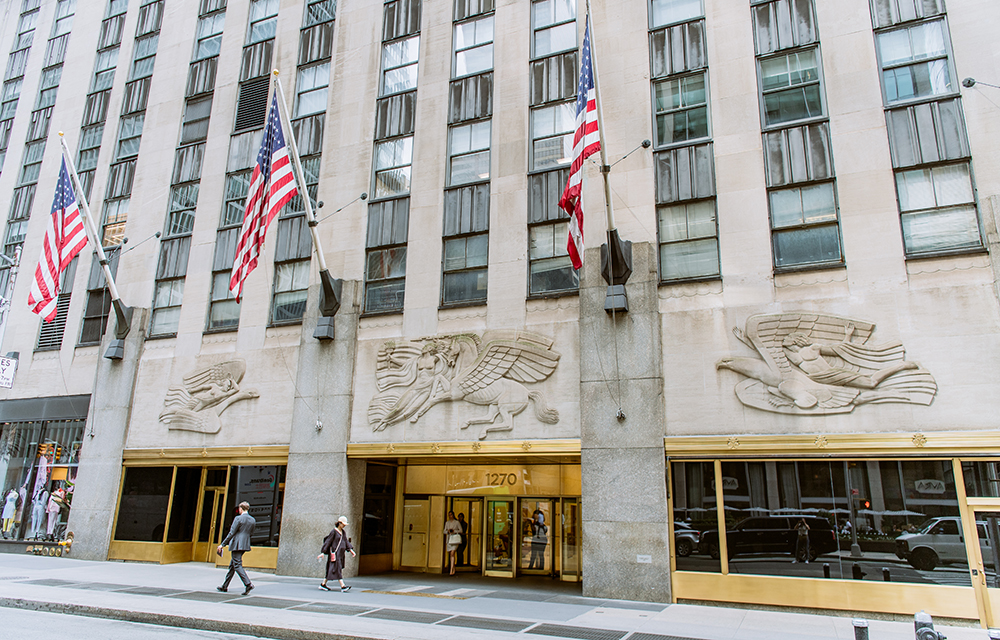
Horizon Kinetics relocates new headquarters to Tishman Speyer’s Rockefeller Center
Manhattan, NY According to Tishman Speyer investment boutique Horizon Kinetics Asset Management LLC will relocate its current New York office to 18,713 s/f on the 27th floor of 1270 Avenue of the Americas at



.jpg)

Quick Hits
.gif)
Columns and Thought Leadership

AI comes to public relations, but be cautious, experts say - by Harry Zlokower
Last month Bisnow scheduled the New York AI & Technology cocktail event on commercial real estate, moderated by Tal Kerret, president, Silverstein Properties, and including tech officers from Rudin Management, Silverstein Properties, structural engineering company Thornton Tomasetti and the founder of Overlay Capital Build,

Behind the post: Why reels, stories, and shorts work for CRE (and how to use them) - by Kimberly Zar Bloorian
Let’s be real: if you’re still only posting photos of properties, you’re missing out. Reels, Stories, and Shorts are where attention lives, and in commercial real estate, attention is currency.

Lasting effects of eminent domain on commercial development - by Sebastian Jablonski
The state has the authority to seize all or part of privately owned commercial real estate for public use by the power of eminent domain. Although the state is constitutionally required to provide just compensation to the property owner, it frequently fails to account

Strategic pause - by Shallini Mehra and Chirag Doshi
Many investors are in a period of strategic pause as New York City’s mayoral race approaches. A major inflection point came with the Democratic primary victory of Zohran Mamdani, a staunch tenant advocate, with a progressive housing platform which supports rent freezes for rent
.gif)