



News:
Brokerage
Posted: August 21, 2009
Mason of Caran Properties Realty elected 2009-10 president of AREW
Rebecca Mason, principal and executive director, Caran Properties Realty, has been elected 2009-10 president of the Association of Real Estate Women (AREW). A member of AREW since 1998, Mason previously served as 2008-09 vice president, chair of the AREW Charitable Fund, sponsorship co-chair for AREW's 30th Anniversary Gala in 2008 and as chair of other committees.
Other officers elected for the 2009-10 AREW term include vice president Debra Cole, director of business development, Perkins + Will; treasurer Bonnie Kirschenbaum, Trump Sales and Leasing; secretary Jennifer Carey, president, JLC Environmental Consultants, Inc.; and member-at-large Jill Leonardis, business development supervisor, Paul, Hastings, Janofsky & Walker LLP. AREW's immediate past president, JenniferMcCool, The Related Companies, will also serve as a 2009-10 officer.
As a principal and executive director of Caran Properties Realty, the residential brokerage division of Caran Properties, Mason is responsible for the group's marketing, business development, management and listing activities.
Mason is also experienced in mortgage refinancing, negotiating commercial and retail leases and overseeing tenant improvements and is a licensed real estate broker. She joined Caran Properties in 1993 as special projects manager for the building management division after moving to New York City from the United Kingdom.
In addition to her activities with AREW, Mason is an active member of the Real Estate Board of New York (REBNY), having served as a co-chair of REBNY's Small Firm Committee. Currently, she serves on the REBNY Ethics and Arbitration Committees and volunteers her time and expertise as a technical instructor for REBNY's continuing education program.
Mason was honored as one of the "Top 50 Women Leaders in Real Estate" and named a "Rising Star of the Real Estate Industry" by Real Estate Weekly. She was presented with the Emma Lazarus Award by the Associated Builders and Owners of Greater New York (ABO) and will be honored as a Woman of Valor by Capuchin Pantries later this year.
Founded in 1978, AREW is the real estate industry's longest-running and most consistent supporter of women real estate professionals. The association provides outstanding educational programs and networking opportunities that contribute to the career growth of both men and women in all segments and levels of the real estate industry. For more information: www.arew.org.
Tags:
Brokerage
MORE FROM Brokerage
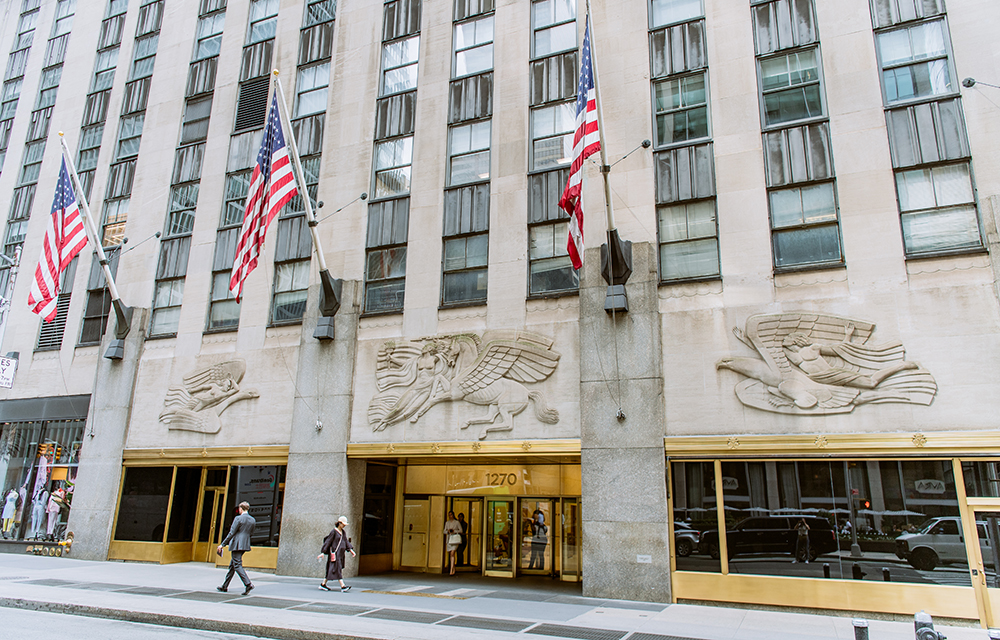
Horizon Kinetics relocates new headquarters to Tishman Speyer’s Rockefeller Center
Manhattan, NY According to Tishman Speyer investment boutique Horizon Kinetics Asset Management LLC will relocate its current New York office to 18,713 s/f on the 27th floor of 1270 Avenue of the Americas at

.jpg)

Quick Hits
.gif)
Columns and Thought Leadership
AI comes to public relations, but be cautious, experts say - by Harry Zlokower
Last month Bisnow scheduled the New York AI & Technology cocktail event on commercial real estate, moderated by Tal Kerret, president, Silverstein Properties, and including tech officers from Rudin Management, Silverstein Properties, structural engineering company Thornton Tomasetti and the founder of Overlay Capital Build,

Strategic pause - by Shallini Mehra and Chirag Doshi
Many investors are in a period of strategic pause as New York City’s mayoral race approaches. A major inflection point came with the Democratic primary victory of Zohran Mamdani, a staunch tenant advocate, with a progressive housing platform which supports rent freezes for rent

Behind the post: Why reels, stories, and shorts work for CRE (and how to use them) - by Kimberly Zar Bloorian
Let’s be real: if you’re still only posting photos of properties, you’re missing out. Reels, Stories, and Shorts are where attention lives, and in commercial real estate, attention is currency.

Lasting effects of eminent domain on commercial development - by Sebastian Jablonski
The state has the authority to seize all or part of privately owned commercial real estate for public use by the power of eminent domain. Although the state is constitutionally required to provide just compensation to the property owner, it frequently fails to account
.gif)