



News:
Brokerage
Posted: May 27, 2025
Looking for tariff certainty in uncertain times - by Kenneth F. Wille

If there is one thing we can all agree on in the U.S. real estate world, it is that 2025 has been a roller coaster regarding tariffs, pricing and certainty. My thoughts and recommendations each week show an ever shifting landscape in how each country, and material group, is tariffed. Recently, following trade talks between the U.S. and China, we’re beginning to see some easing of tariff-related pressure, but uncertainty still clouds the outlook. Here is my current update regarding the current landscape, risk levels, and what we’re seeing on construction sites.
Risk ratings below are based on my 10-point index (1 lowest risk, 10 highest risk)
Uncertainty – Risk Level: 8/10
A 90-day pause in the U.S.–China trade war has led to a significant reduction in tariffs:
• U.S. tariffs on Chinese goods: down from 145% to 30%.
• China’s tariffs on U.S. goods: down from 125% to 10%.
This has helped stabilize global markets in the short term, but long-term trade agreements remain unresolved. Complicating the picture, the U.S. recently ended the de minimis exemption for low-value imports from China and Hong Kong, adding a 120% tariff on those goods.
This is the most promising sign of tariff relief in months, but risk remains elevated due to fluid enforcement and unresolved negotiations.
Lender Resilience – Risk Level: 8/10
As deal pipelines slow, lenders are becoming more cautious. Key trends include:
• Increased scrutiny on pre-closing reviews and underwriting.
• Greater emphasis on stored material verification.
• A noticeable pause on hiring, expansion, and speculative developments.
Bridge lending and affordable housing transactions are still active, but lenders are increasingly focused on cash flow and contingency planning. The saying “cash is king” continues to hold true, especially if loan-to-value ratios begin to tighten in the second half of the year.
Construction Costs – Risk Level: 7/10
For now, material pricing remains relatively stable. Low single-digit increases have been observed in:
• Timber
• Concrete
• Insulation
• Brick
However, a 25% reinstated tariff on steel and aluminum remains in place, and roughly 25% of shipments to the Port of Los Angeles were canceled in early May. With only a six-week buffer in the U.S. construction supply chain, even small disruptions could trigger rapid price escalations.
Current Tariffs – Risk Level: 7/10
Universal tariff
• 10% on all imports (excluding Canada and Mexico).
Country-specific tariffs
• China: Reduced from 145% → 30% for 90 days.
• Mexico: 25% on most goods.
• Canada: 25% on non-USMCA goods.
Material-specific tariffs
• Steel & aluminum: 25% tariff reinstated.
• Canadian lumber: 14.5% duty still in effect.
• Appliances/fixtures: 56% of appliances sourced from China - costs remain elevated.
• Copper: Under investigation for potential new tariffs in Q2.
Summary and Recommendations
There’s reason for optimism, but not complacency, and I believe the worst is over. We recommend the following steps:
Tariff Impact Clause: Add contract language to protect against pricing volatility and delivery delays.
Supply Chain Diversification: More companies are actively sourcing from India, Vietnam, and Mexico to hedge against Chinese dependence. Sounds great but this will likely take months or years so not a great fit for most projects.
Contractual Adjustments: Build in escalation clauses, force majeure protection, and buyout tracking systems. We are starting to see contract execution times similar to post COVID 19. Where a subcontractor would provide a proposal and need execution to honor the price within three months, now it is one month. I believe this trend will continue.
Policy Monitoring: Tariff policies are shifting fast — stay informed and ready to act. Data, now more than ever, is key.
Transparent Communication: Proactively update teams, subcontractors, and clients on buyouts, cost fluctuations, and potential change orders related to price and schedule impacts. Anything that can reduce risk will present a better underwriting to the lender.
We’ll continue monitoring how trade policies impact construction pricing and lender risk. If you’d like to stay informed, you can follow KOW’s weekly updates at www.kowbc.com/blog.
Kenneth F. Wille, PE, is president & CEO of KOW Building Consultants, Smithtown, N.Y.
Tags:
Brokerage
MORE FROM Brokerage
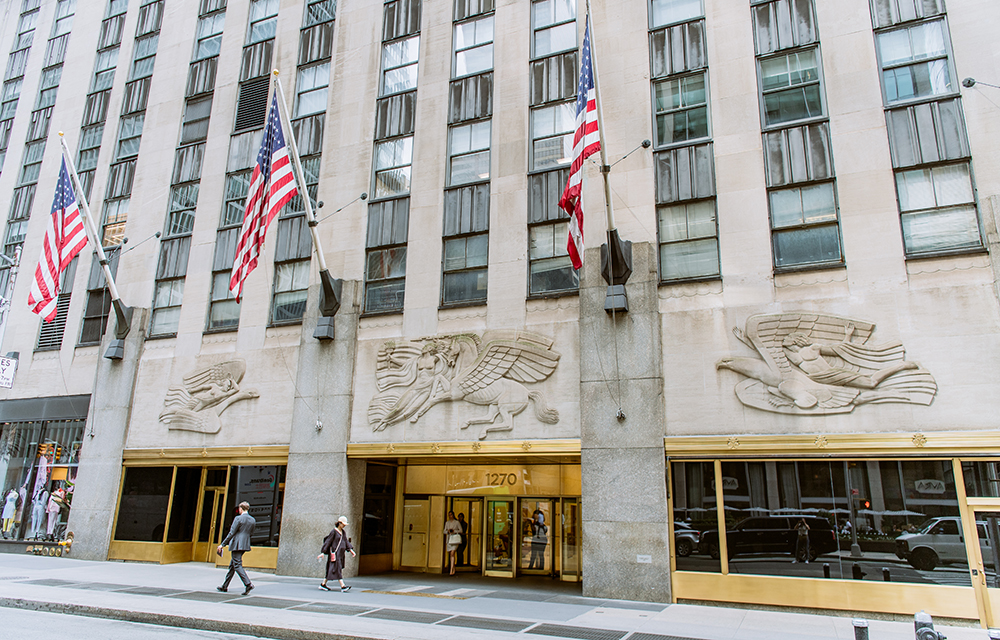
Horizon Kinetics relocates new headquarters to Tishman Speyer’s Rockefeller Center
Manhattan, NY According to Tishman Speyer investment boutique Horizon Kinetics Asset Management LLC will relocate its current New York office to 18,713 s/f on the 27th floor of 1270 Avenue of the Americas at

.jpg)


Columns and Thought Leadership

Strategic pause - by Shallini Mehra and Chirag Doshi
Many investors are in a period of strategic pause as New York City’s mayoral race approaches. A major inflection point came with the Democratic primary victory of Zohran Mamdani, a staunch tenant advocate, with a progressive housing platform which supports rent freezes for rent

Behind the post: Why reels, stories, and shorts work for CRE (and how to use them) - by Kimberly Zar Bloorian
Let’s be real: if you’re still only posting photos of properties, you’re missing out. Reels, Stories, and Shorts are where attention lives, and in commercial real estate, attention is currency.
AI comes to public relations, but be cautious, experts say - by Harry Zlokower
Last month Bisnow scheduled the New York AI & Technology cocktail event on commercial real estate, moderated by Tal Kerret, president, Silverstein Properties, and including tech officers from Rudin Management, Silverstein Properties, structural engineering company Thornton Tomasetti and the founder of Overlay Capital Build,

Lasting effects of eminent domain on commercial development - by Sebastian Jablonski
The state has the authority to seize all or part of privately owned commercial real estate for public use by the power of eminent domain. Although the state is constitutionally required to provide just compensation to the property owner, it frequently fails to account
.gif)