



News:
Owners Developers & Managers
Posted: September 9, 2025
Goddard Riverside’s The Senate reaches 50% completion
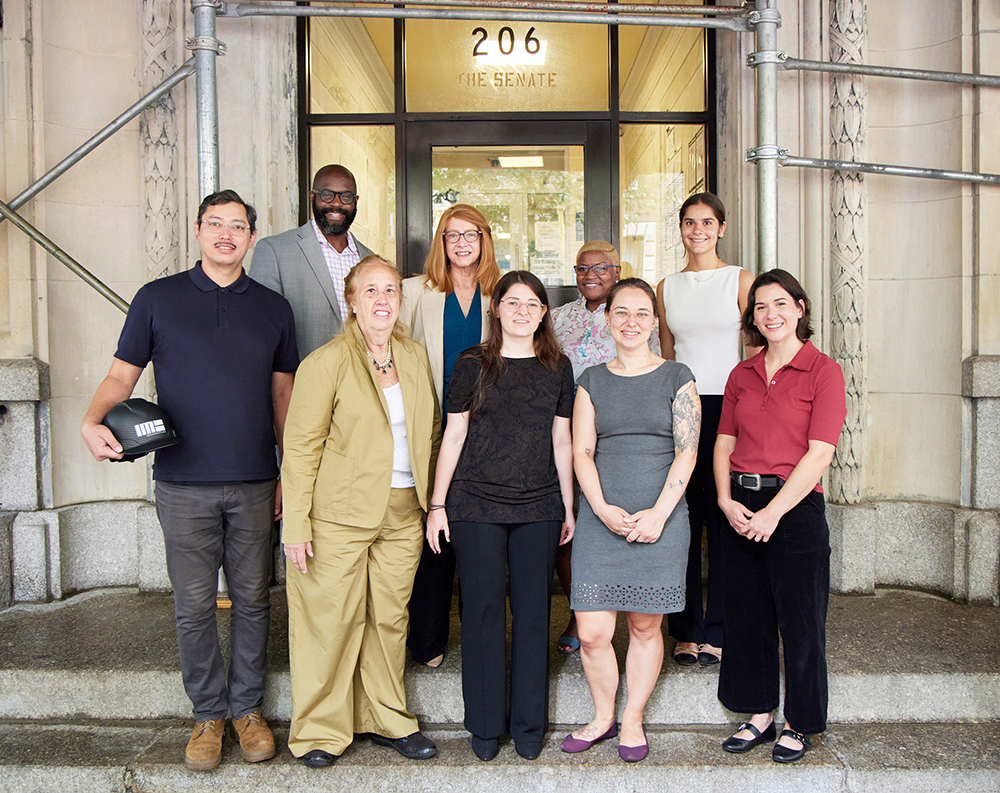
Photo by Ola Wilk/Wilk Marketing Communications
Manhattan, NY Owner and operator Goddard Riverside, development consultant Rockabill Consulting, the architectural team of IMC Architecture and Magnusson Architecture and Planning (MAP) and general contractor Notias Construction have reached the 50% completion milestone of an electrification and rehabilitation project at The Senate residence, a 136-unit permanent supportive housing building located at 206 West 92nd St. on the Upper West Side. Upon the project’s completion, The Senate will be the first fully-electrified single-room occupancy residence (SRO) supportive housing property in New York City.
The financing for the project has been provided by New York City Housing Preservation & Development (HPD), loans from Enterprise Community Loan Fund and a joint HPD-NYSERDA Retrofit Electrification Pilot project grant.
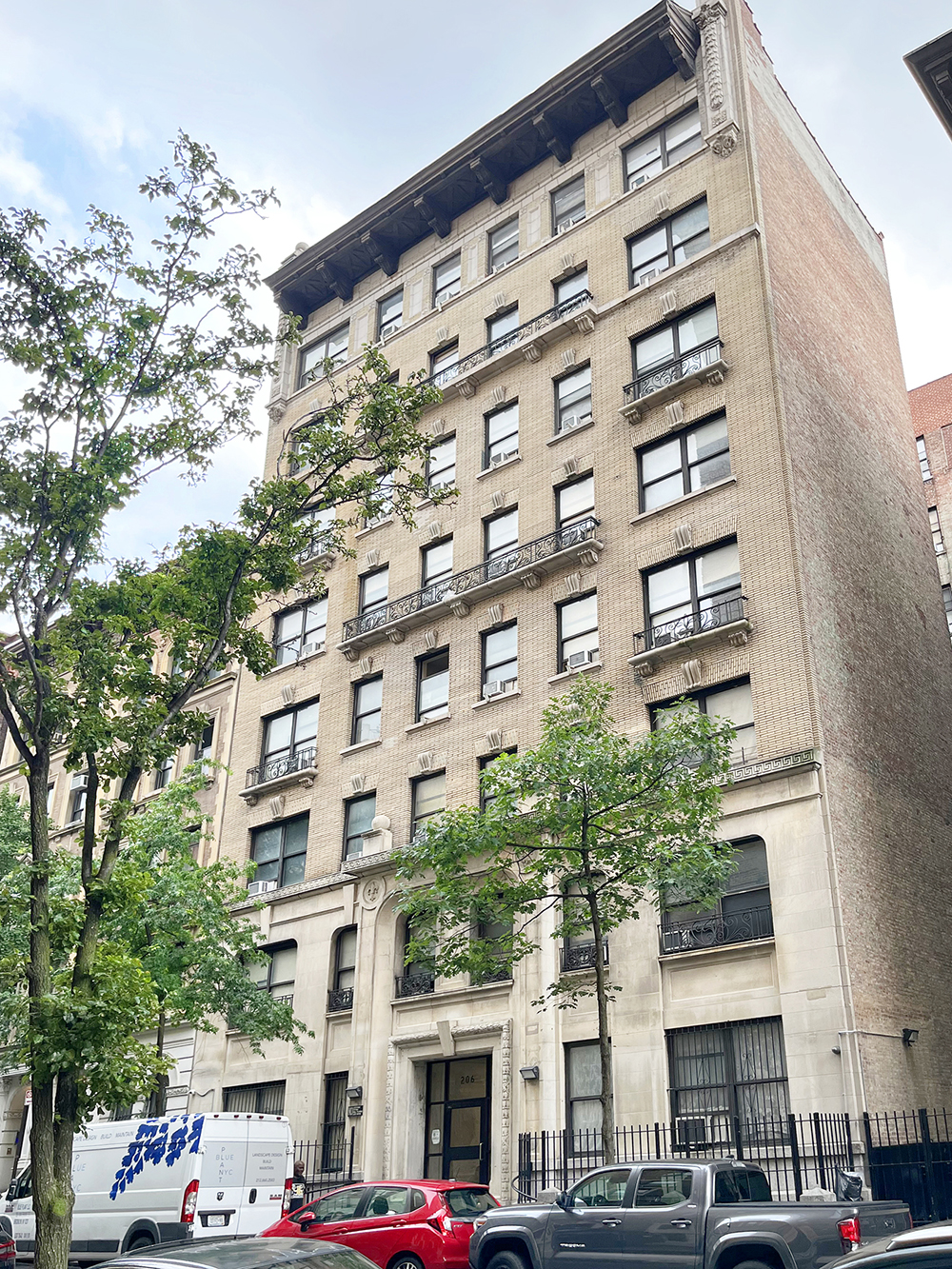
The Senate is composed exclusively of single-room occupancy units, as well as staff offices and community spaces that serve formerly homeless individuals, including many who are living with mental illness. Although the residents pay an affordable rent, the majority of the funding comes from New York City’s public sources.
Goddard Riverside, a New York-based nonprofit, owns and operates the property through its affiliated entities. The organization promotes dignity and self-reliance, and serves some 22,000 people annually through its more than 30 programs offered throughout the city.
“From the time of our development of one of the first SRO supportive housing residences in the nation, Goddard Riverside has a long history of preserving and improving SRO housing. We’re proud to continue that tradition of housing preservation with a modern focus on energy efficiency. We’re grateful to everyone who helped make this vision a reality, including HPD, NYSERDA, IMC Architecture, MAP and Rockabill Consulting,” said Dr. Roderick Jones, Ed.D, MPA, the president of Goddard Riverside.
Due to the age of the building, planning for the rehabilitation and renovation started in 2019. Goddard’s main goal is improving the sustainability of the building, which is why electrification and improving the efficiency of the HVAC system is an important part of the project.
Other team members include permitting and expediting consultant CORE Consultants, sustainability consultant Bright Power and structural and MEP engineer LiRo-Hill.
“The $25.8 million rehabilitation of the 40,000 s/f, eight-story single room occupancy (SRO) Senate residence is part of HPD and NYSERDA’s Retrofit Electrification Pilot program. It is expected to be completed by summer 2026. When finished, it will also make the building compliant with NYC Local Law 97, which places carbon emissions limits on individual buildings,” said IMC partner Dominick Casale, AIA, NCARB.
“The Senate has provided supportive housing for decades to New Yorkers who have experienced homelessness and are living with mental illness, and preserving it is exactly the kind of work that defines our mission. With this $25.8 million investment, we’re advancing climate justice and health equity while protecting deeply affordable housing that New Yorkers rely on," said Acting HPD Commissioner Ahmed Tigani. "Through the NYSERDA Building Electrification Program pilot, we’re retrofitting this century-old building with sustainable systems to make it cleaner, healthier, and more resilient, so the New Yorkers who live there can continue to call it home.”
“SROs are a key part of New York’s affordable housing inventory, so I’m thrilled that Goddard Riverside is not only preserving but fully electrifying the Senate. This trailblazing effort lays the groundwork for other projects to follow suit, demonstrating that our green energy and affordable housing goals can be achieved hand-and-hand,” said Manhattan borough president Mark Levine. “Thank you to all the partners who are making this affordable, supportive, green residence a reality.”
“Goddard Riverside’s single-room occupancy, the Senate, is going green!” said assemblymember Linda Rosenthal (D/WF-Manhattan), Chair of the Assembly Committee on Housing. “This groundbreaking electrification project proves that environmentalism and affordable housing goes hand-in-hand. This project will not only lower the city’s carbon emissions, but it’ll will also preserve 136 much-needed units of permanent affordable housing in my Manhattan Assembly district. I applaud both the city and state for contributing to the success of this incredible renovation, as well as Goddard Riverside’s intrepid efforts to make this project a reality. I hope this green renovation serves as a model for SROs across the city.”
Senator Brad Hoylman-Sigal said “The rehabilitation and electrification of The Senate residence at Goddard Riverside is a perfect example of the type of action needed to solve our city’s two biggest crises, the housing shortage and the threat of climate change. Once completed this will be the first fully electrified single occupancy residence supportive housing property in New York City. I’m grateful to New York City Housing Preservation & Development, NYSERDA, and the Enterprise Community Loan Fund for providing the funding for this unique project. The Senate will serve as a model for how we can modernize our existing infrastructure to create a more sustainable future.”
“This rehabilitation is a perfect example of how preservation of New York’s longest-running supportive housing facilities can not only improve operational efficiency and quality of life for formerly homeless residents, but also help New York City and State meet vital emissions reduction goals,” said Rockabill Consulting principal Katie Devine. “The retrofit was financed through several sources, including an $11.9M subsidy loan from HPD’s Year 15 Preservation Program. HPD also awarded eight project-based vouchers to The Senate, and Enterprise Community Loan Fund provided a $4.8 million construction loan and $5.5 million permanent loan. In addition, the project was included in a pilot program for electrification retrofits through NYSERDA and HPD, through which NYSERDA contributed $1 million in additional funding for electrification measures.”
Doreen Harris, president & CEO of NYSERDA, said “The rehabilitation of The Senate residence serves as an example of how New York City’s historic housing stock can be modernized through sustainable and electrified building solutions to improve the health and wellbeing of its residents. We must continue to leverage public-private partnerships such as this to bring forward opportunities that will help drive New York State toward a future clean energy economy that benefits all its residents.”
Goddard Riverside, a New York-based nonprofit, owns and operates the property through its affiliated entities. The organization promotes dignity and self-reliance, and serves some 22,000 people annually through its more than 30 programs offered throughout Manhattan and in Queens. Goddard Riverside’s areas of focus include preparing children and youth for success; supporting self-sufficiency; enriching the lives of older adults; promoting behavioral health; fighting homelessness; and strengthening families and communities. The agency traces its roots back to the Wilson Industrial School for Girls, founded in New York City in 1853.
“We’re thrilled to announce this renovation and retrofit, which will both significantly improve the living conditions of our residents and improve energy efficiency of the property,” said Thacher Tiffany, chief of housing development for Goddard Riverside. “The Senate was originally constructed in 1920 and redeveloped in 1988 as one of the first low-income housing tax credit projects in New York City. This project carries forward that spirit of innovation in service of our residents.”
“In demonstrating the feasibility of sustainable retrofits like this, The Senate helps prove the case for the carbon reduction goals of both the city and state. Not only is this doable, but it is valuable to residents who live in these buildings,” said Sara Bayer, AIA, CPHC, LEED AP, associate principal & director of sustainability at Magnusson Architecture and Planning. “Electrification is yielding safer living conditions with better indoor air quality and even better amenities – in this case removing the old oil tank, accommodating the new electrical infrastructure and allowing us to enlarge the community room and add a pantry to that space.”
Tiffany shared his advice on undertaking extensive retrofits in occupied housing properties and the importance of selecting knowledgeable team members, such as Rockabill, IMC and MAP: “It was critical for us to work with a consultant like Rockabill that was experienced in obtaining funding for a project like this and managing the renovation of an occupied residential building. Similarly critical to a project’s success are experienced architects and builders, who can quickly address multiple challenges associated with infrastructure upgrades and unforeseen issues related to work taking place in a 100-year-old building,” he said.
“The project team had to solve several interesting design and logistical challenges when planning this project. For example, it was very important to the owner and residents to develop a plan for phasing the construction work so that tenants can remain in place during the project. Construction is expected to take only one to two days per unit and will be done in phases to allow residents to remain in the building and stay in unoccupied units while work is going on in several selected units at a time,” said Casale.
Design And Construction Exterior
The project’s scope of work includes a substantial rehabilitation of the building. In order to maintain compliance with both HPD and NYSERDA’s electrification pilot standards and Enterprise Green Communities regulations, a new electric VRF (variable refrigerant flow) system with condensing units will be installed on the roof, while a new Air Source Heat-Pump domestic hot water heater and storage tanks will be installed in the boiler room and at the exterior. Individual units providing heating and cooling will be installed in each residence. The rehabilitation will also include the addition of three ERV units, which will provide fresh air to the residential corridors.
The renovated and upgraded rooftop will house 51 highly efficient condensing and heat pump units, including 33 3-ton multi-zone Mitsubishi MXZ-SM36NAMHZ inverter condensers, 17 4-ton multi-zone inverter Mitsubishi MXZ-SM48NAMHZ condensers and one 3-ton Mitsubishi MXZ-SM36NAM2 heat pump. Each heating and cooling condenser will serve single apartment lines connected to up to four residential units on four floors. The apartments served by each line are exposed to the same weather and sun exposure during the shoulder season, when some units will require heating while others will need cooling. Each condenser can operate in a different mode, satisfying demands of different single apartment lines in different parts of the building. This system replaces inefficient oil heating and window A/C units, providing significantly higher energy efficiency, operational cost savings, individual climate control in each unit and considerably reduced environmental impact and energy usage.
To support the weight of new condensing units, the roof will receive new dunnage – or structural steel structure on top of which the condensers will be installed – as well as parapet repairs, structural reinforcement and waterproofing. The brick parapets will be upgraded to include code-compliant steel reinforcement, with multiple sections either completely rebuilt or renovated.
The design and construction teams faced several challenges when planning the roof work. As is often case with buildings more than a century old, repeated repairs, revisions and additions accumulated over time into a hodgepodge of materials and systems of varying durability and mismatched look, with most of the previous work lacking proper records. To establish the extent of necessary work, the architects, engineers and builders performed an extensive site condition review, including multiple probing. This review resulted in the discovery of water damage to various elements, including steel rebars in the parapets, and establishing the exact structural design of the roof.
The design of the roof, constructed 105 years ago, is atypical. It features concrete-encased steel beams with rubble roof deck and fill. Because of the unusual design, assessing the exact load bearing of the roof was difficult for the engineering team. To address this challenge, the dunnage for the condensers will be connected directly to the perimeter steel structure of the building, ensuring a proper load transfer.
Once the structural work is completed, the roof will receive an insulating mineral product between the rubble deck level to serve as a new lightweight substrate and then new state-of the-art OPTIM-R insulation panels by Kingspan will complete the roofing upgrade. OPTIM-R?is a next-generation insulation system comprising rigid vacuum insulation panels with a microporous core, which are evacuated, encased, and sealed in a thin, gas–tight envelope to provide high R–values and an ultra–thin insulation solution.
The building’s façade will also undergo repairs and was extensively probed and reviewed in the project’s design phase. IMC worked with a façade consultant Zaskorski & Associates Architects to establish the scope of work necessary to preserve and upgrade the building’s exterior envelope. The repairs will include lintel replacements, repointing, replacement of brick where needed, waterproofing and cleaning. Due to the historic character of the building, the project team is focused on salvaging as much of the original material as possible.
Interior
In keeping with HPD-required aging-in-place guidelines, the shared bathrooms will include grab bars, no barriers, special audio-visual devices such as intercoms with light indicators and new low-flow and ADA plumbing fixtures. The appliances in the shared kitchens will be replaced with energy efficient electric appliances, including stoves.
Along with upgrades to the finishes, the common area will receive a new ERV (energy recovery ventilator) ventilation system, which will provide higher amounts of fresh air into all spaces.
Upgrades to the 800 s/f community room will include a new ceiling, a wet pantry and an ADA bathroom. Other planned interior renovations include painting the hallways and installing Floor Score-certified, sustainable wood-look LVT flooring, toilet exhaust systems, new efficient in-unit LED lighting and light controls, and ventilation systems.
Exterior renovations will include replacement of all windows, upgrades to the roof, façade and sidewalk repairs and a new entrance and sidewalk.
As part of the electrification scope, the building’s old oil tank will be decommissioned and removed. The space will be repurposed to house an expanded electrical room that can accommodate the increased electrical service.
“Locating all of the equipment in such a densely developed area was a challenge, so we installed condensers with big storage tanks on the roof. We also had to increase the electrical services to accommodate the new systems. Keeping the existing systems running while we decommission the old heating system will be very challenging, so we plan to use temporary street-based boilers while this takes place,” said Casale.
MORE FROM Owners Developers & Managers

Habitat, Duvernay + Brooks and Buffalo Municipal Housing close on 254-unit first phase redev. of Marine Drive Apts.
Buffalo, NY The Habitat Company has closed on Marine Drive Apartments, officially setting in motion the redevelopment of the historic waterfront site. The project, undertaken by Habitat in partnership with Duvernay +


.gif)


Quick Hits

.jpg)
Columns and Thought Leadership

Strategies for turning around COVID-distressed properties - by Carmelo Milio
Due to the ongoing pandemic, many landlords are faced with an increasing number of distressed properties. The dramatic increase in unemployment and reduction in income for so many has led to a mass exodus out of Manhattan, an increase in the number of empty rental units

The CRE content gap: Why owners and brokers need better digital narratives in 2026 - by Kimberly Zar Bloorian
As we head into 2026, one thing is clear: deals aren’t won by who has the best asset; they’re won by who presents it best. Yet many owners, operators, and brokers are entering the new year with outdated photos, inconsistent branding, and limited digital presence. This
.gif)