



News:
Construction Design & Engineering
Posted: December 9, 2025
DUMBO and NYC Dept. of Design and Construction conclude $104m restoration with final Belgian block

Brooklyn, NY The DUMBO Business Improvement District and the NYC Dept. of Design and Construction (NYC DDC) has placed the final Belgian block at Anchorage Place, completing a $104 million, multi-year restoration of DUMBO’s cobblestone streets. Over the course of the last six years, more than 800,000 historic Belgian blocks were removed, resorted, restored, and placed back into the 26 blocks that make up modern DUMBO. More than 3,000 artifacts were retrieved, a selection of which will be on display at the Brooklyn Public Library in the spring.
DUMBO began its renovation in 2019, to provide the neighborhood with more modern infrastructure and improved public spaces, all while preserving the historic character that defines the neighborhood’s charm. The revived streets feature a mix of newly laid ADA-compliant Belgian blocks, preserved historic stones, and original rail tiles integrated into the streetscape, maintaining the original details of DUMBO’s industrial heritage and charm. This project reflects a strategic investment in a neighborhood that is driving significant economic activity through its office, residential, and retail offerings.
Widely used in New York City throughout the 19th and early 20th centuries, Belgian block is a type of pavement made from tooled rectangular granite stones. Distinct from cobblestones, an earlier material used until around 1860, characterized by their naturally rounded shape, Belgian block offered a more uniform surface. Over time, however, natural wear and flooding, left many of these historic streets uneven and covered with patchy asphalt. Below the surface, DUMBO’s pipes were a century old and caused widespread, regular flooding - including damage from Hurricane Sandy. Today, those areas have been revitalized into safe, accessible plazas with granite-paved bike lanes and upgraded water and sewer infrastructure.
The completion of this initiative marks the culmination of years-long redevelopment in the neighborhood spanning seven different projects - including major developments like 60 Water St., Front and York and Olympia Dumbo - all built upon the former Watchtower campus. This moment signals the beginning of a new chapter for the neighborhood: as DUMBO continues to rebound from the pandemic’s impact on retail, a new wave of retailers, cafés, and creative brands including Fishs Eddy, L’Ensemble, and abc Kitchens DUMBO, are joining beloved local institutions like Peas & Pickles, Gleason’s Gym, Superfine and POWERHOUSE, some of the 90+ independent retailers that have survived and thrived through this construction period.. This milestone also coincides with the DUMBO Business Improvement District’s 20th anniversary in 2026, underscoring two decades of sustained community investment and growth.
“We are so thrilled to have been able to preserve the Belgian blocks while making them bikeable and accessible for everyone,” said president of the DUMBO Business Improvement District, Alexandria Sica. “We’ve made it through a decade of development–but that’s nothing compared to the eras these Belgian blocks have seen. From tea trolleys to film crews, horses to e-bikes, these streets have carried it all. Now, you can walk through the streets of DUMBO and experience the neighborhood’s historic charm in true old New York style. The neighborhood’s creatives can look up for inspiration and down at history, all in one place.”
Anchorage Place, where the final Belgian block will enter the ground, is the final piece of the DUMBO Archway Plaza, which was mostly completed in October 2024 as part of the neighborhood’s historic street preservation project. The Pearl Street Triangle section of the plaza originally opened as the first plaza in the New York City Plaza Program in 2007. The community and the public will gather on November 19th at 12:30pm with a mallet ceremony to celebrate this occasion.
DUMBO’s roots date back to the 19th century, when the neighborhood served as a hub of Brooklyn’s industrial waterfront. Warehouses, factories, and shipping facilities defined this area, with its iconic Belgian block streets first laid to withstand the heavy loads of horses, carts, and later freight trucks serving the maritime economy. By the mid-20th century, as shipping operations expanded to larger facilities, many of these buildings fell vacant. It wasn’t until the late 1970s and 1980s that artists and entrepreneurs began to see the potential in the neighborhood’s vast industrial spaces, setting the stage for the neighborhood’s reinvention.
This partnership between public entities and private stakeholders supports Two Trees and DUMBO Business Improvement District’s decades-long vision to shape the neighborhood’s future. City investments like Brooklyn Bridge Park and the now-completed street restoration project stand out as two of DUMBO’s most successful public-private collaborations, both contributing to the neighborhood’s transformation from underutilized industrial waterfront into one of New York City’s most dynamic residential, office and creative hubs.
DUMBO stands as a retail destination, home to design galleries, home goods stores, restaurants, and vinyl boutiques. Since construction began in 2019, not a single retail tenant has been lost as a result of the project. Instead, the retail landscape has grown significantly, emphasizing the community-first approach that has guided its progress. Today, with more than 150 architecture and design firms, DUMBO arguably has the highest concentration of designers in New York City and was officially designated as a design district earlier this year.
MORE FROM Construction Design & Engineering
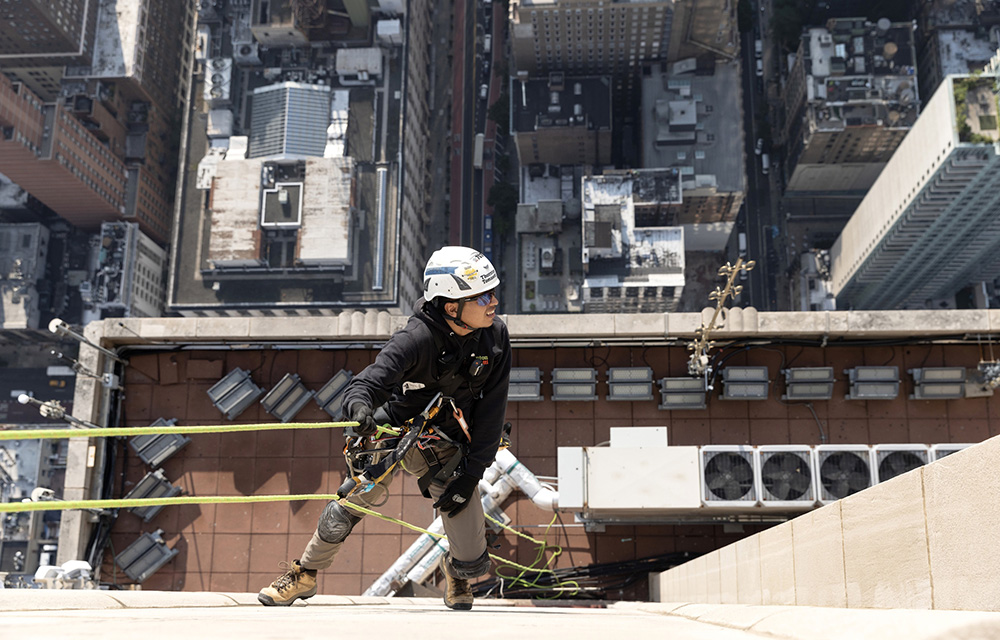
NYC mayor and DOB release comprehensive façade inspection and safety study conducted by Thornton Tomasetti
Manhattan, NY New York City mayor Eric Adams and New York City Department of Buildings (DOB) commissioner Jimmy Oddo released the full recommendations from a comprehensive engineering study conducted by global engineering firm Thornton Tomasetti

.gif)
.jpg)

.gif)
.gif)