



News:
Spotlight Content
Posted: April 30, 2024
Developing Long Island: 26 Harbor Park Drive
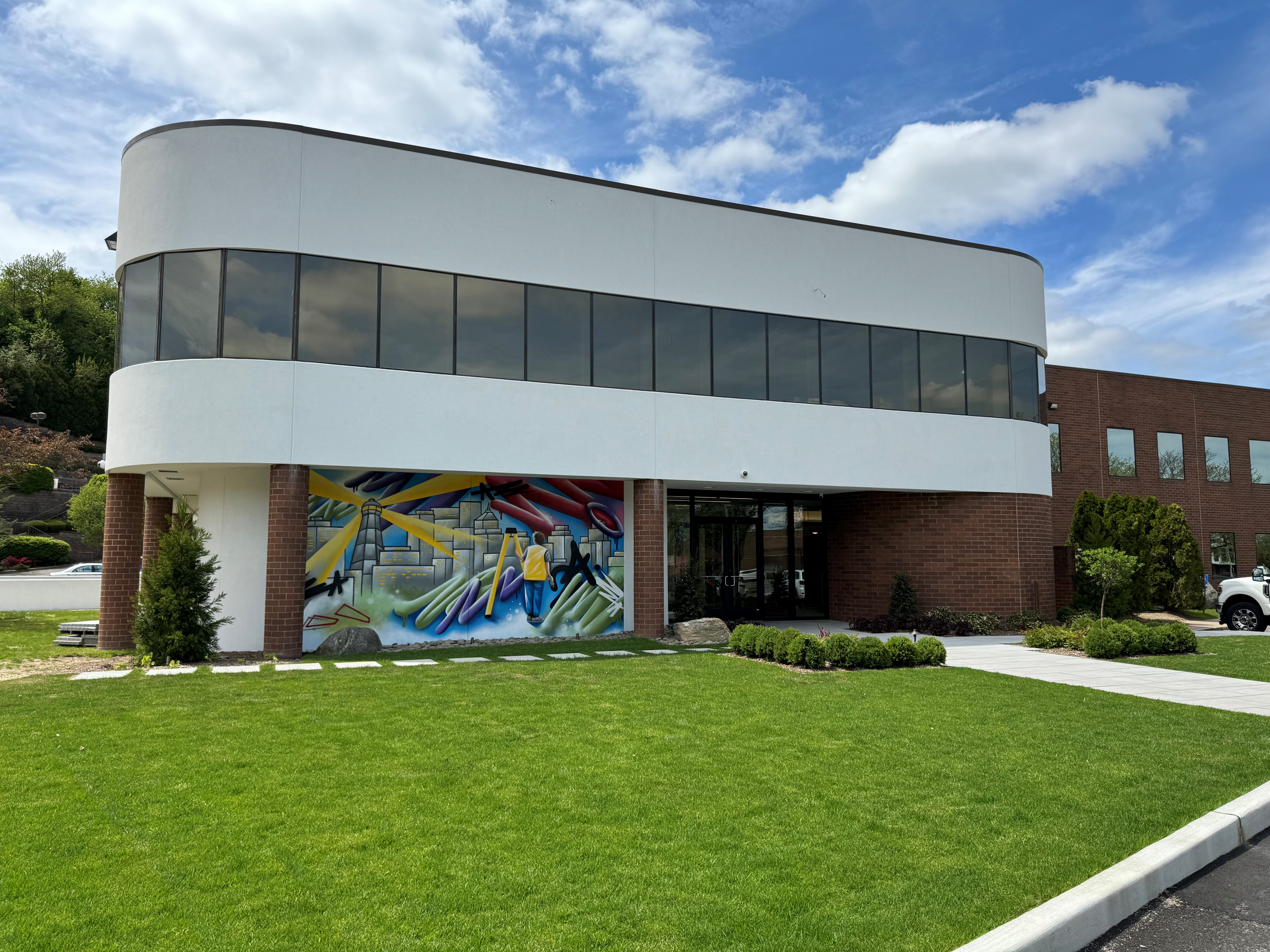
Port Washington, NY BEB Capital completed renovations for its headquarters at 26 Harbor Park Dr. to create a dynamic workplace environment. The property is headlined by a newly installed mural created by Felipe Alvarez and complemented by new amenities to create a forward-thinking workplace environment. With an investment exceeding $4 million, 26 Harbor Park Dr., complete with a shuttle service for tenants to and from the Port Washington Train Station, offers an inspiring workplace ecosystem.
BEB Capital CEO Lee Brodsky wanted to create an atmosphere and ecosystem unlike what you would typically find in boutique assets in the suburbs. Best-in-class operators have successfully completed similar upgrades in major metro areas, and he wanted to bring that creativity and vision for a vibrant workplace environment to 26 Harbor Park Dr. His admiration for the Wynwood Walls in Miami and how they highlight the important cross-section of art and real estate inspired BEB Capital to add a large art component when redeveloping the property.
Alongside the newly installed onsite amenities and artwork, the building’s infrastructure has been upgraded to align with the modern and progressive workspace concept. The office areas now feature polished concrete floors and abundant natural light for a more contemporary aesthetic. Further enhancements include a secluded patio extending from the building’s lobby and a common conference room for tenant use.
Project Info:
Project Title - Renovations at 26 Harbor Park Dr.
Project Location - 26 Harbor Park Dr., Port Washington, NY
Project Type - Office
Project Type - Renovation
Square Footage - 73,455 s/f
Year Project Started - 2023
Completion or Estimated Completion Date - February 2024
Project Team
Architect TPG Architecture LLP
Architect Lauren Kanfi of Studio Luli
Developer BEB Capital
Electrical Contractor Bright Bay Electric
Engineers Nelson & Pope Engineering
Financing BEB Capital
General Contractor Red Umbrella Construction
Mechanical Contractor Meyer Mechanical
Tags:
Spotlight Content
MORE FROM Spotlight Content

Over half of Long Island towns vote to exceed the tax cap - Here’s how owners can respond - by Brad and Sean Cronin
When New York permanently adopted the 2% property tax cap more than a decade ago, many owners hoped it would finally end the relentless climb in tax bills. But in the last couple of years, that “cap” has started to look more like a speed bump. Property owners are seeing taxes increase even when an



.png)


Quick Hits
.gif)
.jpg)
Columns and Thought Leadership

Properly serving a lien law Section 59 Demand - by Bret McCabe
Many attorneys operating within the construction space are familiar with the provisions of New York Lien Law, which allow for the discharge of a Mechanic’s Lien in the event the lienor does not commence an action to enforce following the service of a “Section 59 Demand”.

The strategy of co-op busting in commercial real estate - by Robert Khodadadian
In New York City’s competitive real estate market, particularly in prime neighborhoods like Midtown Manhattan, investors are constantly seeking new ways to unlock property value. One such strategy — often overlooked but

How much power does the NYC mayor really have over real estate policy? - by Ron Cohen
The mayor of New York City holds significant influence over real estate policy — but not absolute legislative power. Here’s how it breaks down:
Formal Legislative Role
• Limited direct lawmaking power: The NYC Council is the primary

Oldies but goodies: The value of long-term ownership in rent-stabilized assets - by Shallini Mehra
Active investors seeking rent-stabilized properties often gravitate toward buildings that have been held under long-term ownership — and for good reasons. These properties tend to be well-maintained, both physically and operationally, offering a level of stability
.gif)