



News:
Brokerage
Posted: September 26, 2007
Credit doors open slowly and slam shut: The comm'l. mortgage backed security (CMBS) meltdown of 2007
Some may say it began with a special report issued on April 10, 2007 by Moody's Investor Service. The memo, titled, US CMBS: Conduit Loan Underwriting Continues to Slide - Credit Enhancement Increase Likely, set the wheels in motion for the "credit crunch" of 2007. Since the release of the memo and the meltdown in the residential subprime lending market, CMBS fundings have come to a virtual standstill.
Moody's Investor Service said, "During the past few years the commercial mortgage market has witnessed a slow but steady erosion of underwriting quality." Moody's memo contends that CMBS underwriting has become too aggressive in the following areas:
* Loan to values on transactions increased by 5% during the first quarter of 2007 alone.
* Net operating income increasingly included future rents or income not yet in place.
* Capitalization rates have bottomed out and increases in real estate values will now have to manifest themselves by actual increases in property cash flow.
* The increased use of interest-only loans meant less amortization of debt over time resulting in excessive "balloon risk."
These underwriting aspects, along with several others detailed in the Moody's Special Report, have resulted in a major repositioning in the CMBS marketplace. CMBS lenders over the past few months have: tightened underwriting standards, increased pricing and several have left the market entirely.
The perceived exit of CMBS lenders in the commercial real estate market has resulted in increased lending activity from traditional commercial real estate lending platforms. Regional banks, credit companies, life insurance companies and agency lenders are all experiencing increases in loan request volumes. Freddie Mac recently reported a 75% increase in multifamily loan activity over the past three months. Increased demand for loans from these traditional sources has resulted in price increases, greater selectivity and longer turnaround times for loan requests.
The question is "when will the CMBS meltdown of 2007 end?" The answer will only become apparent over time. The commercial real estate markets need to re-adjust themselves to the new realities of the lending climate. This adjustment will occur once the balance of CMBS buyers and CMBS sellers re-acclimate to the realities of commercial real estate lending through the balance of 2007 and 2008.
Sam Berns is the managing director of NorthMarq Capital, Inc., Rochester, N.Y.
Tags:
Brokerage
MORE FROM Brokerage
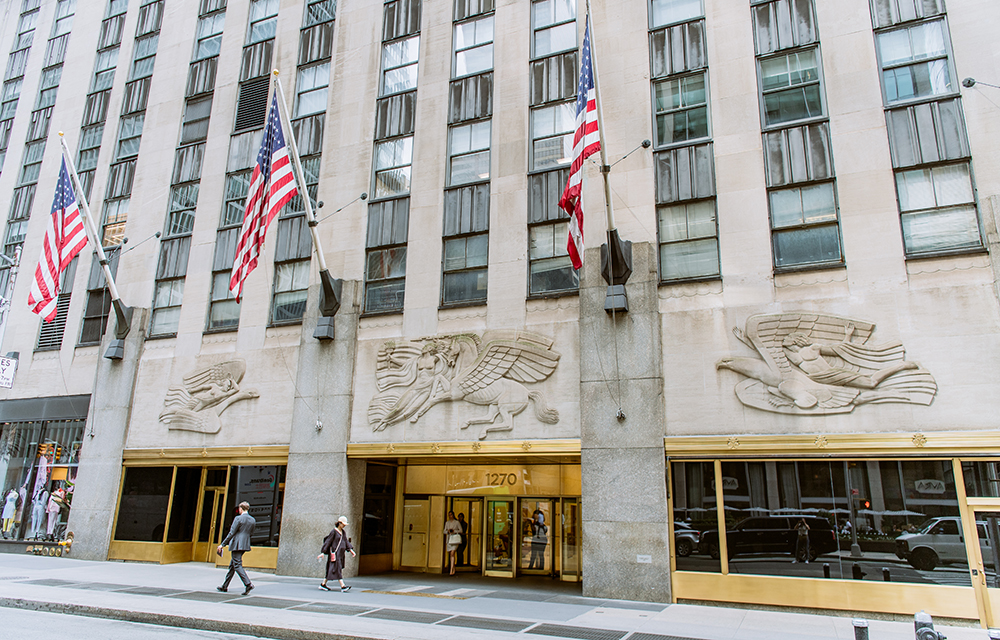
Horizon Kinetics relocates new headquarters to Tishman Speyer’s Rockefeller Center
Manhattan, NY According to Tishman Speyer investment boutique Horizon Kinetics Asset Management LLC will relocate its current New York office to 18,713 s/f on the 27th floor of 1270 Avenue of the Americas at


.jpg)

.gif)
Columns and Thought Leadership

Behind the post: Why reels, stories, and shorts work for CRE (and how to use them) - by Kimberly Zar Bloorian
Let’s be real: if you’re still only posting photos of properties, you’re missing out. Reels, Stories, and Shorts are where attention lives, and in commercial real estate, attention is currency.

Lasting effects of eminent domain on commercial development - by Sebastian Jablonski
The state has the authority to seize all or part of privately owned commercial real estate for public use by the power of eminent domain. Although the state is constitutionally required to provide just compensation to the property owner, it frequently fails to account

AI comes to public relations, but be cautious, experts say - by Harry Zlokower
Last month Bisnow scheduled the New York AI & Technology cocktail event on commercial real estate, moderated by Tal Kerret, president, Silverstein Properties, and including tech officers from Rudin Management, Silverstein Properties, structural engineering company Thornton Tomasetti and the founder of Overlay Capital Build,

Strategic pause - by Shallini Mehra and Chirag Doshi
Many investors are in a period of strategic pause as New York City’s mayoral race approaches. A major inflection point came with the Democratic primary victory of Zohran Mamdani, a staunch tenant advocate, with a progressive housing platform which supports rent freezes for rent
.gif)