



News:
Brokerage
Posted: January 17, 2023
Business leaders request regional cost analysis as climate action council deliberates final scoping plan - by Stacey Duncan

Business leaders in the Southern Tier are calling for a regional cost analysis, as the Climate Action Council (CAC) deliberates its final “scoping plan”. The heavily debated scoping plan will provide legislators with recommendations to meet the goals of the 2019 Climate Leadership and Community Protection Act (CLCPA). Some of which include replacing all gas appliances and home heating fuels with electricity by 2040 and reaching 85% zero emissions by 2050.
The Greater Binghamton Chamber of Commerce testified before the CAC to acknowledge the importance of utilizing renewable energy while also advocating for affordability and reliability during uncertain times. Another component of this plan that has left businesses worried is the speed in which the state plans to implement these proposals. The business community is not opposed to renewable power generation so long as it does not compromise their ability to do business in the state of New York.
Businesses are still in the process of recovering from several global health and economic crises that have impacted energy prices and production. Given the potential for an economic recession, a plan that costs nearly $340 billion to implement will add to continued economic insecurity for businesses. In addition, recent reports have shown that the cost of electricity this winter is expected to increase between 30-40% placing added pressure not just on businesses, but individuals and families.
Earlier this year, the New York Independent System Operator (NYISO) released its “2022 Power Trends”(1) report which states that “deactivating existing generation without having in place resources capable of providing comparable reliability services risk the ability to maintain a reliable electric system” and in their 2021-2040 System & Resource Outlook(2) report the experts suggest that “there will be a great need for dispatchable emission-free resources to meet the flexibility and energy supply needs of the future system”. Risking reliability is unquestionable, especially at a time when our state is experiencing extreme weather events.
In addition to the NYISO’s findings that reliability margins are thinning, they have also found that Upstate New York is well on its way to reaching 100% zero-emitting energy. According to the “Tale of Two Grids”(3), Upstate currently utilizes 92% zero-emitting resources and only 6% of its total energy profile relies on fossil fuels. These figures demonstrate that Upstate New York is doing its part and that a one-size-fits all approach is not realistic for a plan of this size.
A cost analysis is not only the financially prudent approach, but also an imperative to ensure that the regulations put forth in the CLCPA do not create increased financial disparities in New York State. As the CAC finalizes its scoping plan and the legislature considers new policies to meet the goals of the CLCPA, we strongly recommend a regional cost analysis and needs assessment to identify solutions based on a regional rather than statewide approach.
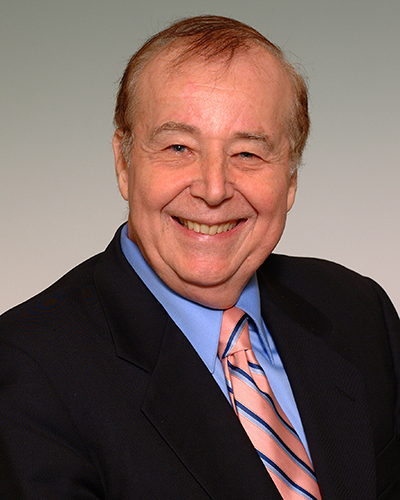
Stacey Duncan is the executive director of The Agency, and president and CEO of the Greater Binghamton Chamber of Commerce, Binghamton N.Y.
1. https://www.nyiso.com/documents/20142/2223020/2022-Power-Trends-Report.pdf/d1f9eca5-b278-c445-2f3f-edd959611903?t=1654689893527
2. https://www.nyiso.com/documents/20142/32663964/2021-2040_System_Resource_Outlook_Report_DRAFT_v15_ESPWG_Clean.pdf/99fb4cbf-ed93- f32e-9acf-ecb6a0cf4841#:~:text=This%20Outlook%20included%20approximately%209%2C500,system%20performance%20in%20the%20future.
3. https://www.nyiso.com/-/new-transmission-investments-add-a-new-chapter-to-the-tale-of-two-grids-
Tags:
Brokerage
MORE FROM Brokerage

Horizon Kinetics relocates new headquarters to Tishman Speyer’s Rockefeller Center
Manhattan, NY According to Tishman Speyer investment boutique Horizon Kinetics Asset Management LLC will relocate its current New York office to 18,713 s/f on the 27th floor of 1270 Avenue of the Americas at





.jpg)

Quick Hits

Columns and Thought Leadership

Behind the post: Why reels, stories, and shorts work for CRE (and how to use them) - by Kimberly Zar Bloorian
Let’s be real: if you’re still only posting photos of properties, you’re missing out. Reels, Stories, and Shorts are where attention lives, and in commercial real estate, attention is currency.

Strategic pause - by Shallini Mehra and Chirag Doshi
Many investors are in a period of strategic pause as New York City’s mayoral race approaches. A major inflection point came with the Democratic primary victory of Zohran Mamdani, a staunch tenant advocate, with a progressive housing platform which supports rent freezes for rent
AI comes to public relations, but be cautious, experts say - by Harry Zlokower
Last month Bisnow scheduled the New York AI & Technology cocktail event on commercial real estate, moderated by Tal Kerret, president, Silverstein Properties, and including tech officers from Rudin Management, Silverstein Properties, structural engineering company Thornton Tomasetti and the founder of Overlay Capital Build,

Lasting effects of eminent domain on commercial development - by Sebastian Jablonski
The state has the authority to seize all or part of privately owned commercial real estate for public use by the power of eminent domain. Although the state is constitutionally required to provide just compensation to the property owner, it frequently fails to account
.gif)