



News:
Owners Developers & Managers
Posted: November 3, 2020
BOMA New York – Now & looking forward - by Hani Salama

Hani Salama, P.E.,
LEED AP
Capital Properties
On behalf of the entire commercial real estate industry in New York and the many commercial tenants that propel the economy of the greatest city in the world, BOMA New York continues to push the ball forward. Our dedicated staff and Board of Directors are regularly behind the scenes advocating for the commercial built environment and are on the frontlines collaborating for a better future. The following summary recaps our recent efforts.
Getting Back to Work
Recognizing the realities of the virus and the importance of getting back to work–BOMA New York collaborated with business leaders, as well as with state and federal agencies to issue guidelines for reentering commercial office buildings–and we continue to champion that cause. From operational changes to logistical efficiencies, BOMA New York is committed to producing a large cross-section of digital content to educate owners and managers on how to ready and maintain their buildings, as well as how to communicate with their tenants.
In doing so, we have assembled thought leaders from throughout New York City to address improved ventilation and indoor air quality. Topics covered include HVAC changes, MERV levels, ultraviolet light disinfection, bipolar ionization, and photocatalytic oxidation (PCO). We are focused on assisting our members maximize their building’s occupancy levels and thus improve productivity throughout the city.
Refine Local Law 97
These are unprecedented times and our actions, as a result, are atypical. To prevent the spread of COVID-19, building owners adhere to state-instituted ventilation guidelines to make their spaces safe. These adjustments make building systems work harder, with a net effect that results in the consumption of more energy–the opposite result set forth by Local Law 97–the Green New Deal legislation to reduce the carbon footprint in the city.
Although the strict carbon emissions cap will not begin until 2024, building systems and budget planning for 2024 and beyond is happening now for many properties, while others are focused on cash conservation.
On behalf of the 400 million s/f of commercial real estate, BOMA New York is actively working with elected officials on a solution that embraces both safety and sustainability. We asked the city to remain diligent on its objectives to reduce our collective carbon footprint, but to refine its initial Local Law 97 implementation timeline for both short- and long-term success of New York City.
Thinking Forward
We will continue to program informative webinars, as well as keep you up to date on ongoing efforts. A few upcoming webinars include:
• COVID-19 Legal Edition – Minimizing General & Employment Law Liability (11/12); and
• Driving Smarter Buildings for Seamless Security and a Differentiated Tenant Experience (11/19)
In the interim, I encourage each of you to connect with one another. Reach out and check in. Those that are active today will be positioned to lead by example tomorrow.
Hani Salama, P.E., LEED AP is with Capital Properties, and is BOMA NY chair & CEO, New York, N.Y.
MORE FROM Owners Developers & Managers
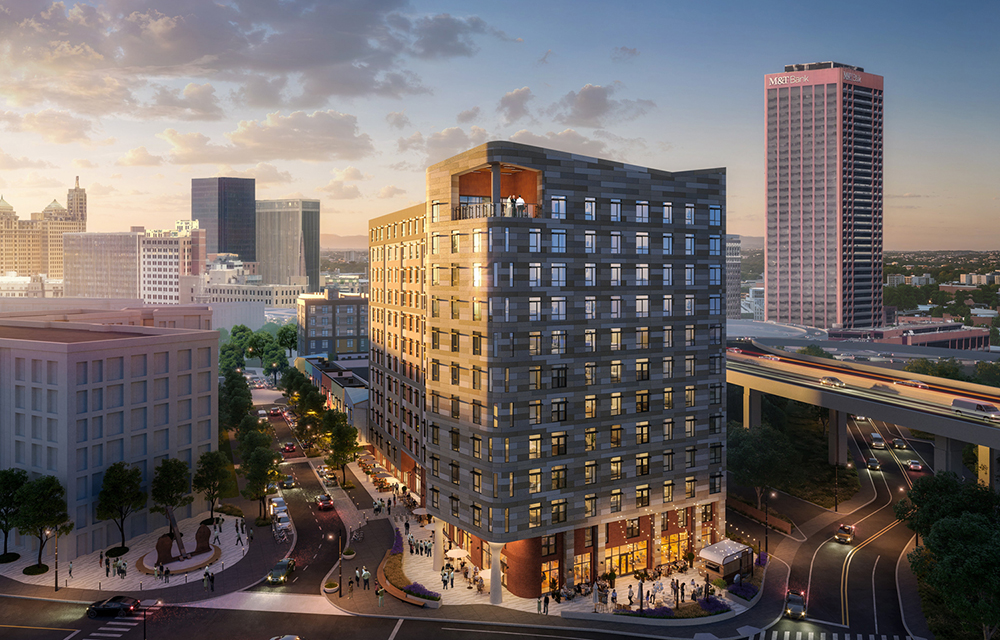
Habitat, Duvernay + Brooks and Buffalo Municipal Housing close on 254-unit first phase redev. of Marine Drive Apts.
Buffalo, NY The Habitat Company has closed on Marine Drive Apartments, officially setting in motion the redevelopment of the historic waterfront site. The project, undertaken by Habitat in partnership with Duvernay +


.gif)


Quick Hits
.gif)
.jpg)
Columns and Thought Leadership

The CRE content gap: Why owners and brokers need better digital narratives in 2026 - by Kimberly Zar Bloorian
As we head into 2026, one thing is clear: deals aren’t won by who has the best asset; they’re won by who presents it best. Yet many owners, operators, and brokers are entering the new year with outdated photos, inconsistent branding, and limited digital presence. This

Strategies for turning around COVID-distressed properties - by Carmelo Milio
Due to the ongoing pandemic, many landlords are faced with an increasing number of distressed properties. The dramatic increase in unemployment and reduction in income for so many has led to a mass exodus out of Manhattan, an increase in the number of empty rental units
.gif)