



News:
Brokerage
Posted: May 16, 2017
Addressing mortgage subordination in ground leases - by Thomas Kearns
As the benefits of long term ground leases become more familiar to property owners, one issue that can be confusing is how mortgage subordination is addressed in the typical ground lease. Ground leases are particularly popular with the first generation of a family that wants to preserve the family’s interest in the property for future generations while avoiding management headaches and minimizing risk. A long term, often 99 year, ground lease provides for a stream of rent while delegating the operation and management of the property to the ground lessee, often a professional real estate developer or operator. The ground lessor gets a regular rent check with no operational expenses and doesn’t have to worry too much about the day to day operation of the building.
Ground leases universally permit the lessee to mortgage its interest in the lease. That mortgage can be a construction loan to help build or renovate the building on the property or it can be a way to generate distributions after the lessee has increased the cash flow. Understandably, this can cause concern for the lessor particularly where the property is the family’s prime asset and the family is not used to the structure. Often the lessor is used to the mortgage subordination clause in the typical space lease: “This lease is subject and subordinate to any current and future mortgage on the property.” But that’s not how it works with ground leases.
I regularly see term sheets generated for proposed ground leases and the sentence or two about mortgage subordination can be garbled. The toughest part for the lessor to understand is that the terms of the mortgage on the fee position must be subject to the terms of the mortgage on the lessee’s position. The easiest way to understand this is an example: If a casualty occurs, the lease must provide for restoration, i.e., neither mortgagee may take the insurance proceeds and pay down the loan, and the leasehold mortgagee not the fee mortgagee gets to control the restoration process. In that example, the terms of the leasehold mortgage control over the terms of the fee mortgage.
That does not mean, however, that the fee ownership could be lost by a foreclosure by the leasehold mortgagee. Far from it–the fee may be subject to the lease but the fee is not mortgaged to the leasehold lender and can’t be lost in a foreclosure by the leasehold lender. But the reverse is also true–the fee mortgagee can’t terminate the lease in a foreclosure and must be subject to the rights of the leasehold mortgagee. Here is a suggested clause for your next ground lease letter of intent: “Tenant’s interest in the lease may be mortgaged without landlord’s consent. Landlord may separately mortgage its fee estate but any such mortgage shall be subject to the terms of the lease. The lease will contain typical protections for leasehold mortgagees. Under no circumstances shall landlord be required to mortgage its fee estate to any leasehold mortgagee.”
Thomas Kearns is a partner with Olshan Frome Wolosky LLP’s real estate department, New York, N.Y.
Tags:
Brokerage
MORE FROM Brokerage
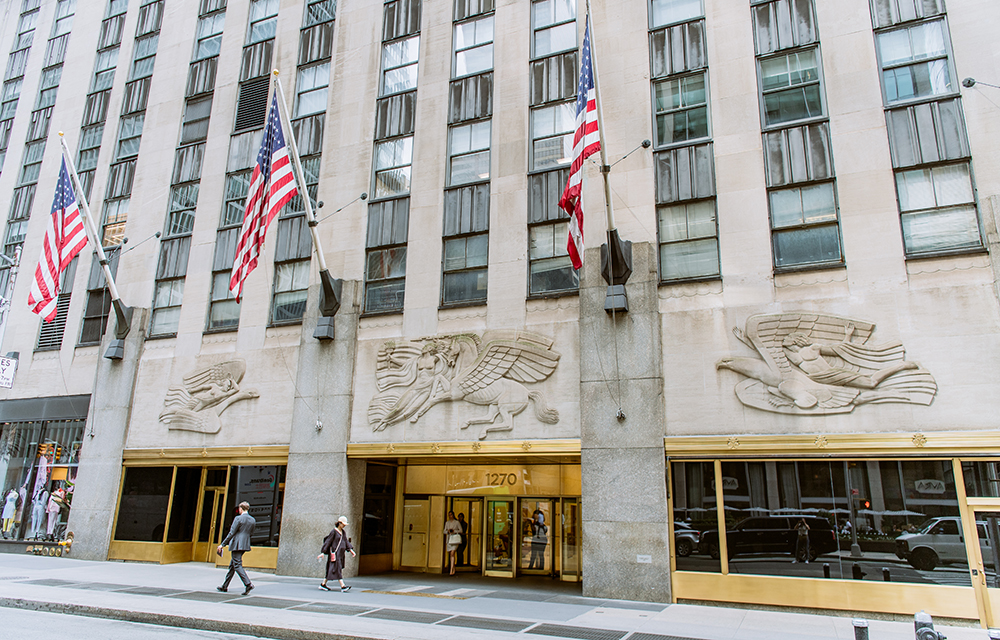
Horizon Kinetics relocates new headquarters to Tishman Speyer’s Rockefeller Center
Manhattan, NY According to Tishman Speyer investment boutique Horizon Kinetics Asset Management LLC will relocate its current New York office to 18,713 s/f on the 27th floor of 1270 Avenue of the Americas at




.jpg)


Columns and Thought Leadership

Strategic pause - by Shallini Mehra and Chirag Doshi
Many investors are in a period of strategic pause as New York City’s mayoral race approaches. A major inflection point came with the Democratic primary victory of Zohran Mamdani, a staunch tenant advocate, with a progressive housing platform which supports rent freezes for rent

Behind the post: Why reels, stories, and shorts work for CRE (and how to use them) - by Kimberly Zar Bloorian
Let’s be real: if you’re still only posting photos of properties, you’re missing out. Reels, Stories, and Shorts are where attention lives, and in commercial real estate, attention is currency.
AI comes to public relations, but be cautious, experts say - by Harry Zlokower
Last month Bisnow scheduled the New York AI & Technology cocktail event on commercial real estate, moderated by Tal Kerret, president, Silverstein Properties, and including tech officers from Rudin Management, Silverstein Properties, structural engineering company Thornton Tomasetti and the founder of Overlay Capital Build,

Lasting effects of eminent domain on commercial development - by Sebastian Jablonski
The state has the authority to seize all or part of privately owned commercial real estate for public use by the power of eminent domain. Although the state is constitutionally required to provide just compensation to the property owner, it frequently fails to account
.gif)