



News:
Spotlight Content
Posted: April 22, 2025
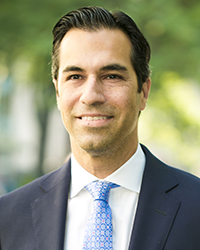
2025 Ones To Watch - Industry Leaders: Matthew Halal, Hunton Andrews Kurth LLP

Partner
Hunton Andrews Kurth LLP
Recent goal and impact:
I recently expanded my practice to include representing buyers and sellers in connection with commercial loan repurchase facilities. This practice area complements my real estate finance practice and has opened up opportunities with new clients that are seeking to engage firms that have expertise in both commercial loan origination and back-leverage finance.
Turning problems into opportunities:
The most recent obstacle that comes to mind, and one that we are all familiar with, has been the ever-evolving market conditions in recent years. As a real estate finance lawyer, the ability to be nimble and help my clients navigate these choppy conditions has given me a chance to distinguish myself in the marketplace. Partnering with my clients to find creative solutions, innovative financing structures, or even assisting with distress when needed has been critical and allows me to be the dealmaker they need.
Best books, podcasts, or apps for aspiring leaders:
The All-In Podcast. This podcast covers a range of topics including tech, politics and finance.
Who was/is your role model and/or leadership mentor?
Brett Gross and Peter Mignone - both exceptional real estate lending lawyers and taught me so much.
Sharing knowledge and expertise:
Specifically, here in New York, the firm has a robust real estate finance practice and we work together seamlessly to share insights and trends, which are of course are leveraged by our clients. Additionally, we are fortunate to have a large nationwide team of real estate lawyers who we are in constant communication with us to make sure we stay informed on market conditions, deal structures, strategies, etc. This level of communication is what sets us apart and gives us the ability to close intricate lending transactions with precision and speed in a manner that is beneficial to all parties.
Best advice for new leaders:
Remain confident in your abilities in the face of the learning curve that comes with being a leader.
Tags:
Spotlight Content
MORE FROM Spotlight Content

Over half of Long Island towns vote to exceed the tax cap - Here’s how owners can respond - by Brad and Sean Cronin
When New York permanently adopted the 2% property tax cap more than a decade ago, many owners hoped it would finally end the relentless climb in tax bills. But in the last couple of years, that “cap” has started to look more like a speed bump. Property owners are seeing taxes increase even when an



.png)

.gif)
.jpg)
Columns and Thought Leadership

The strategy of co-op busting in commercial real estate - by Robert Khodadadian
In New York City’s competitive real estate market, particularly in prime neighborhoods like Midtown Manhattan, investors are constantly seeking new ways to unlock property value. One such strategy — often overlooked but

Oldies but goodies: The value of long-term ownership in rent-stabilized assets - by Shallini Mehra
Active investors seeking rent-stabilized properties often gravitate toward buildings that have been held under long-term ownership — and for good reasons. These properties tend to be well-maintained, both physically and operationally, offering a level of stability
How much power does the NYC mayor really have over real estate policy? - by Ron Cohen
The mayor of New York City holds significant influence over real estate policy — but not absolute legislative power. Here’s how it breaks down:
Formal Legislative Role
• Limited direct lawmaking power: The NYC Council is the primary

Properly serving a lien law Section 59 Demand - by Bret McCabe
Many attorneys operating within the construction space are familiar with the provisions of New York Lien Law, which allow for the discharge of a Mechanic’s Lien in the event the lienor does not commence an action to enforce following the service of a “Section 59 Demand”.
.gif)