



News:
Spotlight Content
Posted: December 28, 2021
2021 Year in Review: Greg Berger, Robert Martin Company, LLC
Name: Greg Berger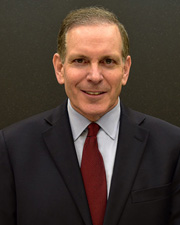
Job Title: President
Company Name: Robert Martin Company, LLC
What was your greatest professional accomplishment or most notable project, deal, or transaction in 2021?
The sale of 3 Executive Blvd. and 3 Odell Plaza in Yonkers—over 130,000 s/f of office space—for $36.6 million, which represented a new record price for suburban Westchester County office sales at $280 per s/f. Seizing upon emerging business opportunities that enhance the value of the company’s overall portfolio is Robert Martin’s formula for success. I am also immensely proud of our firm being an award recipient from BOMA Westchester and NAIOP Connecticut and Suburban New York, which truly reflects the respect we receive from industry colleagues for Robert Martin’s long-held, professional and ethical approach to conducting business.
What was the biggest lesson you learned while working during the pandemic?
The biggest lesson was more a reinforcement of something I already knew to be true—hire smart, competent people and give them the tools they need to succeed no matter what conditions prevail. Even though the pandemic has been an historic-level challenge for everyone, Robert Martin Company successfully navigated through this tumultuous period by heavily relying on each other’s core competencies, implementing a comprehensive internal and external communications plan, and maintaining health and safety as the top priority for all our stakeholders.
How has your working environment changed over the last year?
From the beginning of the pandemic, strict COVID protocols were instituted so we could bring employees safely back to the office, as we have 300 tenants—many of whom were designated as essential businesses—that needed to keep their workspaces open. Remote work is clearly not a preferred option in real estate management, as you need to remain as hands-on and responsive to tenants’ needs as possible, however, the company instituted a remote work protocol (when needed) as part of our comprehensive COVID workplace plan.
What are your predictions for your industry in 2022?
With the last-mile delivery of goods and services rapidly accelerating, there will continue to be a rising need for industrial spaces located near dense population centers. This rising tide will equally lift the value of well-positioned industrial/flex property portfolios that can seize upon the many ways in which e-commerce is transforming the global economy. Fortunately, the strong majority of Robert Martin’s properties are in this asset class, which we anticipate will remain among the highest-valued real estate along with the vibrant multifamily sector.
What is the best advice you received in 2021, and who was it from?
Oddly enough, the best advice I received came from an old Robert Martin press clipping from the New York Times I re-read recently that featured a quote from my father, and co-founder of our company, Martin Berger. It was the late 1990s, and the company had just concluded a major transaction. When the reporter asked my father about the future, he happily said, “We’re very content today, but there’s plenty more to do tomorrow.” That was 25 years ago, but it still rings true today. We are proud of how we have navigated through the pandemic, and excited about the opportunities ahead, as we have more to accomplish in the coming years.
Tags:
Spotlight Content
MORE FROM Spotlight Content

Over half of Long Island towns vote to exceed the tax cap - Here’s how owners can respond - by Brad and Sean Cronin
When New York permanently adopted the 2% property tax cap more than a decade ago, many owners hoped it would finally end the relentless climb in tax bills. But in the last couple of years, that “cap” has started to look more like a speed bump. Property owners are seeing taxes increase even when an


.png)


Quick Hits

.jpg)
Columns and Thought Leadership

Oldies but goodies: The value of long-term ownership in rent-stabilized assets - by Shallini Mehra
Active investors seeking rent-stabilized properties often gravitate toward buildings that have been held under long-term ownership — and for good reasons. These properties tend to be well-maintained, both physically and operationally, offering a level of stability

The strategy of co-op busting in commercial real estate - by Robert Khodadadian
In New York City’s competitive real estate market, particularly in prime neighborhoods like Midtown Manhattan, investors are constantly seeking new ways to unlock property value. One such strategy — often overlooked but

Properly serving a lien law Section 59 Demand - by Bret McCabe
Many attorneys operating within the construction space are familiar with the provisions of New York Lien Law, which allow for the discharge of a Mechanic’s Lien in the event the lienor does not commence an action to enforce following the service of a “Section 59 Demand”.

How much power does the NYC mayor really have over real estate policy? - by Ron Cohen
The mayor of New York City holds significant influence over real estate policy — but not absolute legislative power. Here’s how it breaks down:
Formal Legislative Role
• Limited direct lawmaking power: The NYC Council is the primary
.gif)